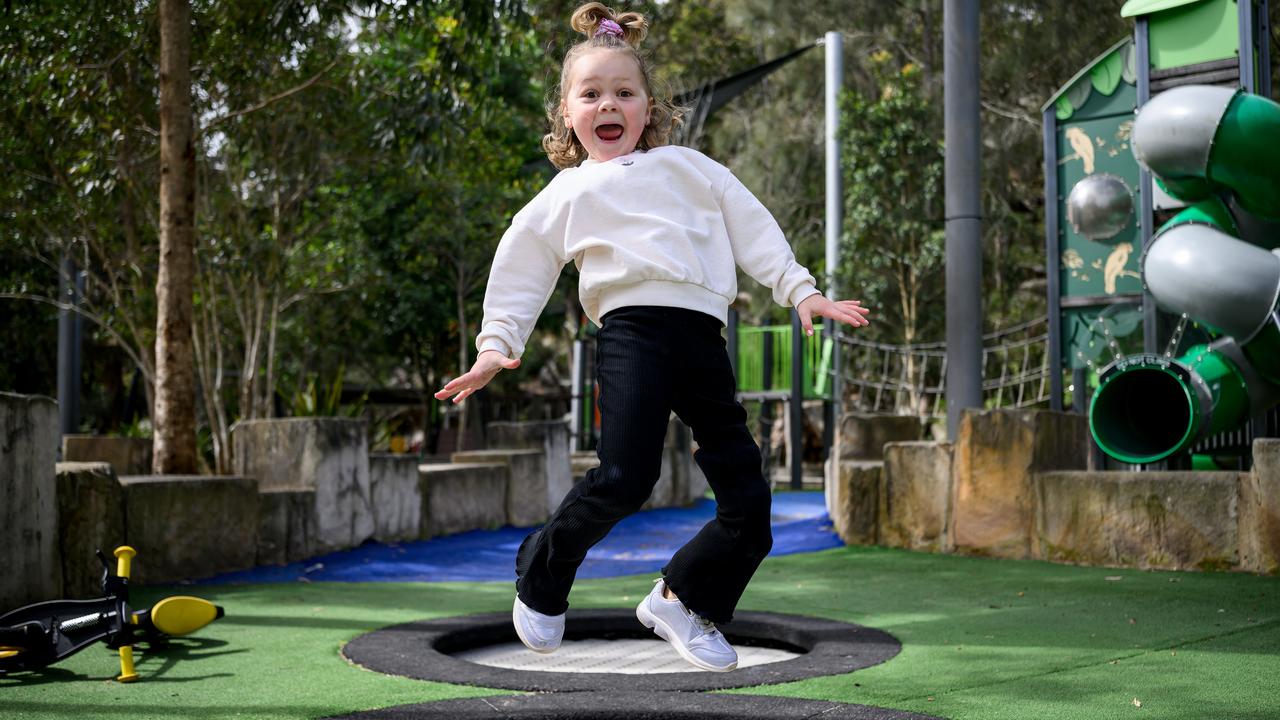
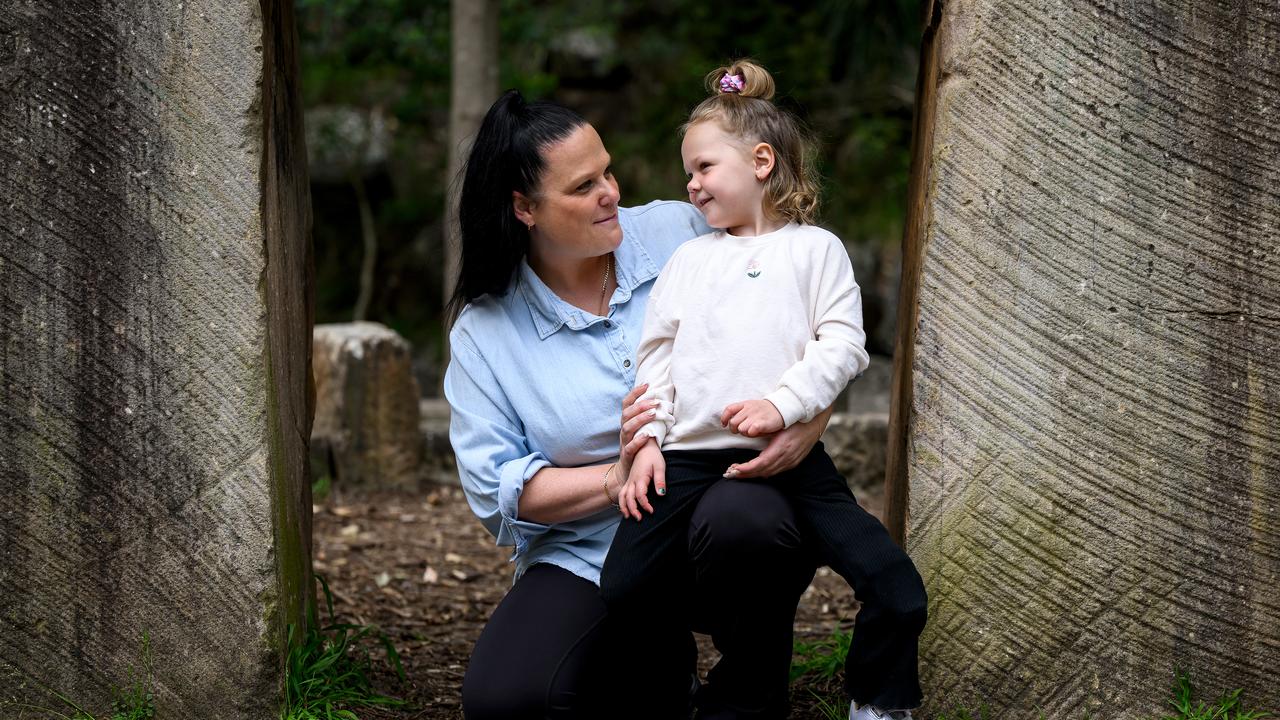
At first, Kelly Hennessy thought her daughter Mileah was just trying to mimic her beloved older cousin with her ''weird, long-legged skip".
Mileah was an energetic, advanced little girl who loved being outdoors and spending time with her close-knit family, including her cousin who had been performing a similarly unusual skip.
When daycare reported the two-and-a-half-year-old was dragging one side after a minor fall, she thought it might be a sprain, so she brought her doctor's appointment forward.
But the Sydney mother never imagined the cause was an aggressive bone cancer that would leave her little girl amputated above the knee.
An X-ray revealed a large dark mass around Mileah's left knee and femur.
A paediatrician told Ms Hennessy it appeared to be either an infection or a tumour.
''I've never had a feeling like it,'' Ms Hennessy tells AAP.
''You know how you get that sick feeling or a nervous feeling? It's like that, is the best way I can explain it. It was accompanied with complete sadness and fear.''
Mileah and Ms Hennessy spent a week in hospital while doctors carried out investigations, with the first biopsy coming back inconclusive.
After about two weeks waiting for a second biopsy, they were told Mileah had osteosarcoma, a rare and aggressive bone cancer.
Amputation had already been raised as a possibility because of Mileah's young age and the position of the tumour.
''I couldn't even process the X-ray, let alone everything else that was still coming to me,'' Ms Hennessy said.
Within days, Mileah had a central line inserted and began chemotherapy.
The treatment was brutal, with fevers, vomiting, mucositis and repeated hospitalisations for infections. Her chemotherapy regime included doxorubicin, known as the ''red devil'' because of its toxicity.
''She got very sick from her chemotherapy,'' Ms Hennessy says.
After two cycles of chemotherapy, Mileah travelled with her orthopaedic surgeon to Melbourne for surgery.
She underwent a Van Ness rotationplasty, an unusual limb-salvage procedure in which part of the leg is removed and the foot rotated 180 degrees and attached to the thigh.
Her heel then functions as a knee joint inside a prosthetic leg.
But for Ms Hennessy, the worst part was returning to Sydney and watching her daughter deteriorate as chemotherapy continued.
''That was the hardest,'' she says.
''That was when all the infections came. That was when she was on a lot of different drips for medication and for pain tolerance.''
The experience consumed the family's life.
Ms Hennessy stopped working and faced financial pressures, while friendships changed and her relationship broke down, as she focused on getting Mileah through the treatment.
''Life still goes on,'' she reflects.
''You've got your financial issues because you're not working. There's all these little things that still are going on around the outside but your focus is just on making sure your kid gets better.''
Mileah was so young when she became sick, that Ms Hennessy tried to make the experience simple.
''You've got a leg that's very sick, we need to get it better, we've got to give you special medicine but then we're going to give you a new leg,'' she told her.
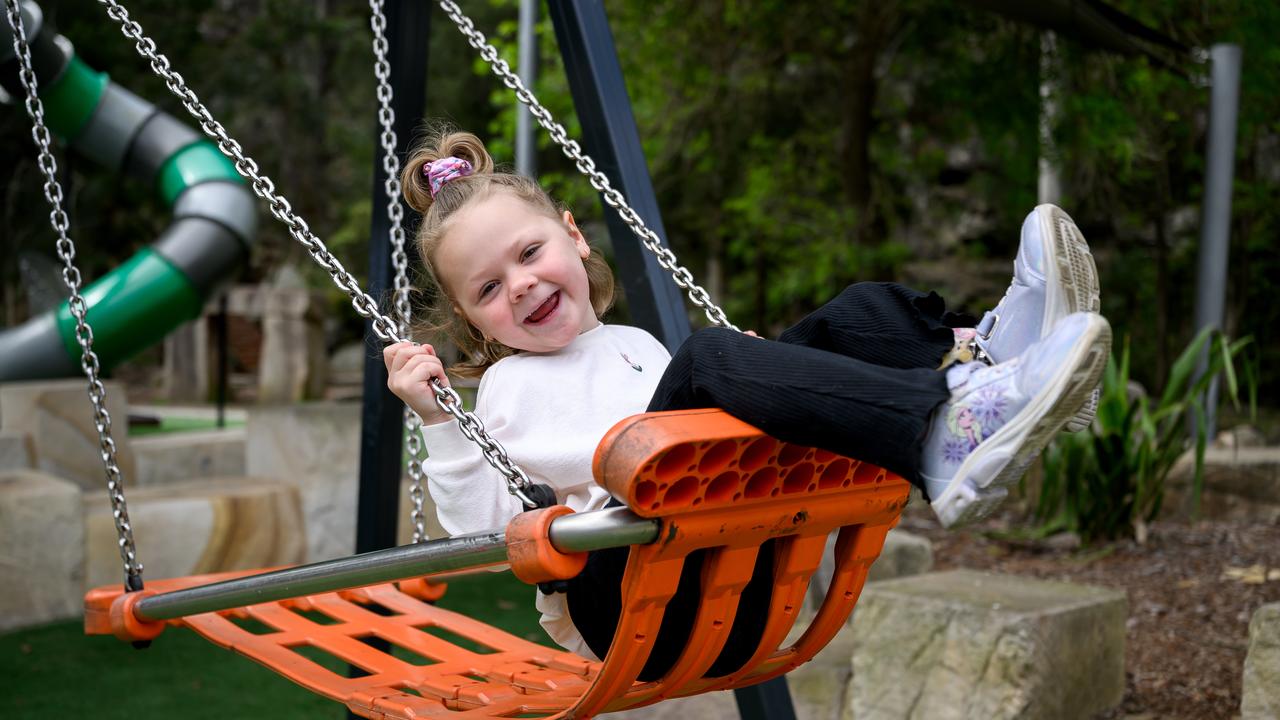
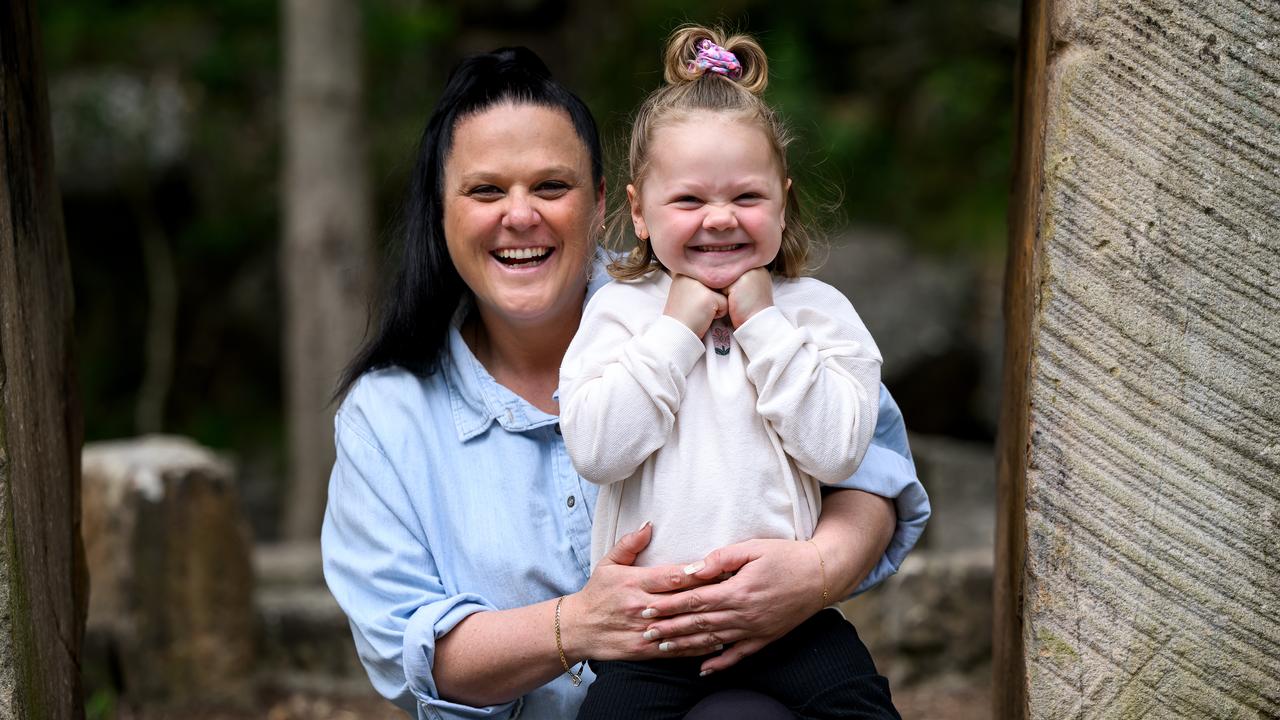
Now approaching her fifth birthday, Mileah has finished treatment and is thriving.
She is back at preschool, preparing to start kindergarten next year, and is already on her third prosthetic leg as she grows.
She can walk almost normally and is working on running and riding a bike.
''A lot of the time, when her pants are on, you can't even tell she's an amputee,'' Ms Hennessy says.
Her latest lung scans, taken as part of her regular cancer monitoring, were also clear.
Ms Hennessy hopes Mileah will remember as little as possible of the worst parts of her treatment. Instead, her daughter is more interested in choosing colourful patterns for her prosthetic, including mermaids, Barbie and Disney characters.
Mileah's young age may also mean she will never have to remember what it was like not to have a prosthetic leg.
In a boost for other young Aussies facing their own fight against the Big C, the government on Friday announced it was committing $5 million to support Australian participation in the LifeArc Worldwide CAR-T Pathfinder Trial and Paediatric Cell Therapy Accelerator.
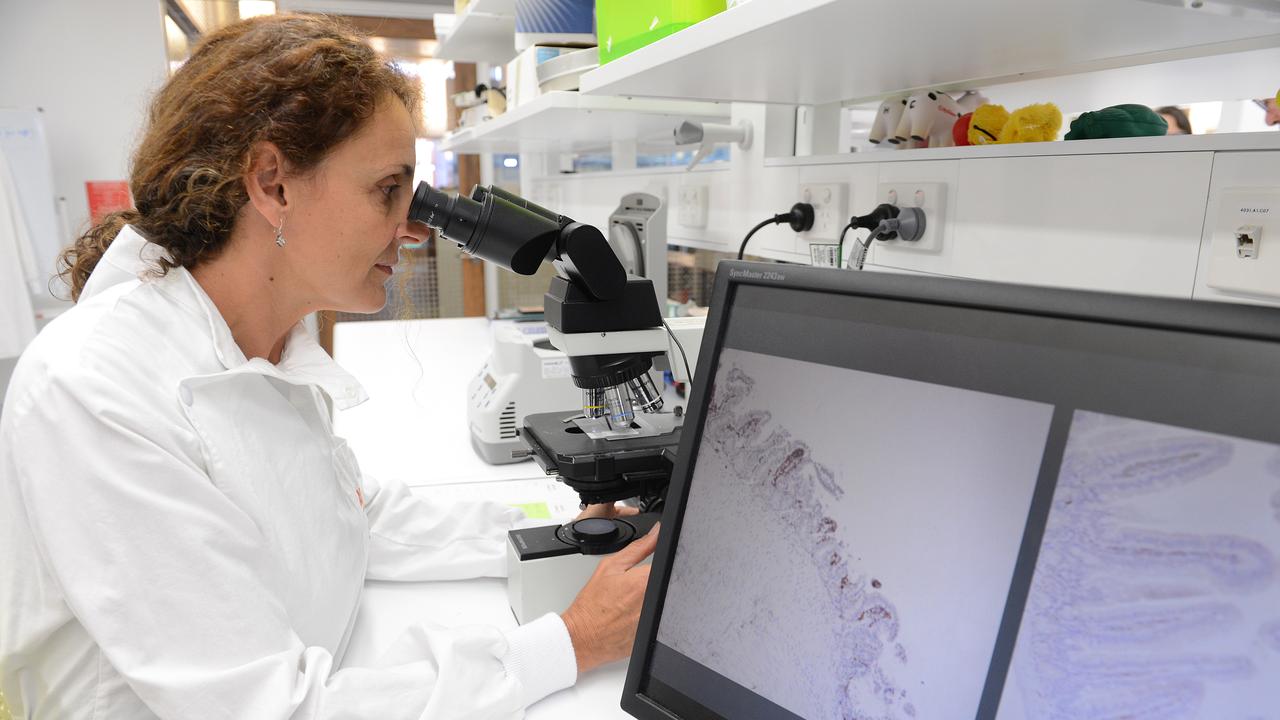
CAR-T is a type of immunotherapy used in laboratories to re-engineer a patient's white blood cells so they can destroy cancer cells.
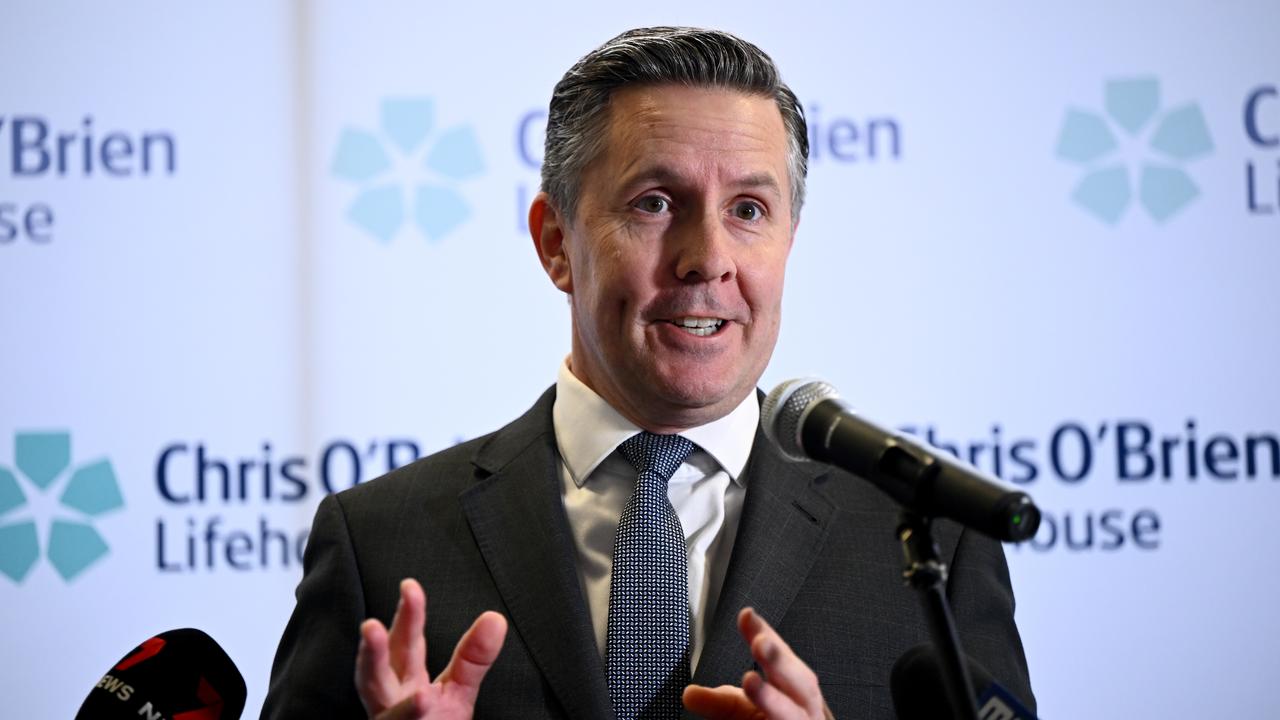
"It will help bring world-class international CAR-T clinical trials closer to home for Australian children and young people with cancer," Health Minister Mark Butler said in a statement.
The funding is part of its $300 million investment in the Australian Cancer Research Program announced earlier in 2026.
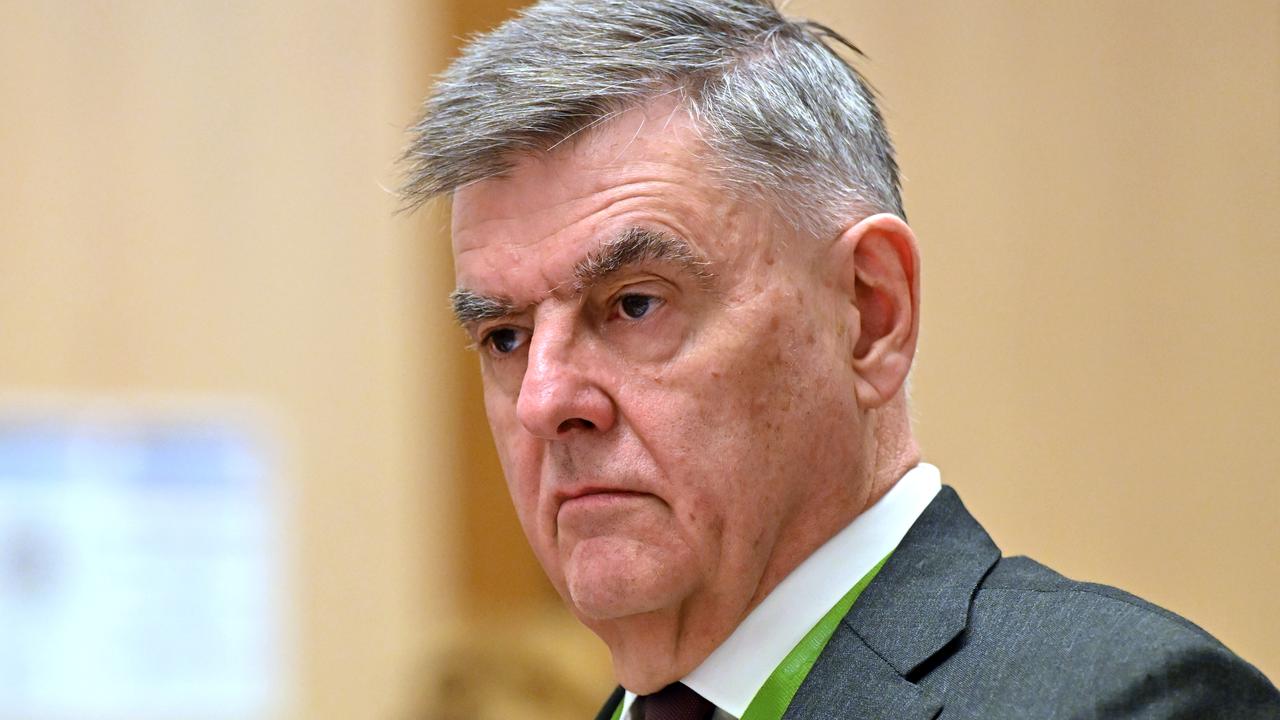
Professor Brendan Murphy, the chair of Children's Cancer CoLab that promotes a collaborative approach to funding research to fight the disease, welcomed the announcement.
The CoLab says 1000 Aussie kids are diagnosed with cancer every year, three children die from the disease every week, and 80% of those who survive have long-term effects from their treatment.
"It is very encouraging to see the Australian government investing in new treatment options for children and young people with cancer,'' Prof Murphy said.
Mileah's family is now sharing her story to boost the corporate sector's involvement in the fight against cancer.
2025 Dare to Cure events in Sydney and Melbourne raised $1.7 million, funding the equivalent of 16 senior researchers.
The CEO Dare to Cure event, run by the Children's Cancer Institute, challenges business leaders and senior executives to step outside of their comfort zones while raising money for childhood cancer research.
Chris Dutton, who is founder of CEO Magazine and an ambassador for CEO Dare to Cure, said the event gives business leaders a chance to make a difference.
''CEO Dare to Cure is the number one event that any CEO or leader should seriously consider doing,'' he says.
''It's a chance to come together to help children with cancer. There's nothing better really.''
For Ms Hennessy, the challenge offers more than an opportunity to raise vital funds.
Children facing cancer are pushed far outside their comfort zones every day, through scans, chemotherapy, surgeries and hospital stays.
She believes asking people who have been fortunate enough not to experience that reality to challenge themselves, even briefly, can help foster empathy as well as raise money.
''It makes an incredible difference because these kids are getting put out of their comfort zone every single day, 24-7,'' Ms Hennessy said.
''To have such an amazing campaign where you can have a laugh and raise money at the same time and also watch people being put out of their comfort zone in a safe and welcome environment, I think makes a huge difference.''