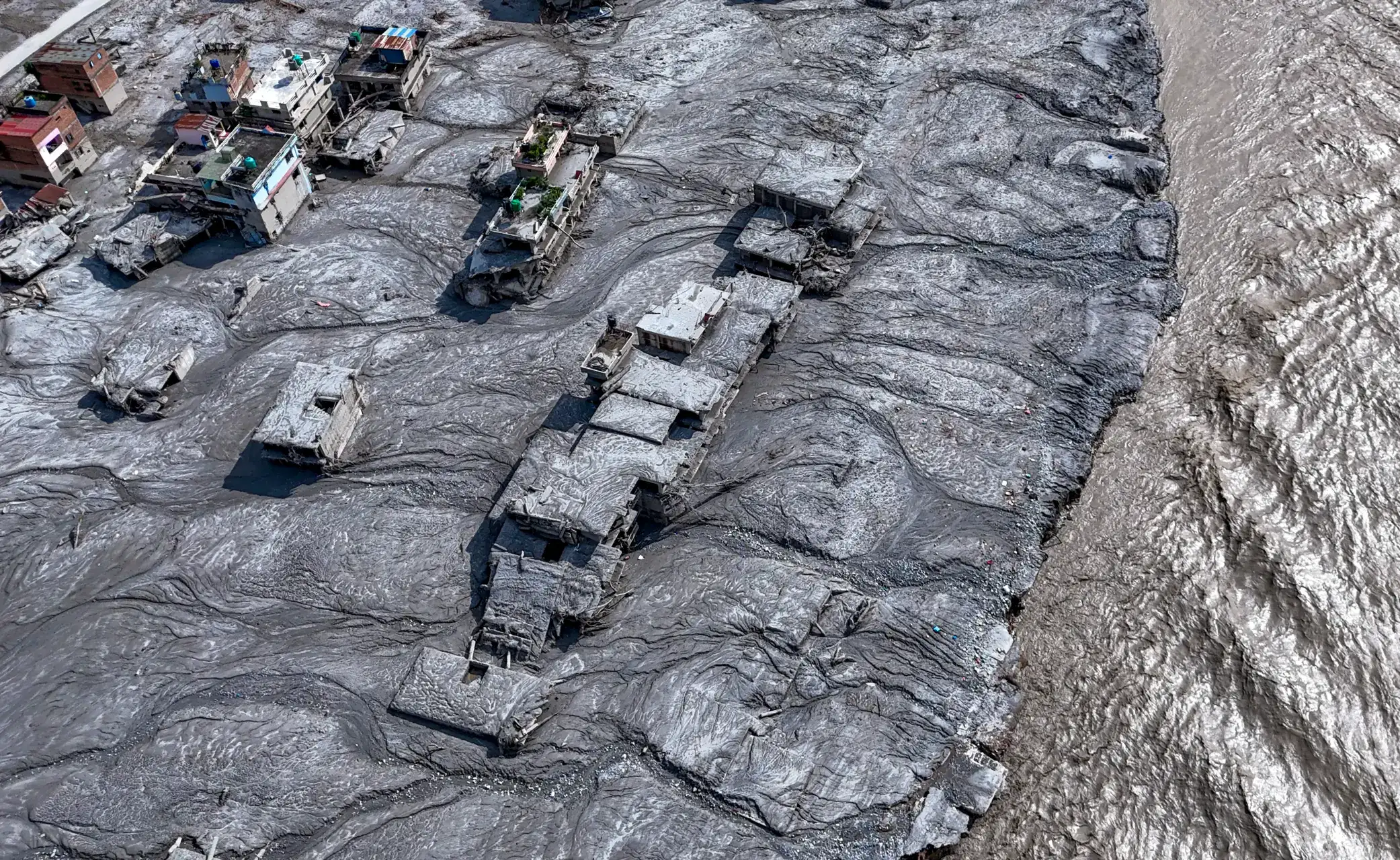
Dehradun: The increasing frequency of floods, landslides, glacial melting, and extreme rainfall events in the Hindu Kush-Himalaya region indicates that the Himalayas are facing the severe impacts of climate change, according to scientists.
However, they also cautioned that attributing every Himalayan disaster solely to climate change diverts attention from the actual problem.
A study conducted by YP Sundriyal, senior scientist, Department of Geology, Dr Nityanand Himalayan Research and Study Institute at Doon University; Dr SP Sati, Department of Basic and Social Sciences, Veer Chandra Singh Garhwali Uttarakhand University of Horticulture and Forestry, Bharsar; and retired ISRO scientist Naveen Juyal indicates that the frequency and intensity of extreme weather events during the summer monsoon are increasing in the Hindu Kush-Himalayas.
According to the research, even the north-western Himalayas-a region that is relatively dry and influenced by Western Disturbances-have witnessed an increase in devastating flood events since 2010.
According to the scientists, rapid melting of glaciers, an increasing number of unstable glacial lakes, and changing rainfall patterns have heightened the risk. They noted that rising temperatures are leading to increased rainfall instead of snowfall in high-altitude areas, which destabilises debris accumulated on slopes, thereby increasing the risk of landslides and debris flows.
The researchers highlighted the fragility of the Himalayas by citing several disasters: the 2013 Kedarnath disaster (Uttarakhand), the 2014 Gya Lake disaster (Ladakh), the 2021 Rishiganga flood (Uttarakhand), the 2023 South Lhonak Lake outburst (Sikkim) and the 2025 disasters in the Beas river (Himachal Pradesh), Dharali and Tharali (Uttarakhand), and Kishtwar (Jammu and Kashmir).
A significant finding of the research is that most devastating floods originated not from major rivers, but from small glaciers or rain-fed streams. These streams carry vast quantities of rocks, boulders and debris along with water, capable of wreaking havoc in narrow valleys.
to scientists, "A disaster occurs only when hazard and vulnerability intersect." They noted that due to rising population and commercial activities, people and infrastructure are increasingly encroaching upon unstable slopes and river floodplains.
The researchers also referred to Uttarakhand's Flood Plain Zoning Act of 2012, which prohibits construction within a 100-meter radius of a river's centerline. They said that the law is not being effectively implemented on the ground.
They said that while climate change is a reality with potentially severe impacts on the Himalayas, simply blaming climate change after every disaster is not sufficient, and it is important to identify high-risk zones, effectively regulate construction and strictly enforce existing laws.