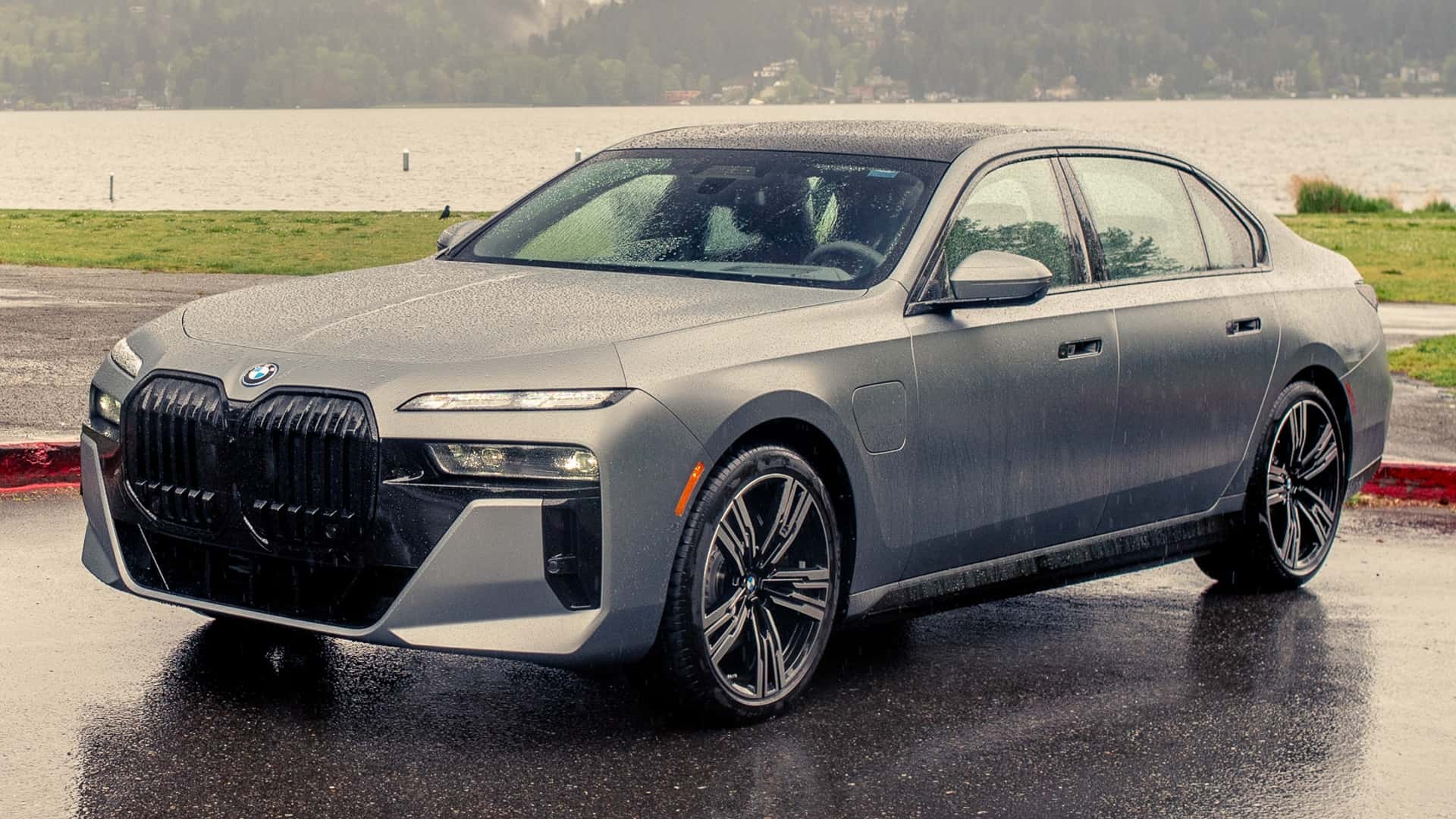
BMW is recalling 27,720 sedans in the United States because a worn driveshaft connection can cut rear-wheel power and, in rare cases, let a parked car roll if the parking brake is off. The defect sits at the joint where the driveshaft bolts to the rear differential.
The campaign, filed with the National Highway Traffic Safety Administration as 26V525000, covers select 5 Series, 7 Series, and 8 Series models. Owners should confirm if their vehicle identification number is included, use the parking brake every time they park, and plan for a free dealer fix.
Affected Models, Years, And Risk
The recall covers specific model years of the gasoline 5 Series, plug-in-hybrid 7 Series, and 8 Series coupe and Gran Coupe. Included are 2021 through 2023 BMW 540i, 540i xDrive, and M550i xDrive, 2022 through 2026 BMW 840i and 840i xDrive, and 2024 through 2026 BMW 750e xDrive. All use a driveshaft-to-differential joint that can wear faster than expected.
Once that joint wears, the driveshaft may stop reliably sending power to the rear wheels. Documents from BMW and regulators outline two main problems: a sudden loss of rear-wheel propulsion while driving and a small chance of rollaway if the joint fails when the transmission is in park and the parking brake is not set. BMW reports no crashes or injuries tied to the defect so far.
BMW’s explanation to safety officials mirrors other recent rollaway recalls, including a Mercedes-Benz door lock rollaway risk recall that showed how skipping the parking brake can let a car move on an incline.
How The Defect Behaves
According to recall filings and summaries from Cars.com’s, damage begins at the point where the driveshaft bolts to the rear differential and sends torque to the rear axle. As the connection wears, a driver may feel shuddering under load, hear clunks from the rear, or notice intermittent loss of drive before the joint fails completely.
If the joint lets go while the car is moving, the rear wheels can stop driving even though the engine is running and the transmission is in gear. If the joint fails while the car is in park and the parking brake is not engaged, the transmission’s parking pawl may no longer hold the wheels through that broken connection, so the car can roll on a slope.
BMW’s remedy, reported to NHTSA, is for dealers to inspect the driveshaft-to-differential connection and either apply an adhesive to reinforce the joint or replace the driveshaft and rear differential assembly at no cost. Dealer notifications began August 12, and owner letters are scheduled to mail by October 2. Until a repair is done, run your VIN through NHTSA’s recall lookup or BMW’s portal, and use the parking brake every time, especially with a heavy sedan parked on any grade.
Motor1's Take: A single driveline joint can turn into a real safety problem, from loss of drive to an unexpected rollaway. If your car is covered, treat the repair as urgent, expect some wait time for parts and appointments, and keep relying on the parking brake.