An independent MLA who said he would not pay back a $5000 donation that would be banned under his proposed law to block gambling industry money from ACT politics has changed his mind.
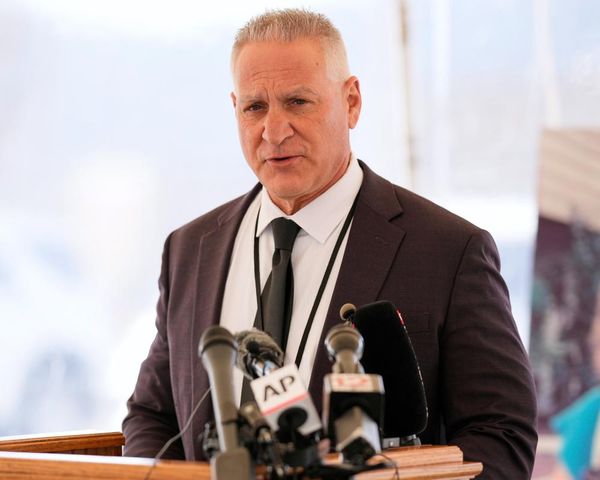
Thomas Emerson has faced off with members of the Legislative Assembly committee examining his proposed law which would include a ban on clubs with poker machines providing free meeting rooms to political parties.
Mr Emerson on Thursday argued his push to change the law showed he had not been influenced by the cash but on Friday said he had repaid the donation.

The manager of a club with poker machines donated $5000 to Independents for Canberra, the political party Mr Emerson helped establish, before the 2024 election. Mr Emerson's bill would make that donation illegal.
"Now, I'd be confident, I've not asked him, that he probably isn't happy about this bill, which is evidence that his donation didn't influence my policy positions," Mr Emerson said on Thursday.
On Friday, he said it was a combative hearing and, on reflection, he could see the point that was being made.
"The donor has said he's passing the $5k onto the Gambling Support Service," Mr Emerson wrote in a comment on the Canberra Times story.
The Liberals' Elizabeth Lee, who is chairing the committee, asked if Mr Emerson thought he was the only member of the Assembly able to receive a gambling-linked donation without being unduly influenced.
"I can't be certain that people have been influenced, but what I do know is that gaming revenue has increased year on year. Gambling harm has increased year on year in our community," Mr Emerson said on Thursday.
"The ACT government has consulted on reducing bet limits on poker machines, introducing load up limits in 2023. Neither of those things have been done. The ACT government has consulted on restricting gambling advertising in the ACT and received incredibly strong support for that measure."
The independent for Kurrajong said Canberrans believed the reason the Assembly had not worked to better reduce gambling harm was because of the "close relationship between political parties and gambling entities in this town".
Ms Lee asked whether someone involved in a community group who was granted the use of free club meeting rooms but then, shortly before an election, was endorsed and ran would be captured by the bill.
"They would. I think they would be required to return it if they were then later endorsed," Mr Emerson said.
Ms Lee then asked whether Mr Emerson would return the donation his party received "as a matter of principle".
"I mean, you sit here and go, Oh, look at me, I'm not influenced. I'm the only one who's not influenced by any of this," she said.
Mr Emerson said that was Ms Lee's characterisation and his proposed law was not yet in effect. "I'm not going to return the money. It was given to the party that I ran under. It wasn't given to me directly," he said.
Asked about the justification for the donation ban, Mr Emerson said ClubsACT's effort to influence the outcome of the 2016 ACT election to stop a Labor government from allowing the casino to hold poker machine licences showed how the industry moved when they saw a threat to their survival.
"By the way, the casino never got any pokies licenses. So you don't think gaming machine venues see a gaming reform minister with a PhD on gambling harm research as a threat to their survival? Will all of the clubs just roll over and let her implement sweeping reforms that risk destroying many of their members' business models?" he said.
ACT Labor had told the inquiry gambling industry donations had no undue influence on the party's policies, with its secretary, Caitlin Cook, pointing to commitments to cut poker machine numbers, a cashless gaming trial and the government's support for an independent clubs sector inquiry as evidence.
Labor also said free meeting room use at clubs, which already must be declared under electoral funding rules, was vital for democratic participation. The party said free facilities use should be carved out of the ban.
Mr Emerson said the free facilities were provided by clubs to cover off their community contribution obligations.
"You've got the people responsible for regulating the industry saying, 'Look, we understand this is a harmful industry, but that's why you have to make community contributions as a kind of offset for the harm that you're causing. And one of the ways you can do that is to provide your meeting rooms to us for free. And we're all OK with that'," he said.
"You know, the solution to that problem is just to pay for the meeting rooms."
In the past financial year, ACT Labor reported $36,181 in free facilities use at five community clubs. The Canberra Liberals reported $3500 in free facilities use at two clubs.
Mr Emerson also accused Labor's Taimus Werner-Gibbings of potentially being in contempt of the Assembly for mischaracterising the provisions in the bill.
"If my interpretation is wrong down the track or even now then I unhesitatingly apologise and withdraw," Mr Werner-Gibbings said later in the hearing.