Saransh, 19, from Meerut, had been studying twelve to thirteen hours a day since mid-April, surviving on sleepless nights and BITSAT mock tests, chasing a seat at BITS Pilani. He needed 75 percent in PCM (Physics, Chemistry, and Mathematics) but fell short by a few marks. When his answer sheets finally arrived, four different teachers independently checked his Chemistry paper and found discrepancies of 8 to 12 marks each.
His birthday was on May 13, the day the results came out. Feeling disappointed with his marks, he didn’t leave his room that day. His parents tried their best to cheer him up, but to no avail. The college they’d all hoped for was now closed to him, not because he had failed, but because the board had given him marks lower than he deserved.
Pandemonium on May 13
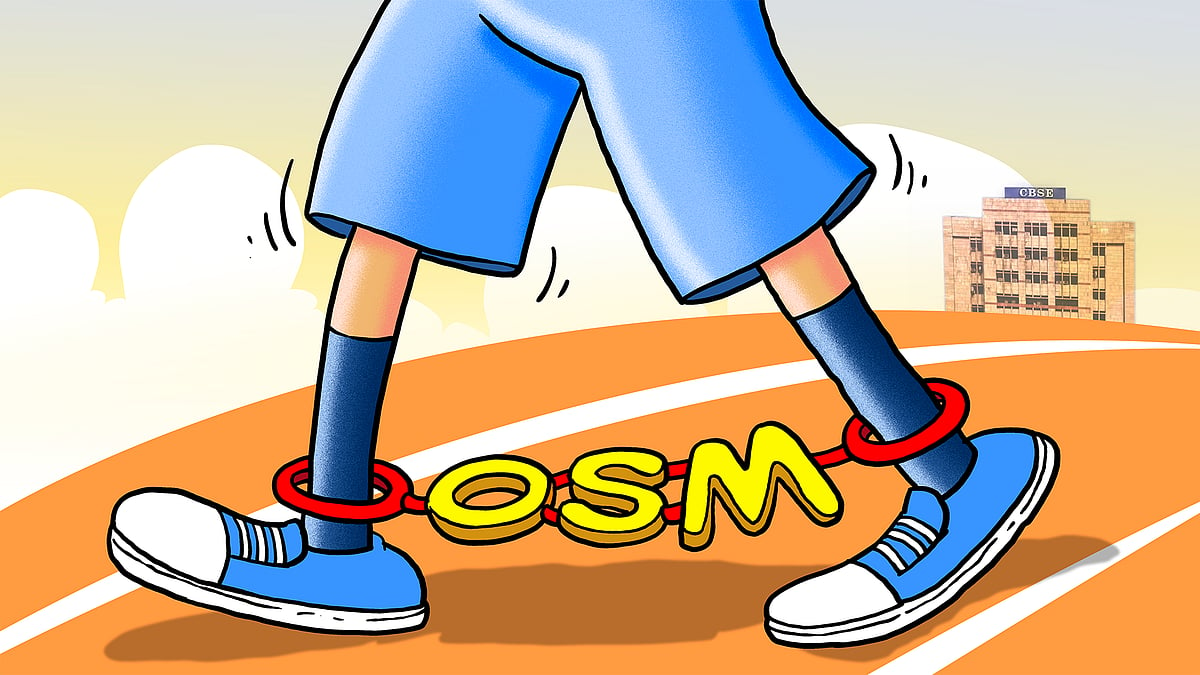
This year, for the first time, CBSE evaluated Class 12 answer sheets through its new On-Screen Marking system (OSM), a reform the board had promised would eliminate errors and make post-result verification of marks “no longer necessary.”
But when the results came out on May 13, it was pandemonium. Pages were missing from answer sheets, scans were blurred, wrong sheets were delivered to wrong students, and step marking was absent across thousands of papers. On June 2, the CBSE chairman and secretary were transferred, and an inquiry into the procurement of the OSM system was ordered. The re-evaluation portal opened the same day, a day later than the education ministry’s own deadline, and with an Aadhaar authentication requirement nobody had been warned about, which the board had introduced for “security reasons”.
Legal experts told The Hindu that the Supreme Court has held mandatory Aadhaar authentication unconstitutional. The board’s workaround for students without Aadhaar is to use a parent’s or guardian’s card. By the afternoon of June 2, over 16,000 students had filed applications.
Calls to Dr Vineet Joshi, Secretary of the Department of Higher Education under the Ministry of Education, went unanswered. Questions sent to him via email about whether the ministry is assisting students facing delays in reevaluation and missing college admission deadlines had not received a response at the time of publication.
The CBSE, whose error sits at the centre of all of this, is charging students Rs 100 per answer book for verification and Rs 25 per question for re-evaluation, with no option to refuse and no other mechanism available. Even then, the process has a logic that students find impossible to follow. They must first apply for scanned sheets, then for totalling verification, and only then can they challenge individual questions.
“Jis bache ko pata hai ki uske totalling mein error hua hi nahi, voh totalling ke liye kyun apply kare?” asks Aditi, a student from Delhi, speaking to Newslaundry. [If a student knows there was no totalling error, why would they apply for it?]
No plan, just a post
When emails to CBSE produced boilerplate replies, helplines went unanswered, and school teachers wrote letters that led back to the same re-evaluation portal that kept crashing, the students decided to do what they could. They built their own noise, and they knew exactly how to do it.
Harshita, 17, from Faridabad, scored in the 98th percentile in JEE Main and qualified for JEE Advanced. CBSE’s results arrived four days before her Advanced exam and gave her 7 marks in a subject she’d scored 55 in internally. She tried the official route first. Her teacher emailed CBSE. The school wrote letters, and she called anyone she could. But the response she got was always the same: to apply for re-evaluation, even though the portal kept crashing.
“Main itne din se patience rakh rahi thi,” she tells Newslaundry. “Kuch ho hi nahi raha.” [I have been patient for so many days. Nothing is happening.] Frustrated, she posted on X (formerly Twitter) that night, without telling her parents and without a plan. “Maine bas kar diya tha.” [I just did it.]
By 2 am, her post had around 200 views. By morning, it had gone viral. With the support came the trolling. ‘Nationalist’ accounts came flooding into her comments, calling her Pakistani for speaking up. She replied to each one.
Aditi made a two-to-three minute video laying out the whole situation. She had gotten an RT in Physics – Repeat in Theory, where a student clears their practical but scores less in theory – despite what she insists was a well-written paper. Step marking was nowhere to be found on her answer sheet. Her English marks had been docked for reasons she still can't account for.
Her post went viral.
“Mere saath nahi ho raha, sabke saath hi same scene hai,” she realised. [It was not just happening to me; it was happening to everyone.]
Saransh used the Instagram followers he had built from his video-editing work. He posted his marksheets openly, tagging CBSE each time. His friends, whose own sheets still hadn’t arrived, took screenshots of his Chemistry paper and shared it widely.
In WhatsApp groups and Discord servers running parallel to all of this, students were advising each other on what to include, which officials to tag, and how to phrase it. “Sab ne bola tha, yeh bhi mention karna, vo bhi mention karna,” he tells Newslaundry. [Everyone said to mention this, mention that.] There was no formal organisation, but the community was there.
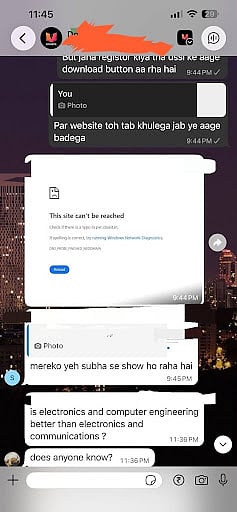
Most students, though, didn’t post at all. “Sab maximum bache dar hi rahe hain,” Saransh says, flatly. [Most students are just scared.] They’d reshare in the group chat, send a supportive DM, repost quietly, but their names stayed off the public record. Before she reconsidered, Harshita had asked to stay anonymous. “Ab voh aa ke kuch legal action toh nahi le sakte mujhpe,” she says. [Now, they can’t take legal action against me.] That she had to think about it says everything about the atmosphere these teenagers were navigating.
The ticking emergency
The costs have been personal too. The day Aditi’s results came out, a college she’d applied to had also rejected her. Her Class 12 marks, as returned by the board, hadn’t met the cutoff. She had expected to score above 95 in English; she’d scored 91 in Class 10 and had no reason to believe otherwise. She got 87 and an RT in Physics.
“I was in severe depression,” she says. “I was getting panic attacks and everything.” She lives in a joint family and asked her parents to tell her grandparents that her marks were fine.
Saransh sat for four competitive entrance exams in the ten days following May 13, travelling to Ghaziabad each time because centres weren’t allotted to Meerut. He tracked the re-evaluation portal every morning between study sessions. “May 13 ke baad toh main paanch din pada bhi nahi.” [After May 13, I didn’t study for five days.] He’d already lost a year to Covid, which is why he’s 19 when most of his peers are 18. This was supposed to be the year he caught up.
College applications are the ticking emergency underneath all of this. Harshita’s counselling sessions have already begun, but the form she has to fill asks for her marks, and she doesn’t know which ones to enter. Saransh is looking at a gap year he never planned for. Aditi is watching college application deadlines go by.
“We have grown with it,” Harshita says when asked what made turning to social media feel so instinctive. “And it evolved in front of us.” Aditi puts it more directly. “Social media helps us. Strangers who resonate with you help you regardless,” she says.
When asked about how mainstream media has covered all this, Harshita doesn’t pause. She names a prime-time anchor who, the previous evening, had gone on national television to argue against the YouTube teachers publicly backing the students, rather than speaking for the students themselves. “Mujhe pata hai, national news ko bhi expect nahi kar sakti ki yeh sab voh cover karein.” [I know we can’t expect national mainstream media to cover such issues.]
Newslaundry is a reader-supported, ad-free, independent news outlet based out of New Delhi. Support their journalism, here.