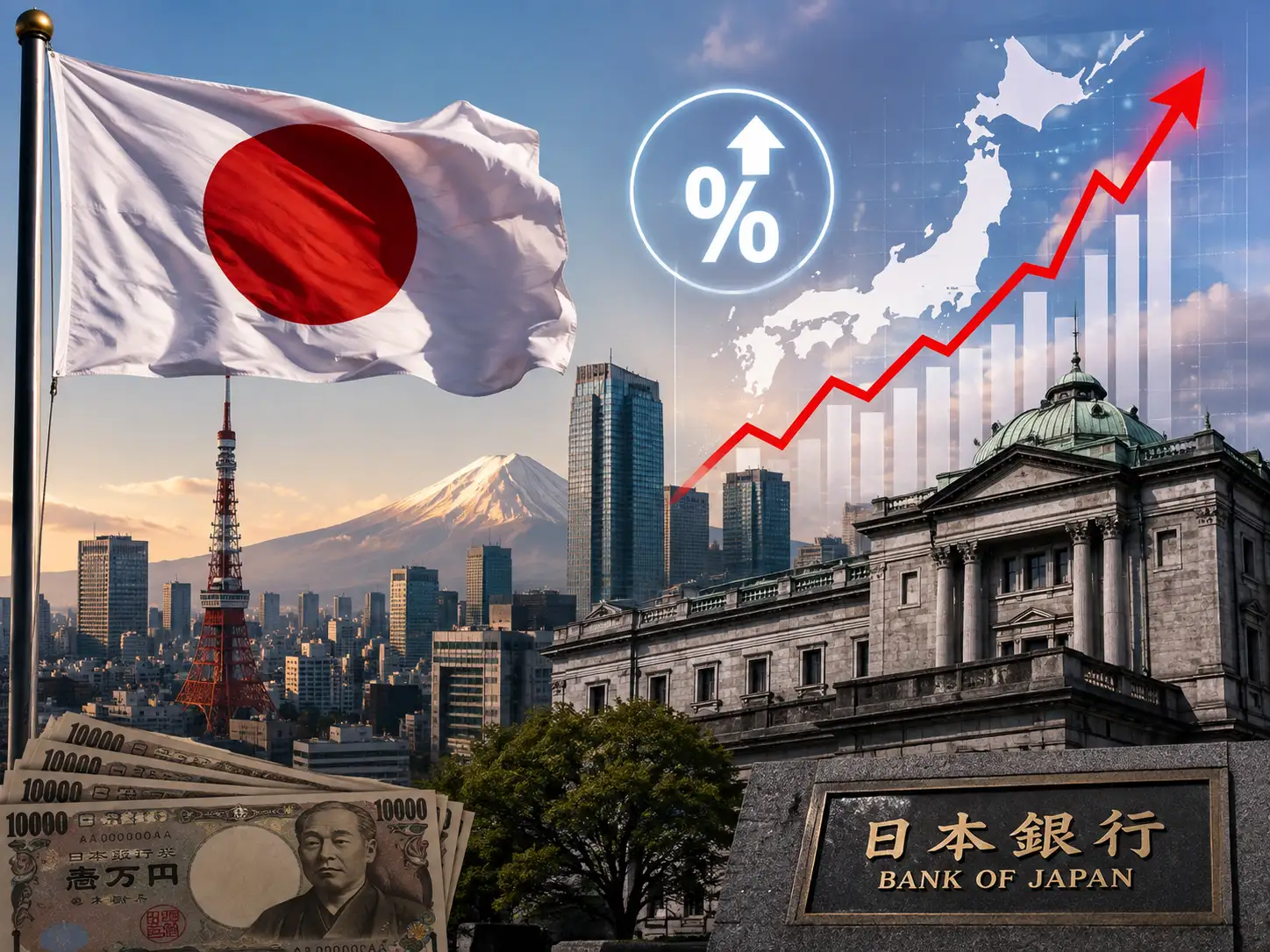
Japan’s core consumer inflation accelerated in July, reinforcing expectations that the Bank of Japan could raise interest rates at its September policy meeting as companies increasingly pass higher import and input costs on to consumers.
According to Reuters, the core consumer price index, which excludes volatile fresh food prices but includes energy costs, rose 1.8% in July from a year earlier, up from a 1.6% increase in June. The reading matched the median market forecast.
Inflation, however, remained below the Bank of Japan’s 2% target for a seventh consecutive month, largely because of government subsidies designed to reduce fuel costs.
The data will be closely watched by the BOJ ahead of its September 17-18 policy meeting. Reuters reported that the central bank is widely expected to raise its policy rate to 1.25% from the current 1%, following its previous increase to 1% in June.
Read more: Global Market: Treasury bond buybacks complicate Fed’s path to price stability
Underlying price pressures also showed signs of strengthening. An index excluding both fresh food and fuel prices, which the BOJ closely monitors as a gauge of underlying inflation, increased 1.9% year-on-year in July, accelerating from a 1.7% rise in June.
Service-sector inflation also picked up, with prices rising 1.2% in July compared with 1.1% in June. The increase suggests that companies are gradually passing higher labour costs on to consumers amid a tight Japanese job market.
Goods prices, meanwhile, continued to rise much faster, increasing 2.7% from a year earlier. A sharp acceleration in wholesale inflation has added to concerns that higher raw-material and import costs will feed through into consumer prices in the coming months.
Reuters reported that Japan’s wholesale inflation climbed 7.2% in July from a year earlier, highlighting growing cost pressures linked to higher commodity prices and geopolitical tensions in the Middle East.
The weaker yen is another source of concern for policymakers, as it raises the cost of imported goods and raw materials. Renewed tensions in the Middle East could further increase crude oil prices, potentially adding to inflationary pressure in Japan.
The BOJ kept policy unchanged at its July meeting but issued stronger warnings about rising inflation risks after raising its key interest rate to 1% in June, the highest level in more than three decades.
Reuters has reported, citing sources familiar with the central bank’s thinking, that policymakers could move as soon as September and may consider a faster pace of rate increases thereafter compared with the current pattern of roughly two hikes a year.
With companies becoming more willing to pass higher costs on to consumers, inflation could strengthen further later this year. The combination of a weak yen, higher commodity prices, rising wages and firmer service inflation is likely to keep pressure on the BOJ to continue normalising monetary policy.
The latest inflation figures therefore strengthen the case for another rate increase in September, although policymakers will also assess economic growth, financial-market conditions and developments in global commodity prices before making their decision.