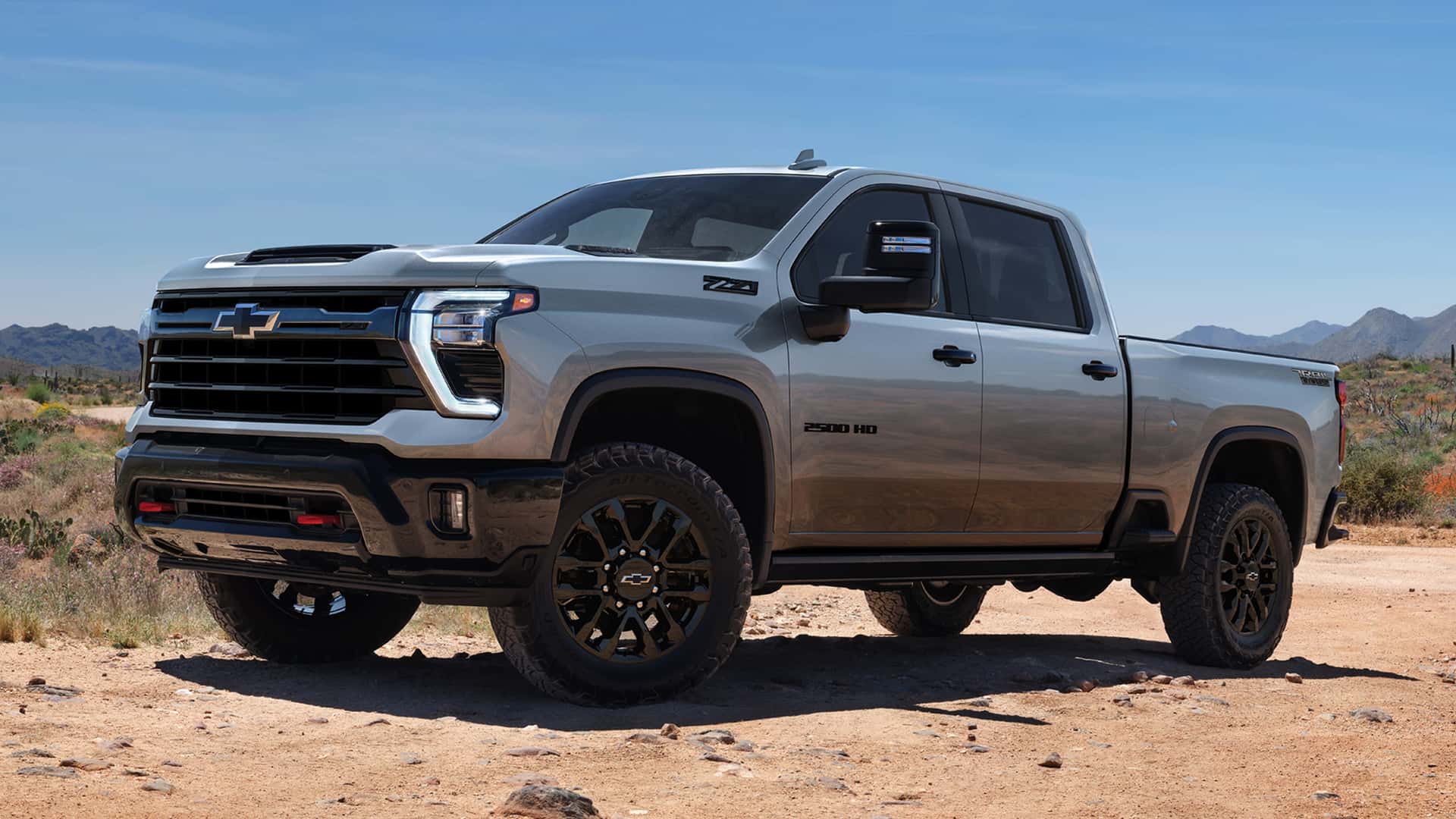
- General Motors will reportedly update the powertrains in its heavy-duty pickups for the 2027 model year.
- The new powertrains, including a Duramax diesel engine, will arrive before the automaker launches the next-generation Chevrolet Silverado HD and GMC Sierra HD.
- GM's next-generation heavy-duty trucks are not expected until 2029.
General Motors updated its two full-size pickup trucks earlier this year. The Chevrolet Silverado 1500 and GMC Sierra 1500 received major makeovers, including updated powertrains. We expect many of the styling changes to carry over to their heavy-duty counterparts, but before that happens, the automaker might launch new engines in the current-generation trucks.
According to a new GM Authority report, citing "sources familiar with the matter," GM plans to update the two available powertrains for the 2027 model year. We do not expect the next-generation Silverado HD and Sierra HD to enter production until the end of 2028 for the 2029 model year.
GM will allegedly replace the naturally aspirated 6.6-liter V8 L8T with the L8S, which will have the same displacement as the current engine. The L8T makes 401 horsepower and 464 pound-feet of torque, and the L8S could make more.
The other engine GM will offer in its heavy-duty trucks is a new Duramax diesel, the L6P, which will replace the L5P. The current diesel engine produces 470 hp and 975 lb-ft of torque and has a 6.6-liter displacement, but it’s unclear whether that will change for the new powertrain.
GM’s Engine Push
In the last few years, as demand for electric vehicles has fallen in the United States, General Motors has heavily invested in producing new combustion engines. In March, the Detroit automaker announced a $920 million investment to support Duramax diesel engine production in Ohio.
In the last few years, GM has invested billions into engine and transmission production. So far this year, the company has launched several new V8 engines that power the Corvette, Silverado 1500, and GMC Sierra 1500.
Motor1’s Take: GM might be putting the cart before the horse, but it has made substantial investments in producing new engines, and it makes little sense to delay their launch to coincide with a new body style. The automaker should capitalize on its new powertrains, making the current truck better.