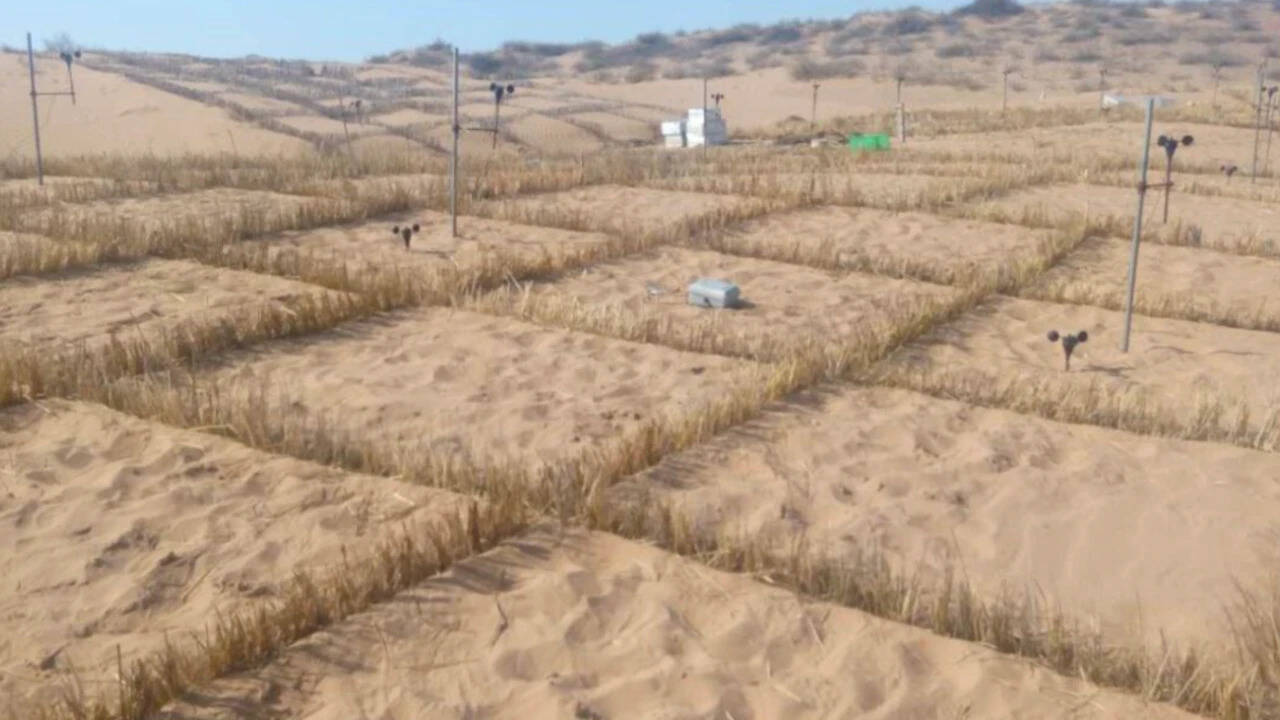
On the eastern side of the Tengger Desert, the movement of sand hills was always a problem for surrounding villages and infrastructure. In the middle of the twentieth century, the wind blew through northwestern China, moving large amounts of sand and exposing the surrounding agricultural areas to dust storms. It became imperative to stabilise the sand hills once the Baotou-Lanzhou railway was constructed over the southeastern part of the Tengger Desert. Engineers realised that conventional planting techniques would not work on the shifting sand, as young plants would be uprooted by harsh gales or covered up by moving sand hills within a few days.
Get breaking news anytime, anywhere. Download the TOI app now!
To prevent the newly laid railway tracks from being permanently buried, scientists and local labourers turned to a simple material: wheat straw remnants. Instead of planting trees directly, workers used wooden shovels to press straw into the sand in a square grid. The technique altered wind flow across the desert surface.
Decades after the straw checkerboard technique was introduced at Shapotou, researchers began studying the physical processes behind its effectiveness. A study published in the Journal of Arid Environments by G.Y. Qiu and colleagues examined how the straw checkerboard system affected wind flow, sand movement, and vegetation establishment.
Qiu and his colleagues found that 1 m × 1 m straw checkerboards reduced wind-driven sand movement and helped stabilise dunes, with sand transport decreasing by up to 99.5% under the conditions examined. By stabilising the upper sand layer, the artificial barriers created conditions that supported vegetation establishment, including natural seed germination and later restoration efforts involving planted drought-tolerant species
How did the grid of straw turn into a living ecosystem?
As the buried straw gradually decomposed, it added organic matter to the sand and improved its ability to retain moisture, creating conditions that supported biological soil crusts made up of mosses, lichens, and microorganisms. Once the sand surface stabilised, restoration efforts included planting drought-tolerant shrubs and native grasses within the protected squares.
With the wind velocity suppressed and the sand motion halted, survival rates for planted vegetation increased sharply. The stabilised soil conditions enabled drought-tolerant shrubs, native grasses, and other vegetation to establish roots across previously shifting dunes. What began as an emergency measure to protect a railway line later evolved into a broader effort to control shifting sand and restore degraded desert landscapes.
According to the researchers, the Shapotou case is seen as a good example of how arid lands can be managed and restored ecologically. The study indicates that, sometimes, cheap and simple methods may work in tackling the problem of environmental destruction. By combining the natural wind flow and using byproducts from agriculture, like straw, scientists have come up with a relatively cheap way that can be used in other arid regions.
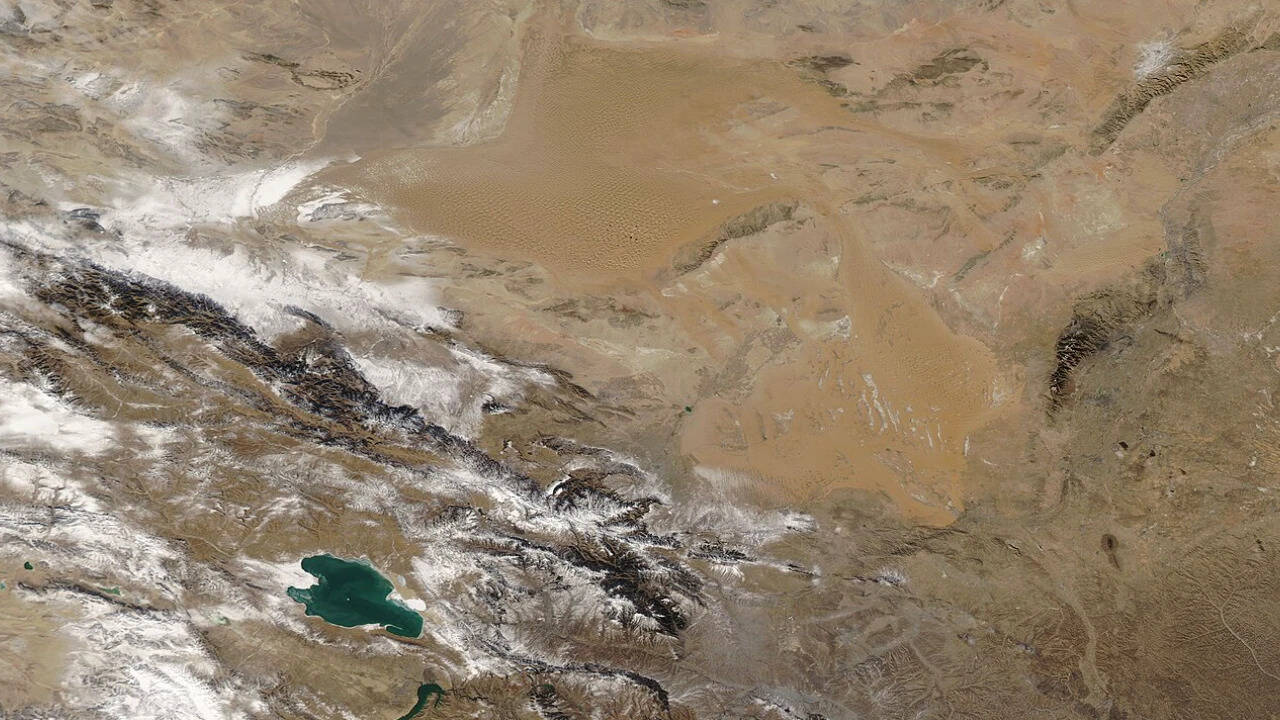
A long-lasting effect on desert restoration globally
Research by Qiu and his colleagues found that straw checkerboards could support dune stabilisation and vegetation establishment over time, providing evidence of the technique's ecological effects. The results found by Qiu and his colleagues indicate that the straw checkerboard approach can be used to stabilise the shifting sand dunes and facilitate the establishment of vegetation in favourable conditions.
The straw checkerboard approach has been modified for use in controlling desertification in other dry areas outside of China, such as North Africa and the Middle East. The Shapotou project highlights how simple engineering and restoration of vegetation can contribute to shifting sand stabilisation.