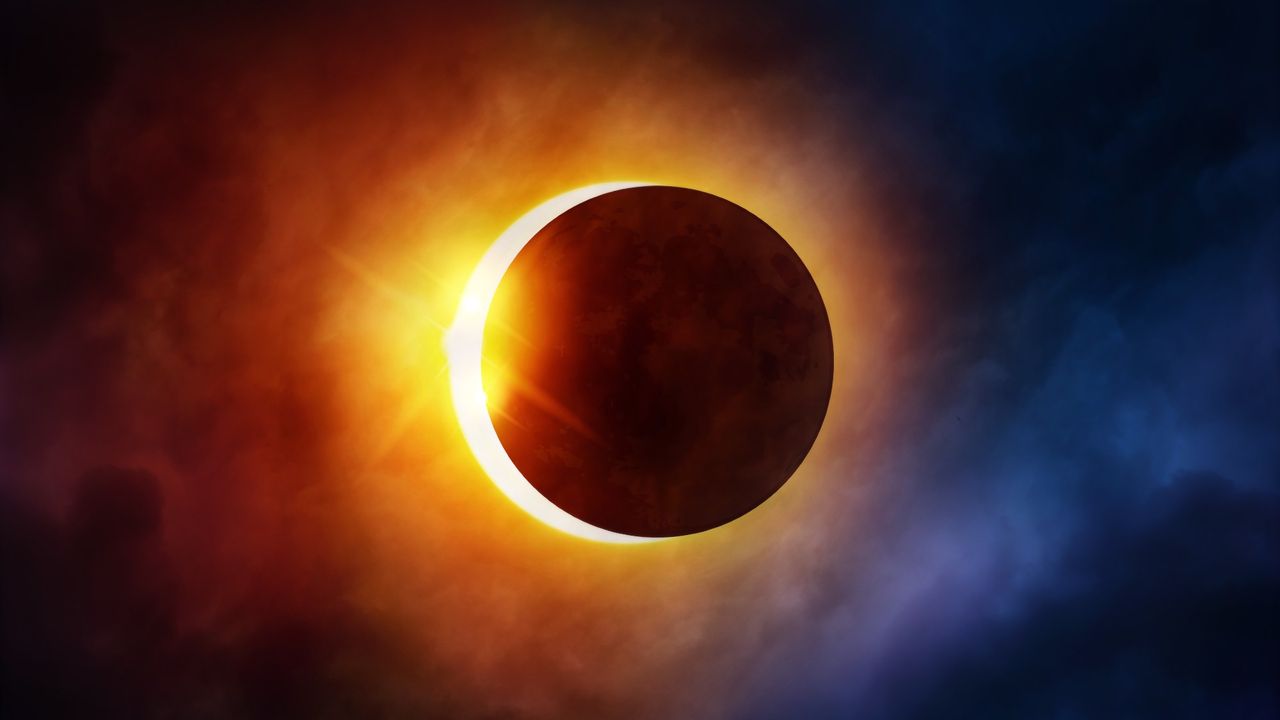
For many people, today's solar eclipse is a once-in-a-lifetime event. The next comparable eclipse visible from the UK won't happen until 2081. Hundreds of millions across Europe will witness a partial or total eclipse as the moon passes in front of the sun. If you're in Spain or Iceland, you'll experience totality for one to three minutes.
Parts of North America will see a partial solar eclipse. It will be visible in the Northern US and Alaska and even New York City (though only at 9%).
Everyone will reach for their phones to photograph it. Then you hear the warnings: pointing your camera at the sun will permanently damage your sensor. Destroy your phone. Create dead pixels that can never be fixed. Is that actually true? The answer is yes, but it's entirely preventable if you know what you're doing.
Here's how to photograph the eclipse safely and keep your phone functional.
Yes, your phone's sensor can actually be damaged
Direct sunlight focusing through your phone's lens can burn the photodiodes inside your camera sensor. This creates permanent dead pixels that no software update can fix. The sun concentrates heat through the lens, and that concentrated energy damages the sensor's light-sensitive components.
Even a few seconds of direct exposure risks this. The damage might not be immediately obvious, but it accumulates with each moment you point your phone at the sun.
This isn't just phones. Digital cameras, binoculars, telescopes — anything with a lens can suffer the same fate. NASA specifically warns against it.
Use solar eclipse glasses to photograph safely
The simplest and most practical solution is holding your eclipse glasses directly in front of your phone's camera lens while you photograph. Eclipse glasses block 99.99% of the sun's light, filtering out the dangerous rays while letting your phone capture the eclipse safely. Position the glasses over the lens, take your photo, then remove them.
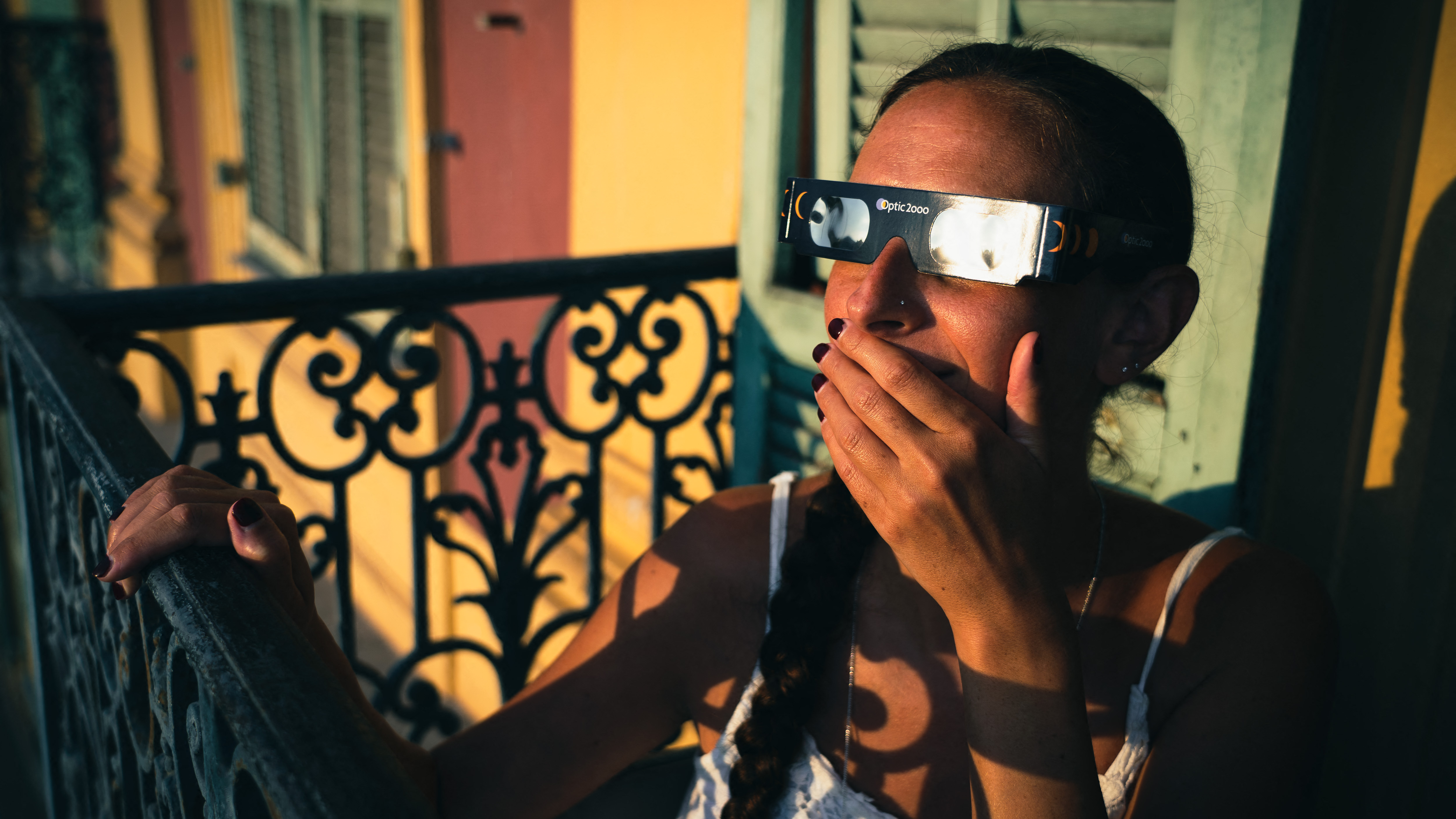
This won't give you professional results. You can't frame your shot precisely and the image quality will be imperfect. But it's safe, requires nothing but the glasses you're already wearing, and actually works. The key here is making sure your eclipse glasses are legitimate: marked with ISO 12312-2 certification.
If you don't have eclipse glasses, you can create a pinhole projector instead. Use a colander or something similar to create an indirect view — don't look at the sun through the device, but project the light onto a card or piece of paper. This lets you see the eclipse safely without ever pointing anything directly at the sun.
When is it safe to photograph directly?
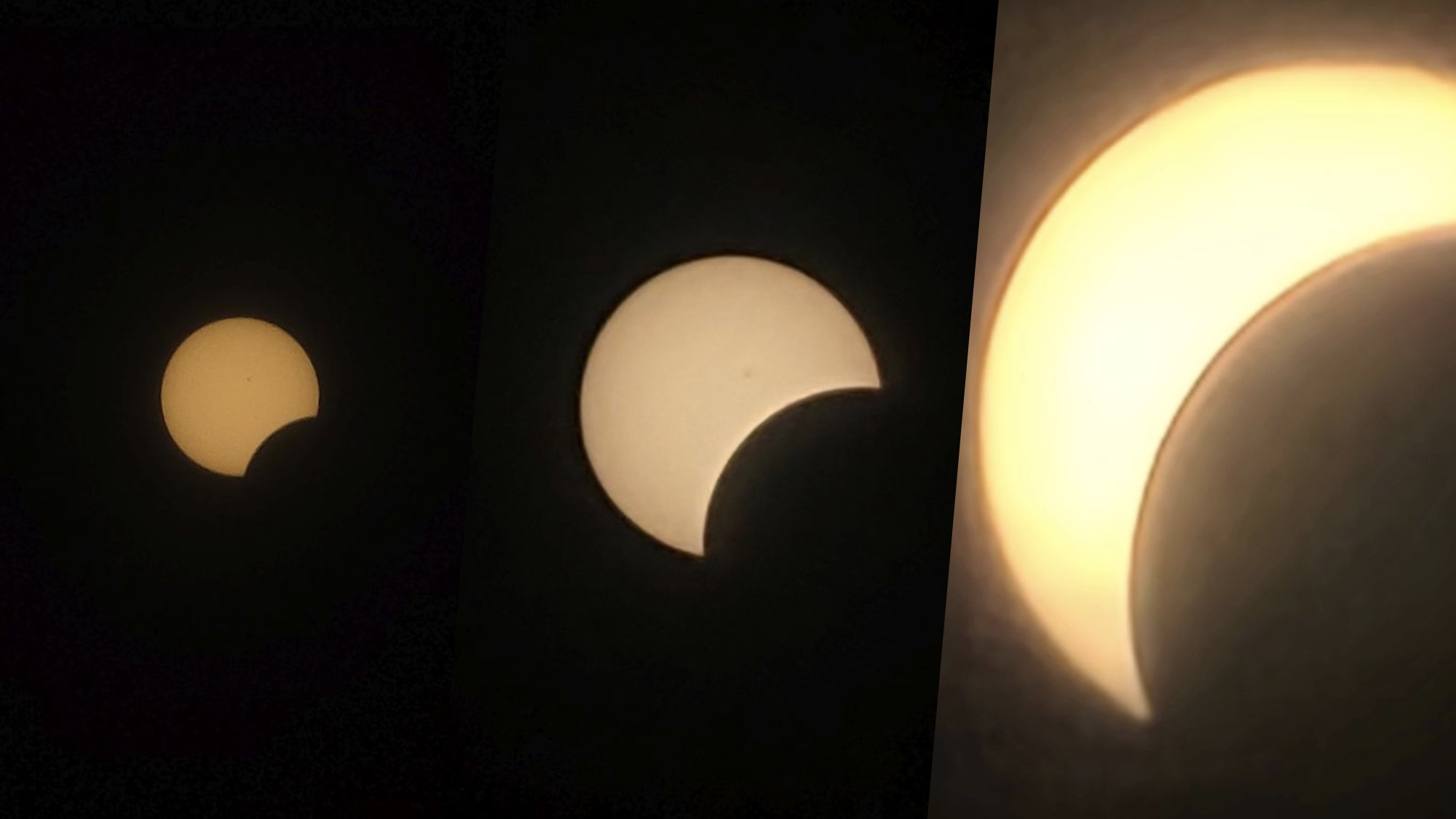
There's one moment when direct sun photography becomes safe: totality. During the brief window when the moon completely blocks the sun, you can photograph the corona without any protection.
This is the only time it's safe. Before totality ends and the sun's edge reappears, put your protection back on immediately.
If you're not in the path of totality (experiencing a partial eclipse anywhere in Europe outside Spain, Iceland, and small parts of Portugal and Greenland), you cannot safely photograph withouteclipse glasses protection or solar filters at any point.
Never look through your camera viewfinder
This is critical: don't look at the eclipse through your camera's viewfinder, optical sight, or lens, even while wearing eclipse glasses. The concentrated solar rays can burn through the filter and cause permanent eye damage. Your eyes will be damaged long before your camera sensor.
Always aim your camera without looking through the viewfinder during partial eclipse phases. Point, shoot, and trust that you've captured something.