I used to find that even with weekly washes, my dazzling white bed sheets quickly faded to gray. Months of detergent build-up to remove yellow bedding stains left a film on my bedding, a problem worsened in hard water areas, as mineral deposits add another layer of dullness.
My first instinct was bleach and a hot wash. However, while chlorine bleach can strip away soap residue, chlorine reacts with mineral build-up to lock in hard-water film. Despite the heavy washing, my gray sheets were even duller.
But I've found a fix. This simple two-step pre-wash soak starts with oxygen bleach and dish soap to lift leftover detergent, and finishes white vinegar to cut through gray film. My sheets are back to their sparkling white best — here's how.
- Read more: The best bed sheets for every budget
The 2-step pre-wash laundry soak
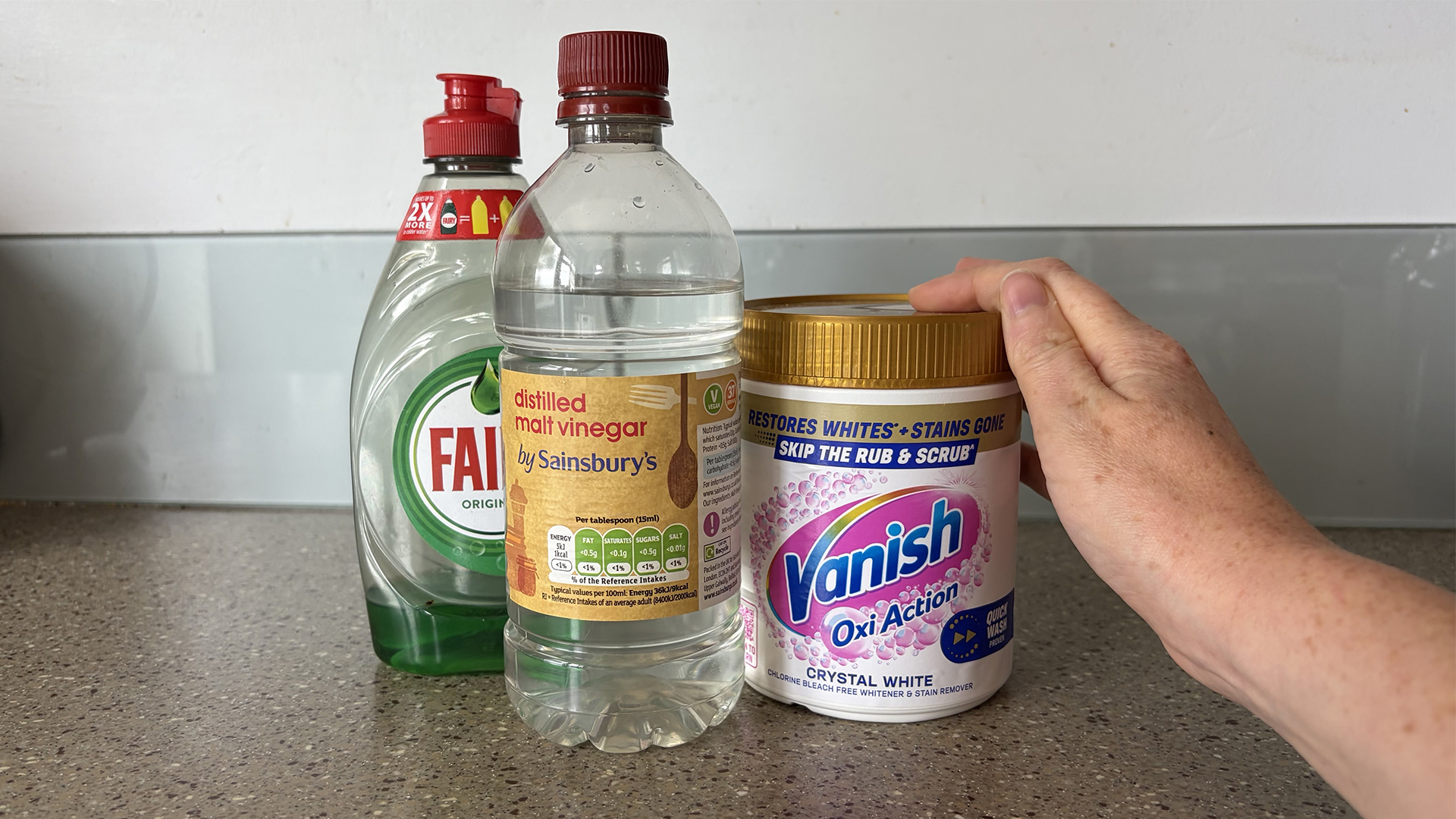
These ingredients are safe to use on most fabrics. However, oxygen bleach should be kept away from silk, wool and leather (plus anything with wooden buttons), while vinegar shouldn't be used on delicate materials such as silk and rayon.
Our first hero ingredient is oxygen bleach. This mild bleach contains either sodium percarbonate, hydrogen peroxide or sodium perborate, which form bubbles when mixed with water. These oxygen bubbles help gently lift away stains and gray film, without damaging the fabrics.
Adding a squirt of dish soap helps boost the stain removal. Dish soap is good at breaking down oils and grease (hence why you use it on your dirty dishes.) In this pre-soak, it helps lift the oily film left behind by your detergent.
Step two involves white vinegar. This kitchen staple is a cleaning must-have, used for everything from freshening up toilets to washing pillows. Vinegar contains acetic acid, which cuts through the gray grease of soap residue. It also breaks down mineral deposits, like the calcium left from hard water.
How to use this pre-wash soak
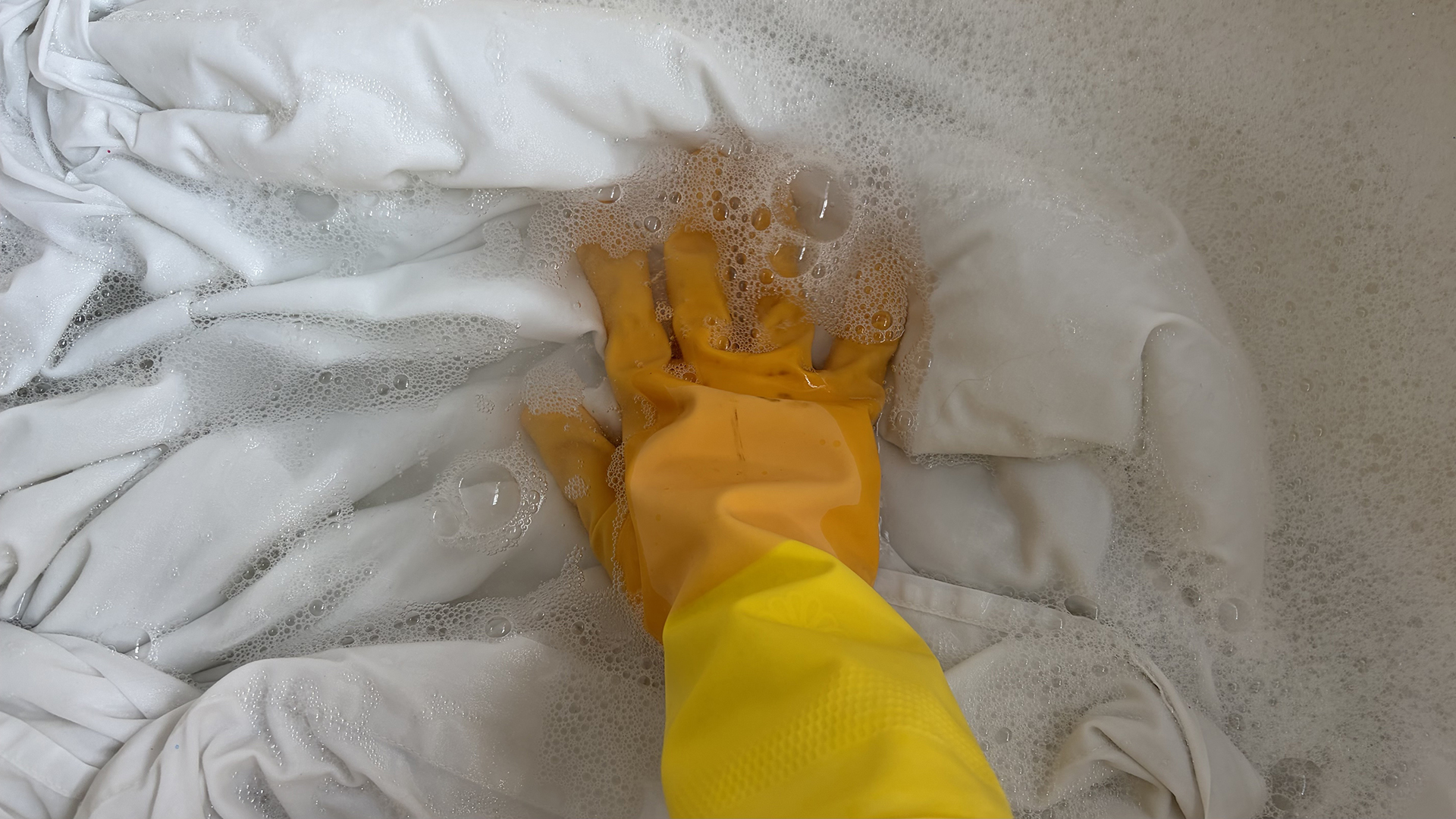
In my experience, the bright white results last for several months but if you're in a hard water area, your sheets may need regular soaks to stay sparkling. However, this soak shouldn't be completed more than every two weeks, as acidic vinegar can break down fabrics. Depending on the severity of your stains, the soak can take upwards of 6 hours. But only around 20 minutes of hands-on washing is required. Here's how to do it:
- Fill a basin or bathtub with warm water
- Add roughly half a cup of oxygen bleach and mix well (check packet instructions for exact measurements)
- Submerge the sheets completely and leave to soak for up to 6 hours
- Drain the water and rinse the sheets to remove any leftover oxygen bleach
- In a basin of warm water, add a cup of distilled white vinegar and stir
- Submerge the sheets and leave to soak for 30 minutes to 1 hour
- Rinse and finish with your usual washing cycle
The final step: Machine wash your bed sheets
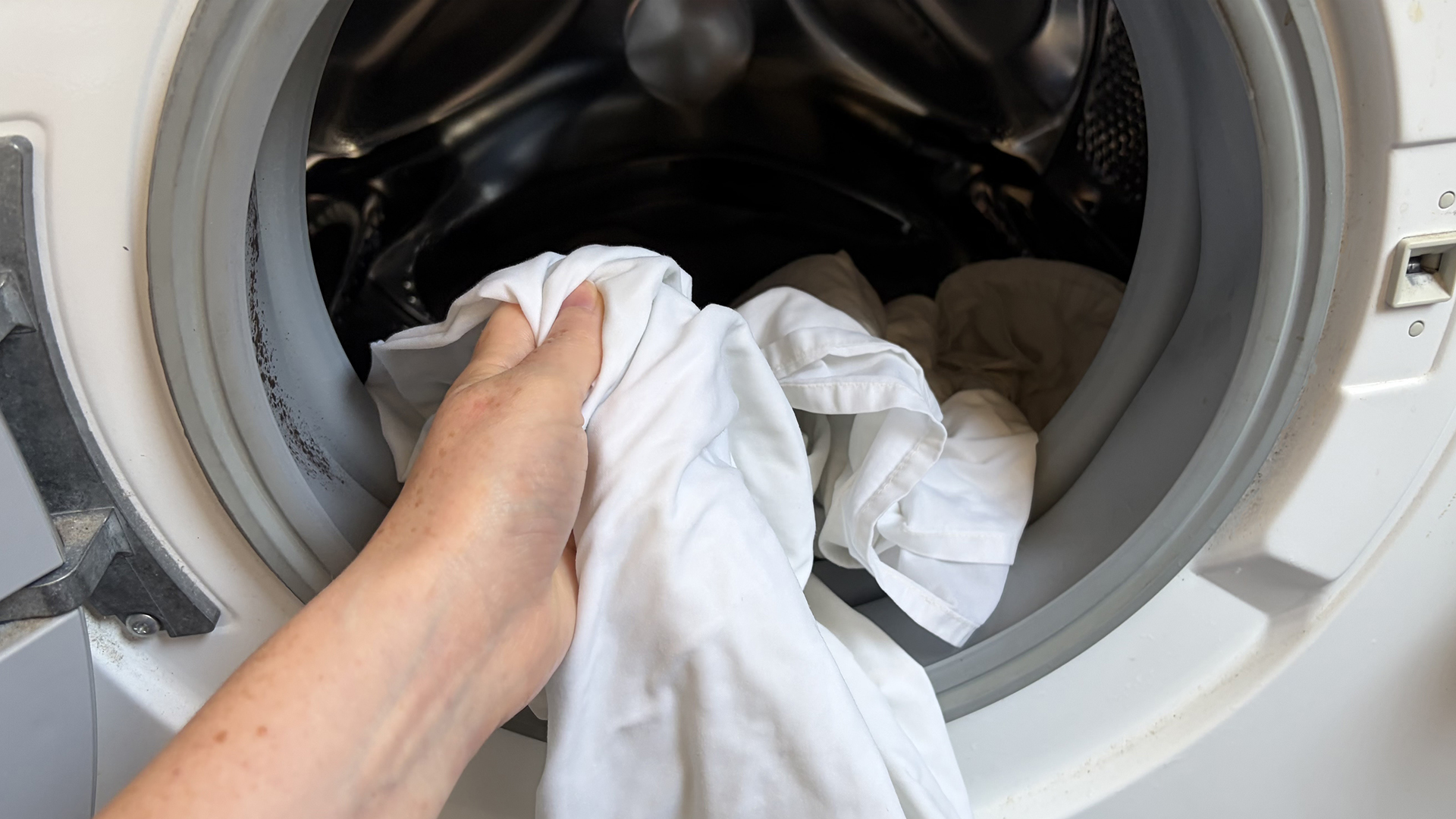
Once your pre-wash soak is completed, the final step is to machine wash your bed sheets. We recommend opting for a hot wash, as hotter water is better at lifting soils and stains, ensuring even brighter whites. However, always follow the care instructions to avoid damaging your bedding.
How to choose bed sheets that won’t turn grey
It is possible to choose sheets that stay sparkling for longer. First, opt for natural fibers. Materials like 100% long-staple cotton or linen take longer to develop a gray detergent film than synthetic fabrics such as polyester and microfiber. It's a case of oleophilic versus hydrophilic: synthetic fibers attract and absorb oil, most natural fibers absorb water.
Weave is also important. A loose, open weave like percale allows laundry detergent to wash through easily. Tight weaves, like sateen, hold onto soap residue. This build-up will quickly lead to graying.
While eventually all bedding starts to dull, sheets made from natural fibers with open weaves take longer to develop a gray finish. That bright white will stay intact for years to come.