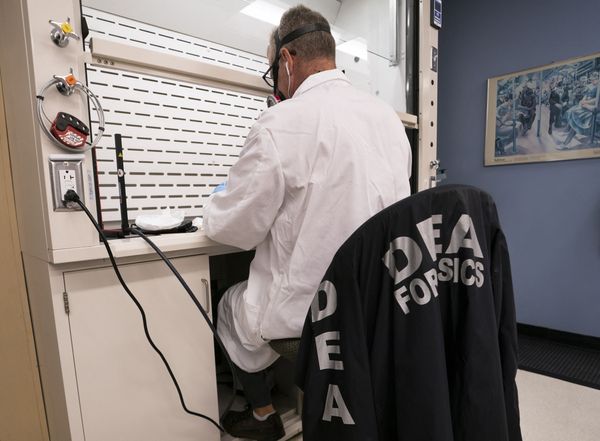
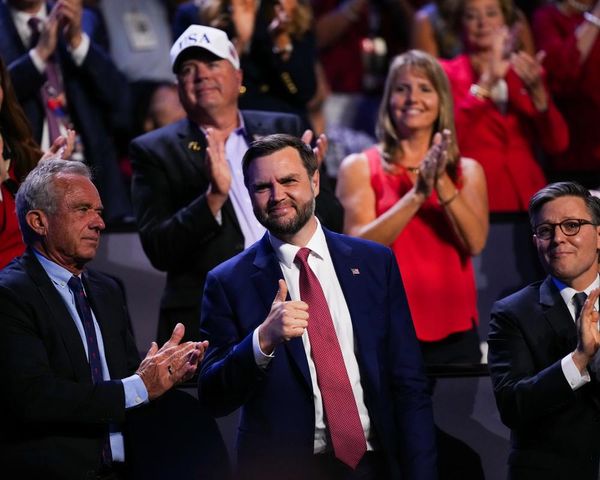
Eight days from now, U.S. Immigration and Customs Enforcement says every officer and agent working in the field will finally be wearing a body camera. Acting Director David Venturella framed the Aug. 31 finish line as proof of momentum, telling reporters the agency is running "ahead of our original schedule." The trouble is that one day earlier, ICE had given the Associated Press a different completion date entirely. For the families still waiting to learn what happened in two fatal encounters this July, the shifting math is nothing new — and it isn't clear the finished rollout will answer their questions even if it arrives on time.
Two Fatal Encounters, No Footage — But Not Quite for the Reason Given
The accelerated push traces back to a violent ten-day stretch in July. On the 7th, a federal agent shot and killed Lorenzo Salgado Araujo, a 52-year-old Mexican-born construction worker, as he drove a crew of coworkers toward a Houston job site. DHS maintains the officer fired because Salgado Araujo tried to strike him with the van; his family and civil-rights advocates reject that account, and to date, no video has emerged showing the shooting itself.
Six days later, an agent in Biddeford, Maine, killed Johan Sebastián Durán Guerrero, a 25-year-old Colombian national who split his mornings cleaning a veterinary clinic and his afternoons delivering food, so that he and his partner could raise their three-year-old daughter in the U.S. In both cases, officials initially said the men killed weren't even the people agents had gone looking for that morning.
Here is where the public record gets more complicated than "neither man was wearing a camera." That was the Trump administration's initial explanation for both shootings. But reporting from The Intercept, based on four ICE officials who reviewed images from the Biddeford scene, found that officers there were wearing Motorola radio devices that include a built-in camera lens — a lens that stays covered because ICE's video-recording subscription runs through a different vendor, Axon, and doesn't extend to that hardware. One officer described leaving the lens cap on simply because "the cameras don't work" in practice, even though the equipment is capable of recording. The same officials told reporters they believed a similar setup was likely in place for the Texas agents involved in the Salgado Araujo shooting. So the more precise description isn't that no camera existed — it's that a camera existed and nobody had paid to turn it on.
The Officer's Own Background Is Now Part of the Story
A detail absent from ICE's public statements has emerged through months of Maine reporting: the agent who shot Durán Guerrero has been identified in court records and multiple news reports as David Brouillette, a former Army intelligence collector and Maine law-enforcement veteran. Since the shooting, two of his ex-wives have separately described a pattern of threatening and abusive behavior stretching back more than a decade, in interviews and in protective-order filings. Even Tom Homan, the White House border czar, told CNN that if those allegations hold up, the agent should never have cleared ICE's vetting process in the first place. None of that history is a body-camera question exactly — but it sharpens why advocates want independent footage of the encounter rather than the agency's word alone.
A Deadline That Won't Sit Still
The clearest sign the Aug. 31 date isn't fully locked down, even inside ICE, is that the agency contradicted itself within a single week. Meeting privately with Sen. Susan Collins in late July, Venturella committed to finishing by the end of August — Collins said as much publicly at the time. Then, on Aug. 7, ICE told the Associated Press something narrower: roughly half its field offices were covered, with the rest arriving by the end of September — a full month past what its acting director had told a sitting senator barely a week before. The very next day, Venturella publicly snapped back to the August date in a statement accusing the AP of mischaracterizing ICE's policy. The agency has not explained the discrepancy.
It wouldn't be the program's first missed mark. ICE began a limited pilot in 2021 and had extended cameras to a handful of additional field offices by 2024. After two U.S. citizens, Renée Good and Alex Pretti, were killed by federal agents in Minneapolis in January, then-Secretary Kristi Noem pledged immediate cameras for officers there, with a nationwide rollout to follow only "as funding is available" — a conditional promise, not a deadline. A week later, then-Acting Director Todd Lyons told a House committee that only about 3,000 of ICE's roughly 13,000 field officers had cameras of any kind. Noem herself was removed from the DHS post in March and replaced by Markwayne Mullin.
President Trump had rescinded a Biden-era executive order mandating cameras across federal law enforcement agencies on his first day back in office, and ICE didn't restart large-scale purchases even after a $75 billion funding infusion arrived later in 2025. It took a $20 million congressional earmark, folded into the legislation that ended a record 76-day partial shutdown of DHS on April 30, before ICE issued delivery orders in mid-July for $30.9 million in camera gear from Axon — orders placed the day after the Maine shooting.
Recording Footage and Releasing It Are Two Different Promises
Even a completed rollout comes with a catch that may matter more than the hardware itself. Under ICE's February 2025 policy, officers must activate cameras during arrests, warrant executions and emergency responses. But footage from a shooting or in-custody death only surfaces quickly if agency leadership judges that releasing it serves the "best interests of the agency" — otherwise, a review committee can sit on it indefinitely, and anything that does come out gets edited to obscure officers' faces, names and badge numbers. Katherine Hawkins, a senior analyst at the watchdog group Project On Government Oversight, put it bluntly to the AP: footage without a firm release standard "doesn't do much good." ICE counters that its approach mirrors other federal agencies' practices; researchers who study body-camera programs note that discretionary release is common in policing generally, if rarely written into policy this openly.
What the Congressional Pushback Actually Established
Rep. Sylvia Garcia of Houston and members of Maine's delegation have pressed ICE publicly to explain why two of its busiest enforcement regions still had no working cameras more than five years into the pilot program. The pressure escalated on Aug. 17, when Democratic lawmakers — led by Rep. Chellie Pingree, joined by Reps. Bennie Thompson, Katherine Clark and Troy Carter — convened a field session at Biddeford High School, outside the normal committee process, to examine ICE's use of force in the state. Pingree told the gathering that new information showed the person agents were actually surveilling that morning was Durán Guerrero's roommate, the registered owner of the car — not, as DHS had initially framed it, someone at that address with a final deportation order. She added that Durán Guerrero had a pending asylum claim and a valid work permit. "Johan Sebastián Durán Guerrero should be alive today," she said.
DHS's response complicates rather than confirms that narrative. A spokesperson told the AP the agency never identified Durán Guerrero or his roommate as the operation's target at all, declining to specify who agents were actually looking for. So what's established is a genuine and serious discrepancy in ICE's account of who agents believed they were surveilling — not, strictly speaking, a confirmed fact about the roommate that DHS has since conceded.
Houston and Maine as Early Test Cases
ICE says its Houston field office alone has received more than 800 cameras, with officers there among the first nationally to begin training, according to Rep. Henry Cuellar. In Maine, the rollout is already done: Collins announced on Aug. 13 that every ICE officer in the state, including in Biddeford, is equipped and trained — more than two weeks ahead of the national deadline.
Houston and Biddeford are just two data points in a nationwide footprint that reaches deep into Latino communities elsewhere, including South Florida neighborhoods where enforcement activity has intensified this year. Families in those communities have watched both cases closely, less for the hardware timeline than for whether the agency's transparency promises hold up once cameras are actually running.
Where This Stands Today
As of Aug. 23, the Aug. 31 completion date remains ICE's official position, and nothing in the record since the agency's Aug. 8 statement suggests it has walked that back. But given that ICE told two different federal audiences two different completion dates within the same week in early August, and given that the "no camera" explanation for two fatal shootings has already required significant correction once, the safest read is that the deadline is a claim to verify, not a fact to assume.