As the summer season approaches and heat starts rising all over the US, air conditioners have to work overtime, causing electric bills to go up. In several cases, a fair share of the load on your AC is silently caused by one of the most overlooked parts of the house: the attic. Positioned right under the roof, it absorbs the heat coming directly from the sun and is rarely insulated enough to resist it from reaching the interiors. It may be just another piece of mundane infrastructure, and yet, it plays quite an important role in how much cooling a home requires.
Engineers at the Oak Ridge National Laboratory (ORNL) in Tennessee, which is part of the Department of Energy, were looking to solve just this problem almost 20 years ago. According to a 2007 ORNL article, a prototype roof and attic roof system utilizing a phase change material between two layers of reflective aluminum foils reduced the temperature in the attic by 22 degrees Fahrenheit, potentially lowering the cost of utilities by 8%. This is not a marketing statement from a consumer product company, but the result of federally funded materials research conducted in a national laboratory. Yet almost two decades have passed, and this discovery remains obscure to the outside world.
What was actually happening inside that roof
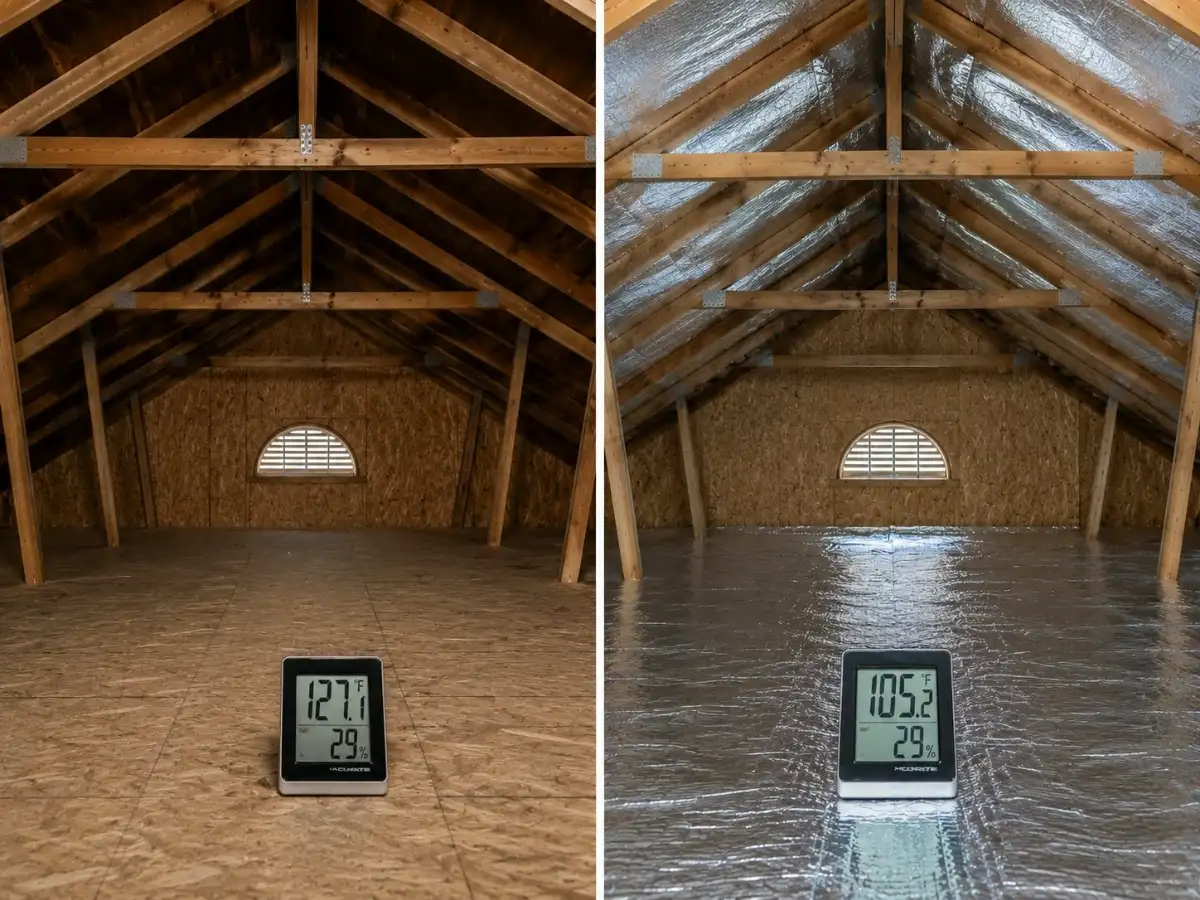
The concept isn't inherently difficult to grasp, if you remove all the jargon. The principle of a phase change material is the same as that of an ice cube in a cooler: it absorbs heat and continues to absorb heat without causing the temperature of the surroundings to rise, and it releases heat back when it cools down at night. The material developed at ORNL by a group led by Bill Miller and Jan Kosny was an inorganic compound that avoided the corrosion, instability, and risk of fire problems that plagued previous phase-change materials in the 1970s and 1980s. During lab testing at ORNL's Buildings Technology Center, on a day with an outside temperature of 92°F, a conventional attic reached 127°F, while the ORNL system stayed at 105°F, according to ORNL's own 2007 announcement of the project.