
There are days when I feel as though I am making absolutely no progress.
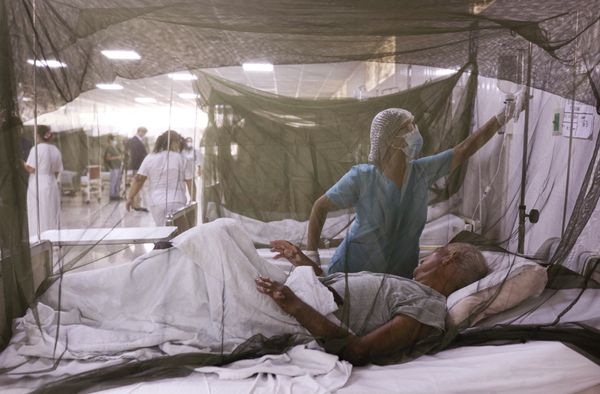
I can spend the entire day and night in bed, looking at the same walls, going through the same routines, wondering whether anything inside my body is actually changing.
Recovery from a spinal cord injury can be incredibly deceptive. You want progress to arrive in dramatic moments. An arm suddenly lifting, a leg moving, a breakthrough that everyone can see.
The reality seems to be very different. If movement is going to return, I am beginning to understand that it will probably come back in the smallest of increments. A little more strength in a shoulder. A slightly stronger contraction in an arm. A finger moving a few millimetres further than it did last week. Tiny changes that might mean nothing to somebody watching, but everything to the person lying in the bed.
This week I had my first outpatient appointment back at the Cleveland Clinic since leaving inpatient rehabilitation. I had been preparing myself emotionally for going back. For six weeks the Cleveland Clinic had become my world. It was the place where I was hoisted out of bed, put on to tilt tables, strapped into machines, electrically stimulated, exhausted, encouraged and pushed.
It was also where I started learning how to drive a powered wheelchair using my chin and lips.
Going back felt significant.
My wife Angella and I set off towards the clinic in my wheelchair. I am slowly getting better at controlling it, although the word “slowly” is doing quite a lot of work in that sentence.
Eventually Angella had to take over the driving because at the speed I was travelling I suspect we might have arrived sometime next Tuesday.
But even that made me smile. A few months ago I was lying completely paralysed in a hospital bed wondering whether I would ever leave it. Now I was travelling across London in my own wheelchair to an outpatient physiotherapy appointment.
Perspective is an extraordinary thing.
Going back into the gym and seeing familiar faces was emotional, but it also felt good. There was something reassuring about returning to a place where people understood exactly how hard every tiny improvement had been fought for.
Even better was hearing my physiotherapist say that she could see improvements in my shoulder and arm. Sometimes you need somebody else to see the progress for you. When you live inside the same body every single day, change can become almost invisible. You compare yourself with yesterday and nothing seems different. But someone who has not seen you for a few weeks can notice things you have completely missed. That gave me another small injection of hope.
After leaving the hospital, we ended up in Hyde Park. That might sound like a very ordinary sentence. For me, it wasn’t. To suddenly find myself surrounded by trees, open space, people walking, running, cycling, talking and simply getting on with their lives, felt incredible.
Read more
Stenhousemuir 0-3 Hearts: Williams scores on first start to ease side into last four Ex-Rangers player and coach returns to Ibrox in role with club's under-19s
Growing up in the Highlands, nature has always been important to me, and there was something about being among trees again that immediately changed how I felt.
Then, completely randomly, I bumped into somebody from back home. In a city of nearly nine million people, there I was sitting in my wheelchair in Hyde Park when suddenly I heard a familiar Highland voice.
It made the world feel slightly smaller. There is something comforting about hearing someone from home when you are going through difficult times. For a few minutes I wasn’t thinking about cancer, paralysis, rehabilitation or hospitals. I was simply having a conversation.
On the way home we passed my friend’s shop, the Turkmen Gallery, on Eccleston Street and decided to stop.
My friend, Wazir is from Afghanistan and attends to his uncle’s shop when his uncle is away. “Wazir” comes from the Arabic root word, Wazara, meaning to “bear a burden” or “to support” and his name could not be more fitting in defining his character. He is kind and displays incredible amounts of empathy.
What was supposed to be a quick visit turned into more than an hour sitting inside a shop selling beautiful rugs from Afghanistan, drinking Afghan green tea and talking. It was wonderfully random. And somewhere in the middle of that conversation I realised something.
I felt normal. Not the old version of normal where I was riding bikes, climbing mountains or disappearing off on another sporting adventure.
A new kind of normal. I was out in London. I had been to physiotherapy. I had driven through a park. I had bumped into someone from the Highlands. I had stopped to see my friend. I was drinking tea and talking about life. There were no hospital monitors around me.
Nobody was asking me about my medication. For an hour I wasn’t a cancer patient or somebody with a spinal cord injury. I was just David, sitting in a friend’s shop drinking green tea.
By the time I eventually got home I was exhausted. My body reminded me very quickly that recovery still has limits. But lying back in bed that evening, the tiredness felt different. It wasn’t the exhaustion of another day spent staring at the ceiling. It was the exhaustion that comes from having done something. And perhaps that is progress too.
Recovery isn’t only measured by how far my arm moves or whether another finger starts working.
Sometimes progress is getting back out into the world.
Sometimes it is hearing a familiar voice in a park.
Sometimes it is drinking tea with a friend.
And sometimes the biggest milestone of all is simply feeling, even for an hour, almost normal again.