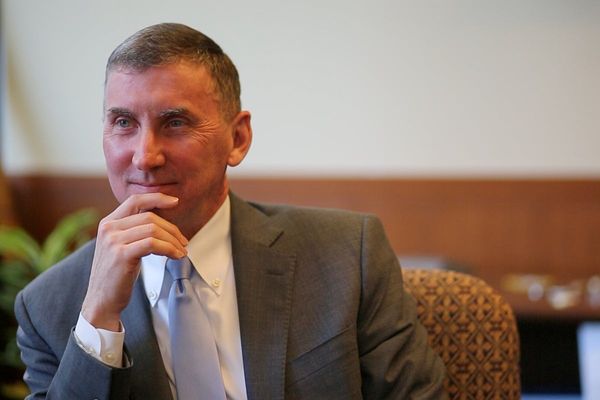
India’s interests on the Doklam tri-junction will not be harmed or “compromised” by the agreement between Bhutan and China for a three-step “roadmap” to resolve their outstanding border disputes, Bhutan’s Foreign Minister Tandi Dorji said in an interview to The Hindu. In the first interview since he signed the roadmap Memorandum of Understanding in October 2021, and ahead of Bhutan’s decision to reopen its borders for tourists in September 2022, Mr. Dorji said that in both cases, it is necessary to learn the “lessons” of the COVID-19 pandemic. He said that neighbours must find the way to “resolve issues” between them, and that Bhutan and China were hopeful of resolving their disputes soon, and would later take up the tricky issue of the Doklam tri-junction area that involves India’s interests as well.
Bhutan has announced that after two-and-a-half years, the country would finally reopen its borders to tourists on September 23. Dr. Dorji, who is a paediatric doctor by profession, said this was possible since all eligible Bhutanese had been administered COVID-19 vaccines and boosters, while children’s vaccination would soon be completed. Bhutan, which saw about 60,000 COVID-19 cases and 21 deaths during the pandemic, has had one of the strictest lockdowns in the world since March 2020, and had 21-day mandatory quarantines at the peak of the pandemic. Defending Bhutan’s latest decision, to triple its entry fee for other international tourists from $65 to $200 a day, as well as to implement for the first time, a daily Sustainable Development Fee (SDF) of ₹1,200 for Indian tourists, Mr. Dorji said the government’s “high-value, low-volume” policy is for tourists who are sensitive to the environment and willing to pay more to visit Bhutan. He denied the policy is “elitist”, but said that given the impact on economies in the neighbourhood post-Covid, it cannot be “business as usual”, and it is necessary to “revise and rethink” priorities.
Mr. Dorji said that the pandemic had also shown how “connected” the world is, and the necessity of resolving the outstanding border disputes in the interests of “all three countries” — Bhutan, India and China. The speed of talks last year took New Delhi by surprise, especially as they came after the 2017 Doklam stand-off between the Indian Army and the People’s Liberation Army (PLA). Mr. Dorji said he had not formally discussed with New Delhi the “Expert Group meeting” in Kunming in April 2021, that finalised the roadmap, but that the Indian government was “aware” of the progress.