
JOHN Swinney refused to commit to a moratorium on AI data centres after pressure from the Scottish Greens.
The First Minister was asked if he would “hit pause” on planning applications for hyperscale data centres, which have faced fierce opposition from local communities.
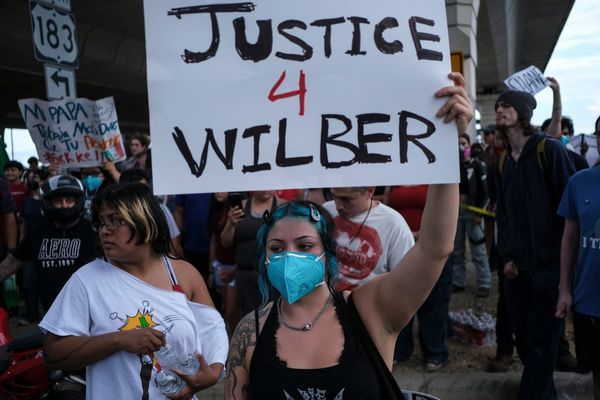
At the first party leaders’ First Minister’s Questions (FMQs) after the summer recess, Swinney was pressed on his Government’s response as hundreds of campaigners protested outside of Holyrood.
One of the key asks of campaigners is that a temporary ban is put in place so that a strategy can be drafted, with clearer definitions of what a “green” data centre is. Campaigners have also said that all sites should be required to do an Environmental Impact Assessment (EIA).
Scottish Greens co-leader Ross Greer told the FM that for months his party and communities across the country had called for a pause on applications to build hyperscale data centres.
“As I told the First Minister in June, the first twenty four of these applications alone would require one and a half times as much energy as our entire country has, that is clearly absurd.
“And it looked like the government was going to accept that urgent action was required.”
Greer then pointed out there were no plans for a temporary ban in the Programme for Government earlier this week but instead that ministers are aiming to attract “more of these data centres to Scotland”.

“That announcement has been devastating for communities across the country,” Greer added.
“The Government's previous position was that it was in favour of so-called green data centres, but back in June, the First Minister couldn't give a definition of what makes a data centre green. “This week, a new word has been added: responsible green data centres.
“So, can the First Minister tell Parliament and the hundreds of campaigners rallying outside right now exactly what makes a data centre responsible and green?”
In response, Swinney pointed to the steps announced by Public Finance Minister Hannah Mary Goodlad, which requires planning authorities to notify ministers of any data centre application exceeding 50 megawatts.
“This will allow for the strategic modelling of the national pipeline of major data centre proposals and their implications for communities and wider infrastructure,” Swinney said.
He added that the Cabinet will “give further consideration to this issue”, and said that green data centres “must be powered by renewable energies”.
“They must make use of energy efficient technologies,” Swinney added. “They must seek to minimise water consumption, and they must support the reuse of excess heat.”
Greer argued that the announcements from Goodlad have not changed “any of the fundamentals” of the programme, and urged for further guidance to be issued by local authorities with “clear definitions for these data centres”.

The Scottish Greens co-leader later pointed out that campaigners from communities across Scotland were outside the parliament “demanding a moratorium on these new hyperscale data centres”.
“That pause should have started in June, the next best time for it is now,” Greer said.
“The Scottish Greens are ready and willing to work with the Government on a credible data centre strategy.
“But if these live applications aren’t paused, that strategy will come in far too late. It is meaningless at that point.
“So will the First Minister hit pause now and halt consideration of all new hyperscale data centres until full planning guidance and a national strategy are both in place?”
Swinney replied: “I understand the concerns that are being raised, but it doesn't take into account much of the existing planning regulations on this particular issue.
“National Planning Framework Four provides a robust framework for consideration of development proposals, including climate and emission impacts, and that is central to the National Planning Framework that this Parliament itself has approved.
“In addition to that, are the regulatory constraints that have been added to this by the Government as a result of the summer.
“There is a robust framework in place to guide the assessment of such developments, and the government will continue to monitor the effect of that as a consequence of the decisions we have taken over the summer to maximise the scrutiny of these issues.”