
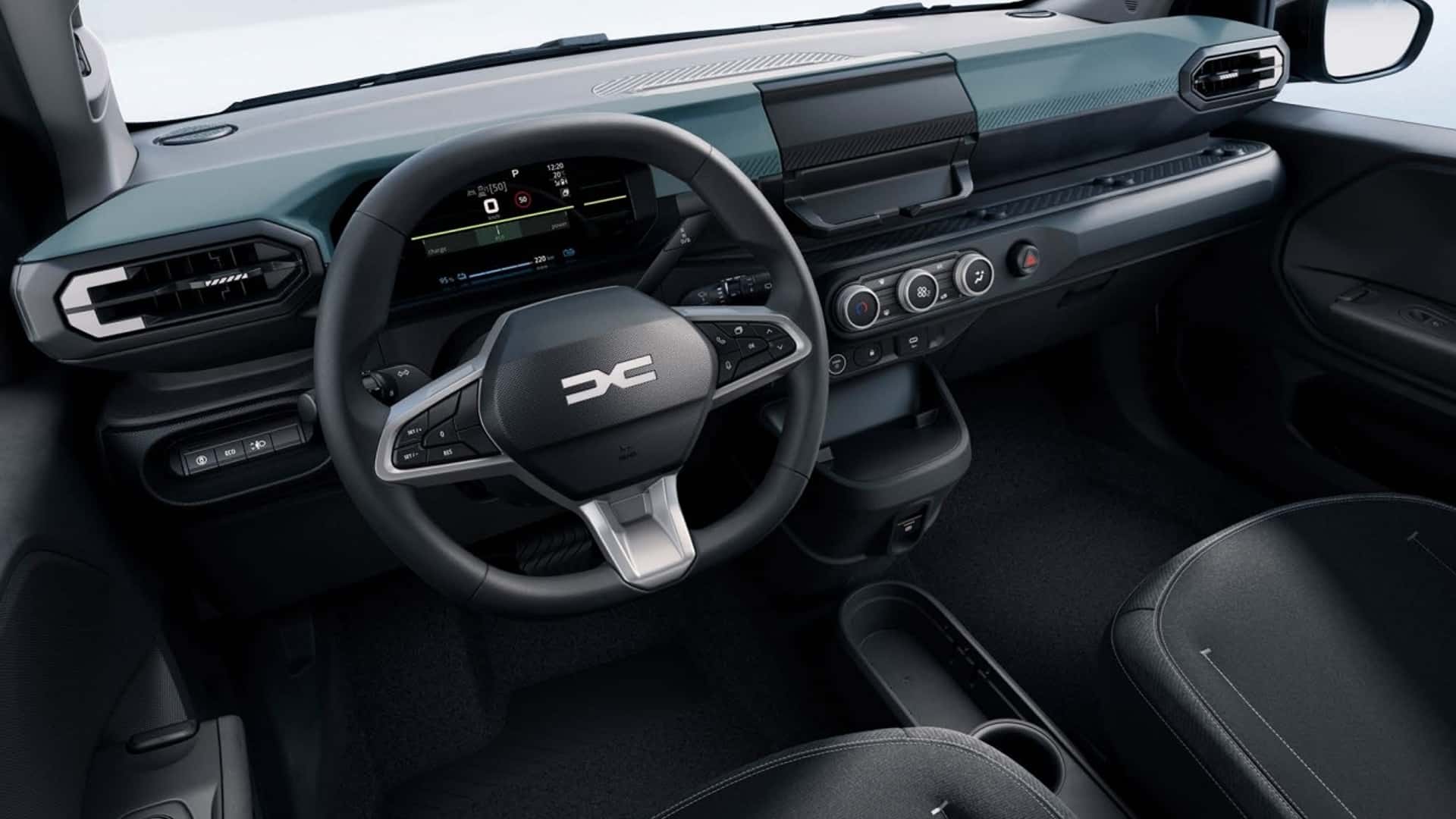
- The entry-level Dacia Spring skips the center screen by using your smartphone as the infotainment system instead.
- The next trim isn’t much more expensive and adds the touchscreen plus several other useful upgrades.
- We have a feeling most buyers will spring (get it?) for the better-equipped version.
Tired of screens? Well, the cheapest version of the new Dacia Spring doesn’t even bother with one in the center console. Before you accuse Renault’s low-cost brand of going full Nokia 3310, there’s a catch. The base Spring lets you hook up your smartphone to the car, effectively turning your phone into the infotainment system. Why spend money on another screen when you already have a perfectly good one in your pocket?
It’s a wonderfully Dacia solution. The entry-level Spring comes with the company’s Media Control system, which uses your smartphone for navigation, music, radio, calls, and other multimedia functions. There’s a dedicated spot on the dashboard to hold the phone, while steering-wheel controls let you operate key functions without constantly poking at the device. In other words, Dacia didn’t forget the infotainment screen. It just decided you should bring your own.
And before anyone thinks this is some radical new idea dreamed up for the second-generation Spring, Dacia has been doing it for a while. Media Control has also been available on entry-level versions of other models for several years. The idea is always the same: keep the dashboard simple, use hardware the customer already owns, and avoid charging them for a screen they might not even need.
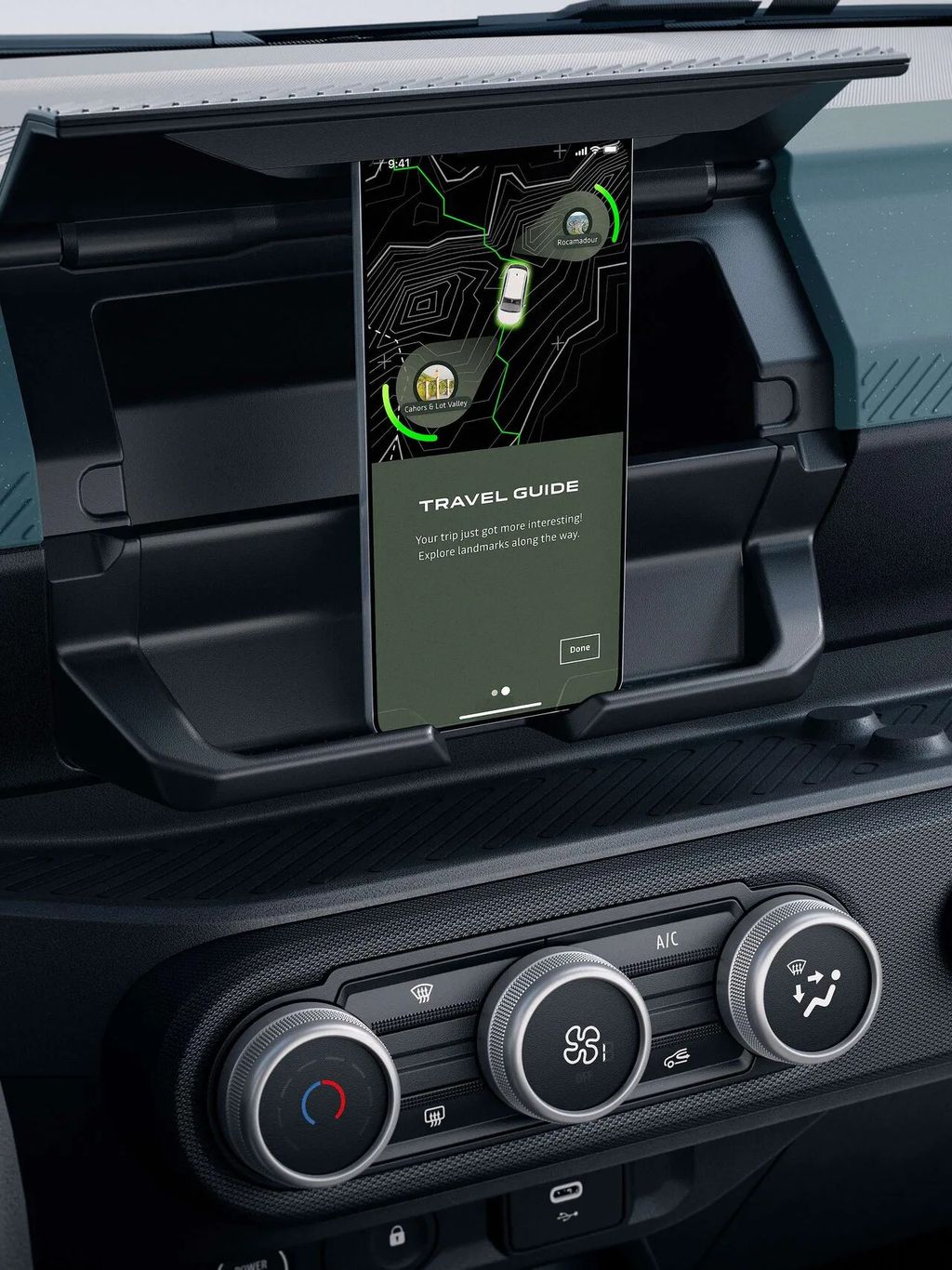
The No-Screen Setup Isn't New
Dacia didn’t invent this setup; Volkswagen did something similar many years ago with the up! city car. Of course, there are downsides. Lose your phone, run out of battery, or forget it at home, and suddenly your infotainment system has vanished too. And some buyers will understandably prefer having a proper screen built into the dashboard.
But for a budget EV, there’s something refreshingly honest about Dacia’s approach. The industry has spent years making screens bigger, more numerous, and increasingly difficult to avoid. Dacia is basically saying: You already have a screen. Use that one. It also keeps the Spring’s cabin from becoming another rolling electronics showroom.
For buyers who care more about getting an affordable electric car than having a jumbo-sized display staring back at them, that might not be a compromise at all. Speaking of affordability, the new Spring starts at €17,900 ($20,800) in France, with the next trim level beginning at €19,400 ($22,500). The conversion to U.S. dollars isn’t entirely relevant since Europeans pay value-added tax, with France applying a 20 percent VAT. The starting prices also don’t factor in local EV-related subsidies, which Renault France says bring the price down to €14,280 ($16,600).
So you save €1,500 ($1,750) by sticking with the entry-level car, which still gets plenty of kit. The seven-inch digital instrument cluster is standard, as are electric front windows, air conditioning, an electric parking brake, and electrically adjustable mirrors. Those look like alloy wheels at first glance, but they're actually 15-inch steel wheels with two-tone hubcaps.
Back To Basics
The screen’s absence isn’t the only change on the inside, as the base model skips the start/stop button in favor of an old-school key. Both trims have rear windows that pop out instead of going down, a setup shared with the Spring’s mechanical twin, the Renault Twingo. We have a feeling that Nissan’s upcoming Pixo will feature an identical setup since it’ll be cut from the same cloth as the Spring and Twingo.
Since this is a car sold in the heavily regulated EU, it has plenty of safety and driver-assistance kit: lane-keeping assist, lane departure warning, a camera-based driver attention monitoring system, traffic sign recognition, hill start assist, and a tire pressure monitoring system. The list goes further, since Dacia also fits the entry-level Spring with automatic headlights and automatic emergency braking with pedestrian and cyclist detection.
The more expensive version adds a 10-inch touchscreen, bigger 16-inch wheels, a rearview camera, keyless access, a start/stop button, and a few other goodies like USB-C ports. On top of that, options include heated front seats, faster charging (50 kW), and vehicle-to-load (V2L) to power external devices. The front trunk is also listed as an extra, though I assume Dacia means the part that goes over the compartment, since the hole is still there.
2027 Dacia Spring base model
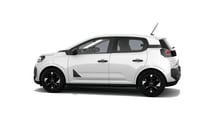
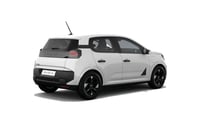
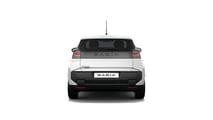
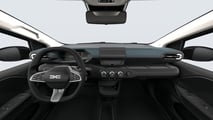
Motor1's Take: There’s something almost rebellious about a car not having a center screen in 2026. At a time when automakers are putting displays everywhere they possibly can, Dacia is taking the refreshingly simple route of telling customers to use the screen they already own. Sure, it’s not going to impress anyone who wants a dashboard dominated by a giant touchscreen, but that’s not really the point. The Spring is supposed to be cheap, and ditching hardware that isn’t strictly necessary is exactly how you keep the price down.
The bigger question is whether buyers will actually accept the trade-off. The next trim level isn’t that much more expensive, and aside from adding the screen back, it brings several other upgrades. I have a feeling most people will spring (get it?) for the better-equipped version. I know I would.