Picture this: it's peak summer, your fan is running at full speed, and your electricity bill still looks like a phone number. Now imagine living under a dark, sun-soaked roof that turns your attic into an oven every single day. That was the reality for many low-income families in San Antonio, Texas, not long ago. Then the city tried a simple approach: swapping conventional dark roofs for light-colored, reflective ones. According to a 2018 University of Texas at San Antonio (UTSA) study of homes in the city's roofing program, during peak summer afternoons, attic temperatures dropped by an average of 10.1°F, while homes overall saw their Electricity Use Intensity fall by an average of 7.3%.
A city that knows what real heat feels like
San Antonio was the nation's fourth fastest-growing city by numerical population growth between 2023 and 2024, according to U.S. Census Bureau data, and about 17% of its population lives below the poverty line. On June 4, 2024, San Antonio recorded a heat index of 117°F, its highest on official record, measured by the National Weather Service. In 2017, the city committed by resolution to align with the goals of the Paris Agreement, a pledge it later formalized in 2019 as a citywide goal of carbon neutrality by 2050. For households already stretched by rent and food costs, a very hot summer can force difficult choices about air conditioning. This is the exact problem San Antonio tried to fix with a roofing program called "Under One Roof."
So, what exactly did they do?
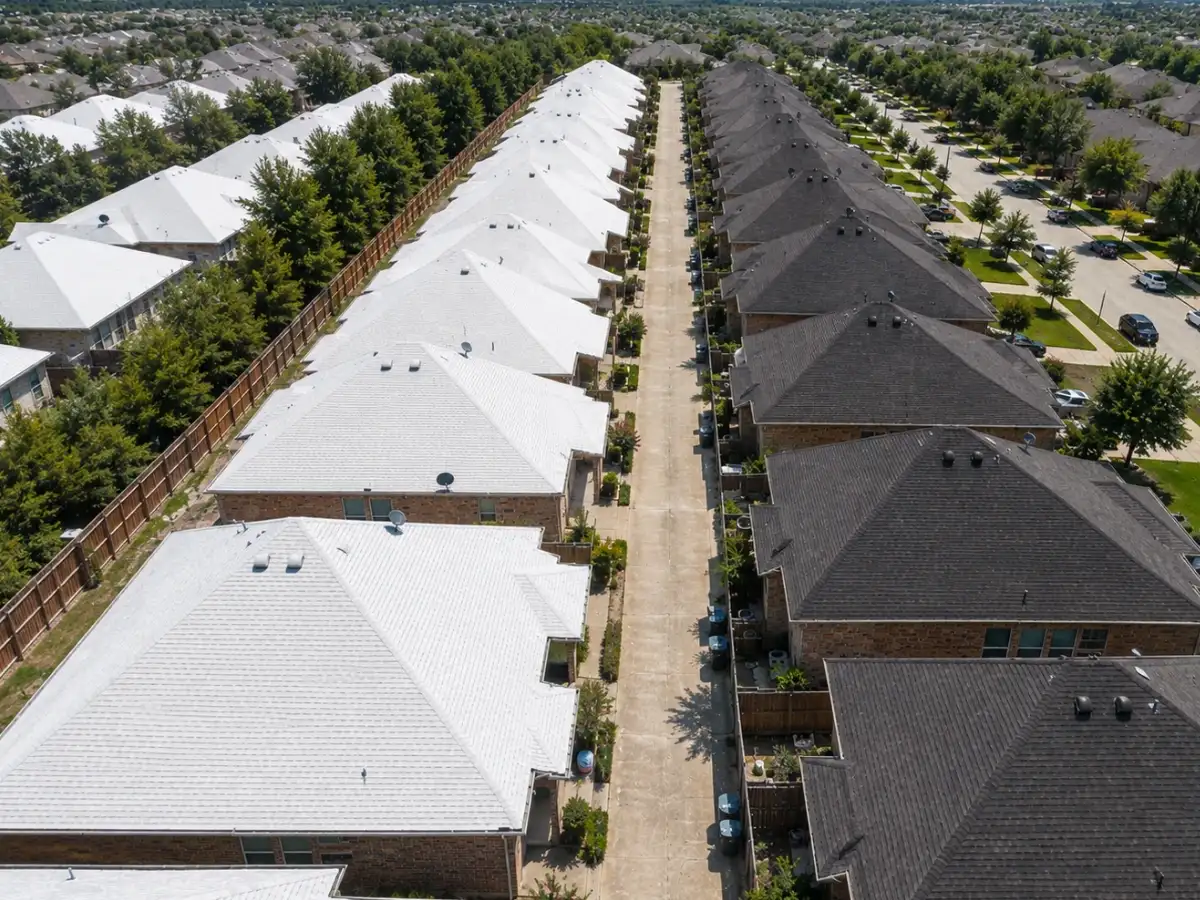
Beginning in 2016, the city started replacing the old roofs of homes of low-income families, senior citizens, veterans, and people living with disabilities. Instead of standard dark shingles, the city used Owens Corning reflective shingles in Shasta White, along with a radiant-barrier underlayment. In other words, these materials reflect sunlight rather than absorbing it. The program has grown from a $200,000 pilot in a single city council district in 2016 to a citywide initiative with a $2.25 million budget expansion approved in 2018, and more than $5 million in combined public and private funding by 2020. Under the program's official rules, the city places a five-year restrictive covenant on each property, requiring homeowners to keep owning and living in the home for five years afterward, which keeps homes affordable and protects families from being displaced.