
How much can you earn as an ultrasound tech, and what factors influence your salary?
Whether you're considering a career in sonography or want to understand your earning potential, knowing what ultrasound technicians make is a key first step.
In this guide, we'll break down the ultrasound tech salary, explore what sonographers earn, and examine the factors that can help you plan your career and increase your salary.
How Much Do Ultrasound Techs Make?
 When researching ultrasound tech salary, you’ll encounter several job titles: ultrasound tech, ultrasound technician, and sonographer are often used interchangeably in the United States, while the U.S. Bureau of Labor Statistics (BLS) uses the formal title diagnostic medical sonographers.
These professionals use ultrasound technology to produce real-time images of the body, and healthcare facilities support this work with imaging equipment suited to their clinical needs and budgets, including new and refurbished ultrasound machines and compatible refurbished ultrasound transducers.
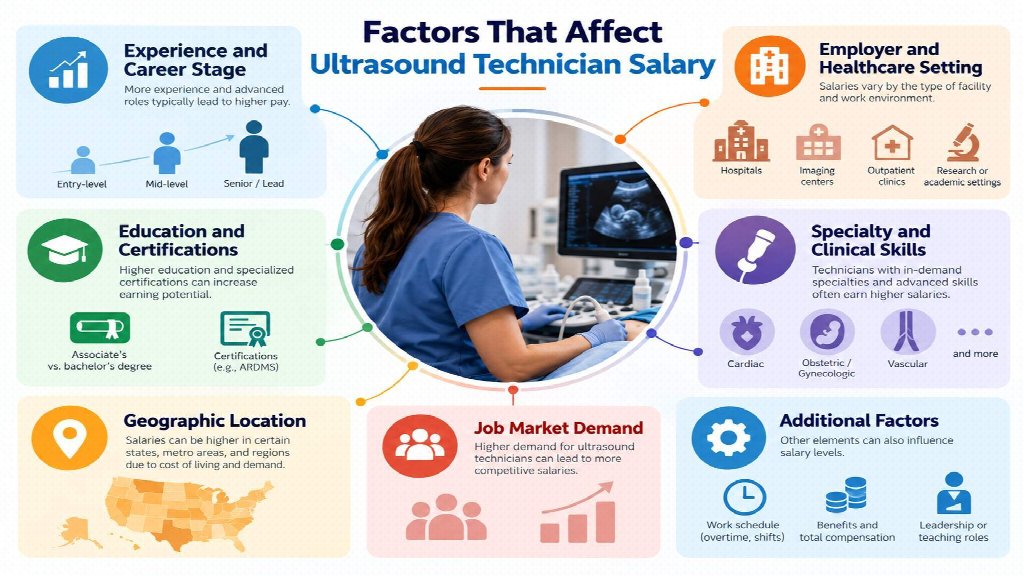
Ultrasound tech salaries vary based on several factors, including educational background, healthcare setting, location, job responsibilities, and other factors that we’ll explore later in this article. Generally, in May 2025, the BLS reported a mean annual wage of $97,240 and a median of $96,590 for diagnostic medical sonographers. The mean is the average across reported wages, while the median is the midpoint: half of workers earned more and half earned less. Together, these figures provide a more complete picture of national sonographers’ salary.
|
Wage measure |
Amount |
|
Mean annual wage |
$97,240 |
|
Median annual wage |
$96,590 |
Ultrasound Technician Salary per Hour
The BLS reported a median hourly wage of $46.44 for diagnostic medical sonographers in May 2025. However, an hourly rate does not guarantee a particular annual income, since total earnings depend on scheduled hours, overtime, and employment arrangements.
|
Wage measure |
Amount |
|
Mean hourly wage |
$46.75 |
|
Median hourly wage |
$46.44 |
Sonographer Salary by Wage Percentile
BLS wage percentiles show how earnings are distributed across the profession, but they do not directly correspond to specific career stages. In May 2025, workers in the lowest 10% of the wage distribution earned less than $67,820 annually, while those in the highest 10% earned more than $129,370.
|
Wage Percentile |
Annual Wage |
|
10th |
67,820 |
|
25th |
80,430 |
|
50th |
$96,590 |
|
75th |
$106,930 |
|
90th |
$129,370 |
Ultrasound Tech Salary by State and City

An ultrasound tech salary can vary depending on where a professional works. For example, the ultrasound tech salary in California may differ from what a sonographer earns in a smaller city or another state. Below is a comparison of median annual wages for ultrasound technicians across selected U.S. states, based on data from the U.S. Bureau of Labor Statistics (BLS).
|
State |
Median Annual Salary |
|
California |
$128,530 |
|
Hawaii |
$124,430 |
|
Washington |
$121,340 |
|
Oregon |
$120,220 |
|
Colorado |
$108,410 |
|
Massachusetts |
$107,480 |
|
Alaska |
$105,670 |
|
New York |
$103,920 |
|
Texas |
$92,580 |
|
North Carolina |
$86,010 |
|
Georgia |
$83,250 |
|
Florida |
$82,940 |
|
Alabama |
$68,180 |
Ultrasound technician salaries can also vary within the same state. For instance, a sonographer in a major metropolitan area may earn a different salary than someone in a smaller city, so compare local wages when evaluating job opportunities.
Staff Sonographer vs. Travel Sonographer Salary
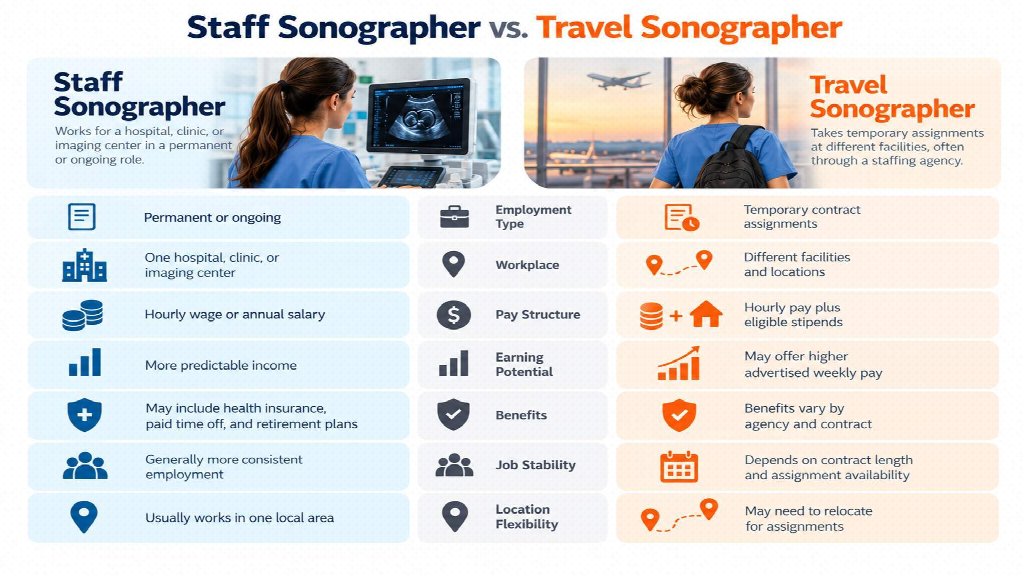
A staff sonographer works directly for a healthcare facility, such as a hospital, clinic, or imaging center, usually in a permanent or ongoing position. A travel sonographer, by contrast, takes temporary assignments at different facilities, often through a healthcare staffing agency, to help cover staffing shortages. These assignments may offer the opportunity to work in different locations, but they also require flexibility and sometimes relocation for the duration of a contract.
When comparing staff sonographer salary with travel sonographer salary, travel positions may advertise higher weekly compensation, but the difference is not always a straightforward comparison. Staff roles typically provide more predictable income and may include employer-sponsored health insurance, paid time off, and retirement benefits. Travel pay packages may combine taxable hourly wages with housing and meal stipends, depending on the contract and the worker’s eligibility. Travel-related expenses, time between assignments, and differences in benefits can affect overall earnings, so sonographers should compare the complete compensation package rather than relying on the advertised rate alone.
|
Comparison factor |
Staff sonographer |
Travel sonographer |
|
Employment type |
Permanent or ongoing position |
Temporary contract assignments |
|
Workplace |
Usually one hospital, clinic, or imaging center |
Different healthcare facilities and locations |
|
Pay structure |
Typically hourly wages or an annual salary |
Often hourly pay plus eligible stipends |
|
Earning potential |
More predictable income |
May offer higher advertised weekly compensation |
|
Benefits |
May include health insurance, paid time off, and retirement plans |
Benefits vary by staffing agency and contract |
|
Job stability |
Generally more consistent employment |
Depends on contract length and availability of assignments |
|
Location flexibility |
Usually works in one local area |
May need to relocate for assignments |
|
Additional Considerations |
Shift differentials, overtime, and benefits affect total compensation |
Housing costs, travel expenses, unpaid gaps between contracts, and stipend eligibility affect take-home earnings |
Other Factors that Affect a Sonographer’s Salary
In the previous section of this guide on ultrasound tech salary, we explained how earnings can vary by hourly pay, state or city, experience, and whether a sonographer works in a staff or travel position.
Several other factors can also influence how much diagnostic medical sonographers earn, including education, professional credentials, clinical specialty, and employer requirements.
Education and Professional Credentials
Education and professional credentials can affect which positions a sonographer qualifies for. Additional certifications or specialized training may help candidates pursue certain roles, although their value depends on the employer, clinical specialty, and job requirements.
Specialty and Clinical Skills
Sonographers can specialize in areas such as cardiac, vascular, pediatric, and obstetric imaging, each requiring skills suited to specific clinical applications. Those researching cardiac, vascular, cardiovascular, or pediatric sonographer salary should compare role-specific data rather than assume one specialty always pays more. The BLS does not publish separate national median wages for every sonography specialty.
Employer and Healthcare Setting
Hospitals, outpatient care centers, physicians’ offices, and diagnostic laboratories may offer different compensation and benefits for similar roles. Responsibilities, staffing needs, and the complexity of the work can also vary by setting, making it important to compare the full compensation package rather than ultrasound tech salary alone.
Job Responsibilities and Level of Responsibility
Sonographers with additional duties, such as coordinating procedures, training colleagues, or taking on supervisory responsibilities, may qualify for higher-paying positions. However, these opportunities depend on the employer and the role, and additional responsibilities do not automatically guarantee higher pay.
How Can Ultrasound Technicians Increase Their Earning Potential?
So far, we’ve explored ultrasound tech and sonographer salaries across different states, specialties, and work arrangements. But how can ultrasound technicians increase their earning potential?
Gaining clinical experience, earning relevant professional credentials, and developing specialized imaging skills can help sonographers qualify for more advanced or better-paid positions. They can also compare employers, consider high-demand locations, and evaluate overtime or travel opportunities. Ultimately, increasing an ultrasound technician's salary depends on a combination of qualifications, local demand, and the overall compensation package.
Final Thoughts on Ultrasound Tech Salary
Understanding ultrasound tech salary requires looking beyond the national average. Earnings vary by location, experience, clinical specialty, and employment type, with staff and travel positions offering different advantages.
For those considering a career in sonography, developing specialized skills, earning relevant credentials, and comparing compensation packages can help identify opportunities for higher pay. Ultimately, the best career path balances earning potential with job stability, professional growth, and personal priorities.