
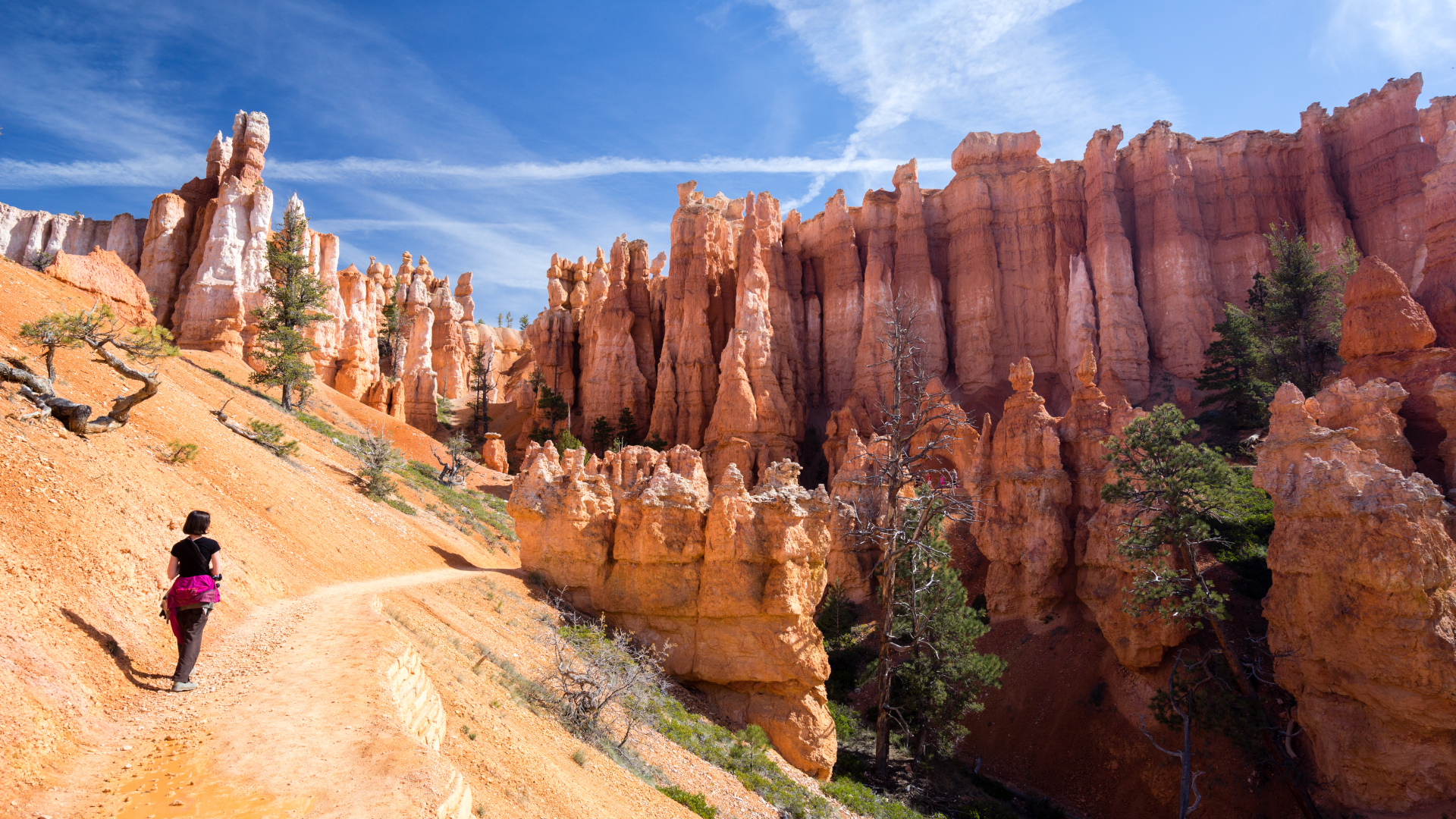
If you’re lucky enough to go hiking in the desert out west, you’ll likely be astonished by how much diversity there is in the terrain. Like most of us, I grew up thinking that the desert was just a giant sandpit with a single cactus standing in the middle of it, so I couldn’t believe my eyes when I made my first trip out to Utah and found myself strolling amongst the otherworldly rock formations that inhabit the landscape of places like Zion, Arches and Bryce Canyon National Parks. It felt like I had landed on another planet.
In addition to deep, lush canyons and impossibly balanced rocks, the red sandstone has been artfully carved by wind and water over millenia into unbelievable fins, arches, spires and hoodoos. Of all of these sights, the hoodoos might be one of the most remarkable features of the desert landscape. But if you haven’t ventured out west yet, you might be asking yourself, what are hoodoos anyway? And if you’ve seen them in the flesh, you might be wondering how they got there, and why they’re called hoodoos. Read on to answer all your questions about this fascinating natural phenomenon, then grab your hiking boots and go and explore them as soon as you can.