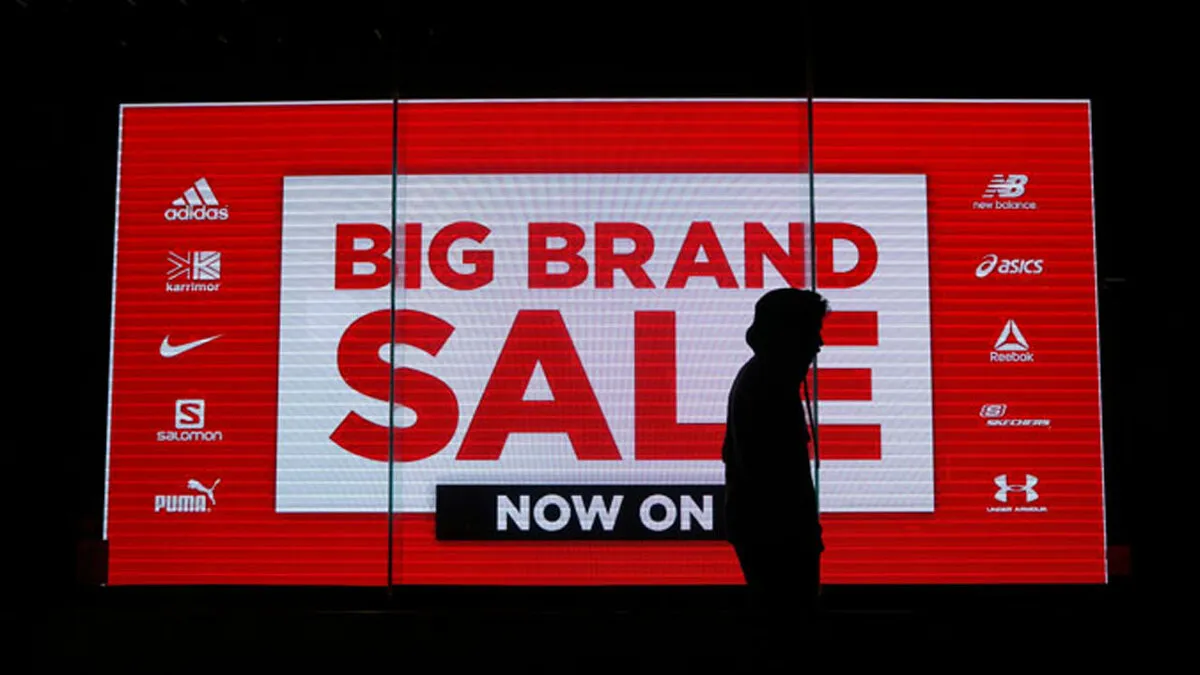
It’s almost that time of the year again. That magical time when you scour the internet for the tastiest deals and your shopping cart fills faster than your bank account can keep up. That glorious time when buying stuff you don’t need feels like the wisest financial decision you’ve ever made. We are, of course, talking about Black Friday. It’s when logic flies out the window, and massive price cuts make supposedly reasonable adults act like raccoons rummaging through a dumpster. $1,000 off on a 42-inch HDTV. A used car for under $100. 85% off a pair of Patagonia pants. Deals so sweet and unreal, you’d want to pinch yourself. It’s as if you’re living in a fever dream where everything is alright. But as we know, the real world doesn’t work that way. When something is too good to be true, it likely is. As it turns out, those hefty Black Friday discounts aren’t total steals because of a few stealthy tricks from retailers. So, we’ve rounded up the key things to watch for and even tapped an expert for valuable tips and insights. But before we get into all of that, we need to address one key question first. belart84 / unsplash (not the actual photo) Let’s revisit a scenario you’ve likely seen at least hundreds of times. You come across a product originally listed at $500 suddenly slashed down to $250. The retailer says you’re saving 50% when you buy that shiny new smartphone right then and there. Is it a miracle from the heavens? What could you have done to be granted such a gift? The short answer here is nothing. This is the “was” price at play, where retailers display the higher price point alongside the current rate to highlight your supposed savings. They make you believe you just got one hell of a bargain, and that can be accurate. But many a-times, it's a sneaky case of false advertising, where a product has been selling for $250 for several months. Now, that “50% off” Black Friday deal doesn’t feel so special. It’s all marketing and psychology via a tactic known as price anchoring. In the example above, the $500 anchors the $250 sale price. Natalia Blauth / unsplash (not the actual photo) This strategy makes us, the consumers, believe that we are getting the best value by paying half the price. It plays on cognitive biases that often focus on getting the best reward for the least effort, or, in this case, spending the least money. But attractive prices strongly influence purchasing decisions, and this can lead someone to buy the wrong product. “A dramatic discount can push someone toward an expensive model with features they will never use, or toward a subscription that renews at a much higher price after the first year,” advertising expert and Brizy CMO Monica Panait tells Bored Panda. “The risk is particularly relevant in categories where offers are complicated to compare, including software subscriptions, electronics, home appliances, and bundled services.” Jon Cellier / unsplash (not the actual photo) That would be a harsh conclusion. It wouldn’t be fair to suggest that every retailer on planet Earth offering hefty discounts is trying to pull a fast one on us. We need to consider economics and price fluctuations. Retailers compete with one another, respond to changes in demand and inflation, and run marketing promotions to draw attention to their products. Then there is the manufacturer’s suggested retail price (SRP), the target price producers recommend stores charge. Of course, many retailers will choose to go below the RRP, whether to keep up with competition, as part of their pricing strategy, or for regular promotions. This practice is not inherently wrong. However, it becomes problematic when comparisons between high recommended prices create the impression of massive savings. Let’s say a brand new 70-inch LED TV has an SRP of $599.99, but it has routinely sold for $299.99. Advertising the latter as a massive markdown from the SRP gives shoppers the misguided impression they are saving a lot. Black Friday discounts are not scams. But if you pull back the curtain and see these plausible behind-the-scenes tactics, you might realize these deals aren't anything exceptional after all. DC_Studio / envato (not the actual photo) Most people would consider themselves informed consumers, yet they would still bite on a Black Friday ad featuring a 40% discount on an air fryer. As we mentioned earlier, our brains are wired to gravitate toward low-risk, high-reward deals. But a few other factors are at play, including the dreaded FOMO. Consumer psychologist Professor Cathrine Jansson-Boyd says marketing messages specifically target our fear of missing out on a possible steal. Anna Tolipova magnific (not the actual photo) During Black Friday and Cyber Monday, in particular, marketers utilize the “scarcity principle” through messages like “when it’s gone, it’s gone.” Jansson-Boyd adds that this pressure is what pushes many people into impulse buys. Another reason: spending money can hurt emotionally. As marketing professor Max Alberhasky explains, the pain of payment refers to the unpleasant feeling we get when we spend hard-earned money. “When spending money, we sometimes have to decide whether the pleasure we will experience from that vacation to Cancún will outweigh the pain associated with purchasing the vacation,” he said, while also advising the bundling of purchases to make the expenses feel less of a burden once you start enjoying them. On that note, it can also explain why going after a Black Friday sale can feel so rewarding. Sure, you are spending money, but it hurts less because you are supposedly “getting the best deals.” peoplecreations / magnific (not the actual photo) Social proof plays a role, too. Beyond the eye-catching price cuts, it helps to see what others say about the product. Many people turn to reviews (some of which are bogus but entertaining) to help them make more informed purchasing decisions. As University of Oxford marketing professor Prasad Vana explains, even retailers rely on reviews to boost sales. “Individual reviews have a lot of power. It’s critical for retailers to think about how to display them in a way that helps consumers find the right product,” Vana said. Ashkan Forouzani / unsplash (not the actual photo) Markus Spiske / unsplash (not the actual photo) If all the information above is new to you, dear reader, you may feel a bit put off. After all, no one enjoys realizing they fell for marketing tricks while big companies get richer and richer. One way forward is to check price patterns over time rather than rely on a single historical price. According to Panait, products discounted every month may not offer anything unusual on Black Friday. Her second piece of advice: calculate the total cost of ownership. “For a laptop, that might include necessary accessories or software. For a subscription, it means checking renewal prices, the number of users covered, and any limits on features or usage. A low entry price can become expensive if you later need to upgrade.” dikushin / magnific (not the actual photo) Panait’s third, and perhaps most important, piece of advice is to ask what the product solves. Do you need it for its primary features? Would you still choose it over alternatives even without the promotional messages? “A genuine discount should make a useful purchase more affordable, not make an unnecessary purchase feel urgent. The strongest buying decision is one based on the product's lasting value, not the excitement of a temporary promotion.” Eva Wahyuni / unsplash (not the actual photo) Plenty of legitimate deals are out there to take advantage of, and you don’t need to scrutinize every retailer promotion as if you’re investigating a crime scene. But if there’s one takeaway from this piece, dear reader, it’s that a substantial price cut doesn’t necessarily indicate a good bargain. Perhaps more importantly, a sale countdown timer isn’t a compelling enough reason to click checkout. Retailers are marketing wizards with a multitude of strategies to make a deal look irresistible. As consumers, we can stay more informed by checking the product’s price history, comparing offers, and carefully evaluating whether the current price is worth paying. And if you do discover a deal isn’t nearly as impressive as when you first saw it, don’t feel bad about passing on it. You might even be doing yourself a huge favor.