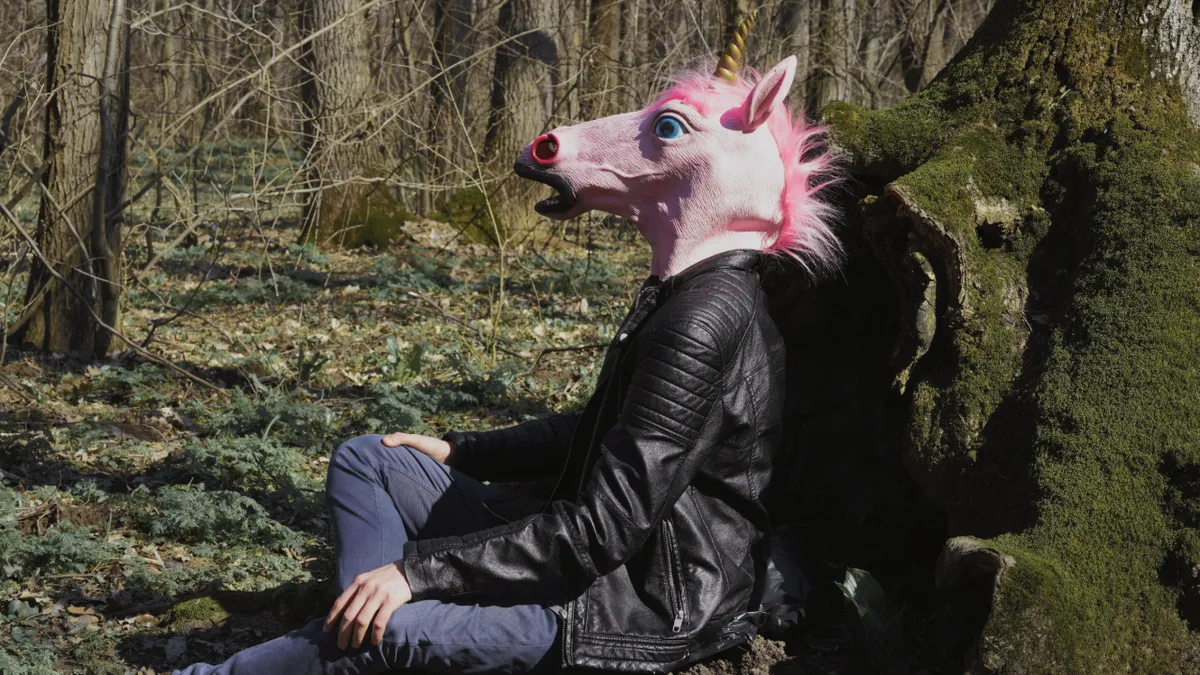
Their pronouns are Puss, Purr, Paws and Whiskers. They walk on all fours and insist on wearing diamante-encrusted collars to school. A litter tray lies in the corner of the communal bathroom, and teachers make sure there's always fresh water and some tuna available in tiny bowls on the floor. The mere thought of students coughing up furballs in class once prompted a Texas politician to file a bill prohibiting children from any "non-human behavior." Under the Forbidden Unlawful Representation of Roleplaying in Educational Spaces (FURRIES) Act, there could be no hissing, no meowing, no licking oneself or others, and definitely no toilet time in a litter box. Meanwhile, across the pond in the United Kingdom, similar concerns have seen schools sending out frantic memos to address the elephant (or cat) in the room. "We do not and will not be planning on providing any litter trays at the school," wrote the deputy headteacher of one school in Wales. "Whilst we are an inclusive and welcoming school, we do not make any provision for any pupils who might identify as an animal of any kind." A letter sent to parents by the deputy headteacher of a Welsh school (Penarth Times) Up to a million people worldwide consider themselves to be part of the 'furry' community but is it really as bad as some make it out to be? And are schools actually being infiltrated by these mysterious beings? Beyond the litter tray talk lies something a lot deeper, and many believe it's time to let the cat out of the bag. West Monmouth's deputy headteacher Claire Hughes made waves when she penned a widely-circulated note to parents after concerns were raised that some children had been coming to school dressed as animals. And, worse yet, that the school had been making provisions for their 'wild' antics by providing litter trays in the classrooms. Some folks were relieved, others were confused and a few found it hilarious. The school vehemently denied that any such madness was occurring, and quickly tried to shut down the rumors. But a parent later told journalists from the Argus newspaper that their child had seen a few fellow pupils acting like animals. Another claimed her daughter had been ‘growled’ at. Neither of these claims were verified. Welsh authorities from the Torfaen area, where the school is located, also entered the fray. “Torfaen Council is focused on pupil attainment and wellbeing," said Torfaen Council’s Strategic Director for Children and Family Services, Jason O’Brien. "It's disappointing when schools are distracted from these priorities by having to quash damaging rumors and misinformation circulating on social media.” But while the litter trays and meowing turned out to be more fiction than fact, it hasn't helped to squash the stigma that's often attached to being a real life "furry." frank minjarez / Pexels (not the actual photo) Some believe that ‘furries’ are people who identify as animals. But this is not true, says a ‘furrie’ expert who has been studying the phenomenon for more than fifteen years. “Furries are people who have an interest in anthropomorphism, which specifically refers to giving human characteristics to animals,” explains Sharon E. Roberts, the co-founder of the International Anthropomorphic Research Project, also known as Furscience. “In its most distilled form," adds the expert, "furries are a group of people who formed a community — or fandom — because they have a common interest in anthropomorphic media, friendships and social inclusion." It's a subculture that has long been misunderstood. At its root, a furry is a fan of media that features animal characters doing “human” things. For example, Bugs Bunny, Donkey from Shrek and Mickey Mouse. Fans collectively form part of what’s known as the furry fandom. “Like other fan communities, furries talk about movies, art, or television online,” notes the Furscience site, adding that many cities around the world host furry conventions, “which are major tourist attractions that bring together thousands of furries.” And yes, many furries have a ‘fursona.’ This doesn’t mean they have split personalities and switch between being a cat and a human. But rather, that they have created a unique avatar-like character that speaks to certain parts of their own personality. German Suarez / Pexels (not the actual photo) According to Roberts, fursonas can represent “idealized versions of the self.” For example, someone might choose to be sociable, funny and less anxious. “Fursonas can be a safe, functional way for furries to explore who they are as people, including their gender identity and sexual orientation,” explains the expert. “Research also indicates that a fursona can help facilitate interactions with others and result in more social confidence.” This does not mean that a furry always dresses up as their fursona, or believes they're an animal. “Furries don’t identify as animals; they identify with animals,” says Roberts. “In the same way that cosplayers typically don’t believe they are actually Spiderman, furries don’t think they are their fursonas.” Mario Spencer / Pexels (not the actual photo) Only around 15 to 25 per cent of furries own a fursuit, which is sort of like a mascot-type outfit. That’s because the rest either have no interest in buying one or simply can’t afford it. According to Roberts, fursuits can be ridiculously expensive, and some are even engineered with fans, cooling packs and LED lights built into them. If you’re picturing someone cooking dinner or doing grocery shopping in a fursuit, that’s probably not something you’re likely to come across in real life. Roberts says fursuits are typically worn on special occasions, like a parade, meet-up or convention. “Have you met sports fans who wear their team’s jersey at a special event, such as a game, or a music fan who wears their favourite band’s branded T-shirt? Most people wouldn’t wear this kind of fan paraphernalia to work or a job interview, and some wouldn’t wear it at all. That’s the case for furries, too,” explains the researcher. German Suarez / Pexels (not the actual photo) Alfie Long, who goes by his fursona name Vesperaith in the fandom, says furry culture does not exist only online, in media and at conventions. “For many people, it becomes part of everyday life through smaller, personal forms of expression,” explains Long, who is also the main fursuit coordinator and manager at Fursonafy. He adds that some fans enjoy displaying artwork, collecting themed items, or incorporating furry aesthetics into their personal spaces. It could be an artwork on a wall, a favourite book on a shelf or even something more personal, like a character-themed pillow that they lean on for relaxation or emotional comfort. Long says these elements allow people to feel close to the fandom without needing to participate publicly or socially. “By embracing both highly social spaces and quieter personal expressions, the furry fandom remains flexible and inclusive. It allows people to engage at whatever level feels right for them, whether that means creating art, joining conversations, or simply enjoying a favourite character in their own space,” he explains. MrDm / Magnific (not the actual photo) While the furry fandom has been painted by some as a dangerous and inappropriate space for children, experts from Furscience say this is not the case. They say their own research has shown that there are positive benefits for those involved. For example, it can provide kids with a community of like-minded others and a sense of belonging. "The furry fandom gives kids permission to express themselves, develop artistic skills, and make friends. The added layer of anonymity online can keep their personal information safe," the researchers explain. "They can experiment with different sides of their personality and ways of interacting with others through roleplay instead of 'acting out.'" So what actually sparked all the talk of litterboxes in schools and kids growling at each other? It turns out that certain American politicians are partly to blame. “We have furries and fuzzies in classrooms,” Republican Don Bolduc said at an October 2022 campaign event in North Hampton. “They lick themselves, they’re cats. When they don’t like something, they hiss… and get this, get this, they’re putting litter boxes [in schools] for them.” Bolduc was one of several Republican politicians and pundits who spread the false ‘furry’ narrative throughout the U.S. campaign cycle. According to Education Week, the litter box hoax may have already started in December 2021, when a community member shared the rumor at a Midland Public School Board meeting in Michigan. Despite the school district debunking the myth, politicians poured fuel on the fire in their bid to call out “woke-ness.” And chaos ensued, as several schools scrambled to douse the flames. grllsmnmxms / Magnific (not the actual photo) “It’s fascinating to see smart, common sense people get sucked into the narrative and actually believe it’s happening—that we have students dressing up like animals, that we have litter boxes in our schools,” says Superintendent Terry Brenner from the Grand Forks school district in North Dakota. “But, quite frankly, it’s offensive," he adds. "It’s offensive to our teachers, to our principals, to our students." Brenner believes the hoax was part of an overarching political agenda to sow distrust in public schools, and has called it “purposefully deceitful.” Keenan Crow of One Iowa, a LGBTQ advocacy group, also believes there was a hidden agenda behind the litterbox rumors. “The real goal with comparing furries to trans people and bringing up stuff like this is, one, to make fun of furries and say, ‘Oh, aren’t they so silly. And oh, by the way, transgender identities are just as silly as this. And we should reject the request of a transgender student to use the restroom that matches their gender identity, in the same way that we should reject a student request to use a litter box,’’’ said the activist. benevolente82 / Magnific (not the actual photo) Roberts, meanwhile, can't confirm nor deny that some furries use litter trays. "Anything is possible and I can’t disprove a negative. But are litter boxes an integral part of the furry fandom? We’ve never observed litter boxes at any of the dozens of furry conventions we’ve attended internationally," writes the expert. Roberts adds that the fact that many litter tray rumors fixate on cats points to a misunderstanding of the subculture. "Most furries’ fursonas are wild and mythical animals, such as foxes, wolves and unicorns or hybrid species, such as a kangaroo-dragon," says Roberts. "These are not the kinds of species that would use litter boxes, anyway."