Get Premium
Dark mode theme is available exclusively for premium users. Learn more about the benefits of subscribing.
No fees, cancel anytime.

 Dark Mode Ad-Free Browsing Unlimited Content
 Ad-Free Browsing Unlimited Content Dark Mode
Join 1.2 million Panda readers who get the best art, memes, and fun stories every week!
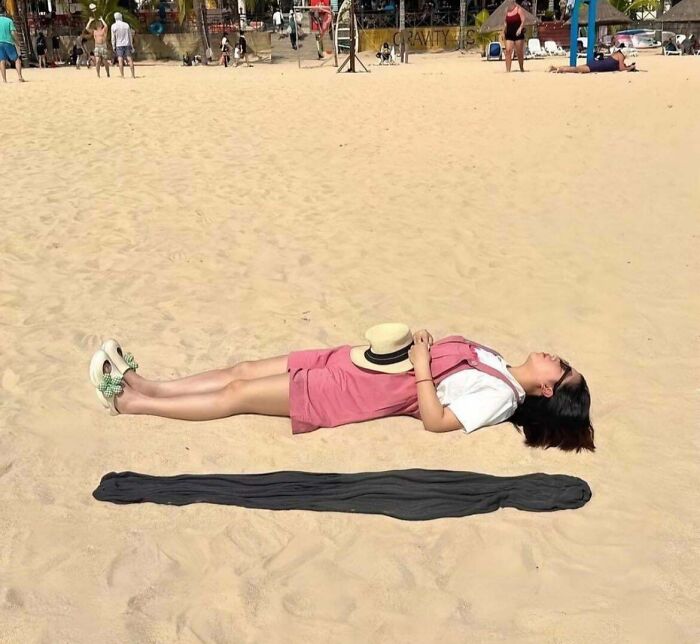
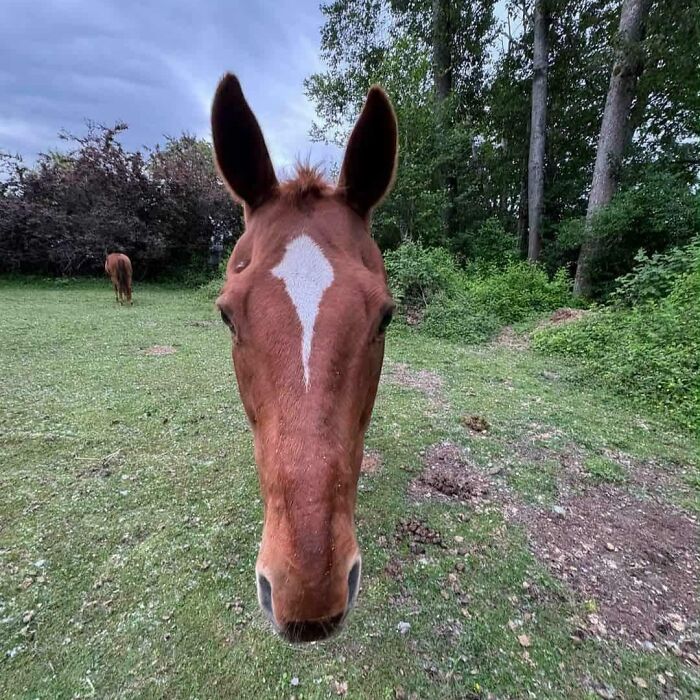
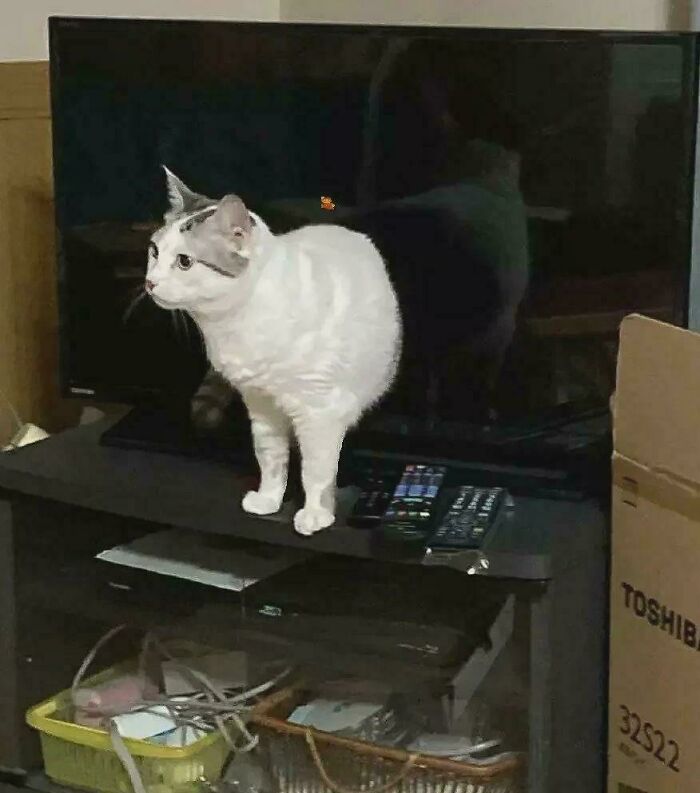
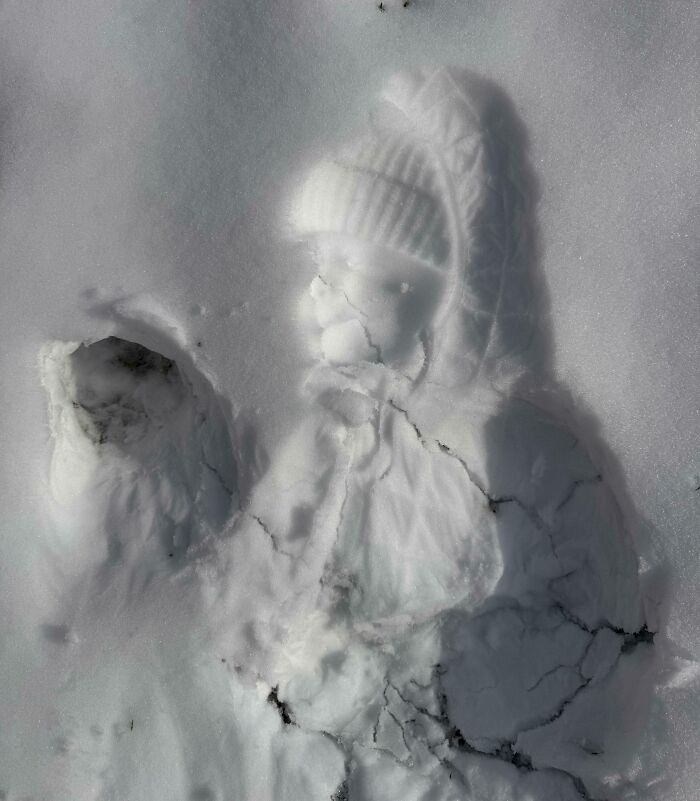
Your eyes are lying to you. Not occasionally, not under unusual circumstances. Constantly, systematically, and with absolutely no remorse. The human visual system is a magnificent piece of evolutionary engineering that also happens to be embarrassingly easy to fool, and the images in this list prove it over and over again.
Some of them will take a second look. Some will take ten. Some will have you tilting your phone, calling someone over, and then both of you standing there equally stumped, which is somehow worse. Don't fight it. Your brain is doing its best. It's best is simply not going to be enough today.
This post may include affiliate links.
In February 2015, the internet briefly forgot about everything else it was supposed to be doing and dedicated itself entirely to a photograph of a dress. The dress appeared to some people as white and gold, and to others as blue and black, with such absolute certainty on both sides that friendships were tested, relationships were strained, and the entire concept of shared reality took a brief but meaningful hit.
Scientists eventually explained that the disagreement came down to how individual visual systems interpret ambient light and shadow; some brains automatically compensate for a warm light source and see blue and black, while others compensate the opposite way and see white and gold. The dress was, for the record, blue and black. The white and gold people have never fully recovered.
In 1983, David Copperfield appeared to make the Statue of Liberty vanish on live television, and the world lost its whole mind. The actual explanation is considerably less supernatural but no less impressive as a feat of engineering and deception. The live studio audience was seated on a revolving platform hidden behind giant pillars.
While a curtain was raised and the drama built, the platform imperceptibly rotated the audience's angle until the statue was simply hidden behind one of the support towers. At this point, the curtain dropped to reveal an empty space that was never actually empty. Nobody moved the Statue of Liberty. The audience moved. The entire illusion was just a lesson in misdirection and our gullibility.
But optical illusions are nothing new, and Hans Holbein the Younger painted 'The Ambassadors' in 1533, and somewhere in the lower half of this otherwise stately double portrait of two French diplomats, he hid something extraordinary. Stretched diagonally across the bottom of the canvas is a human skull that simply looks like a smear across the bottom.
Step to the far right of the painting and view it at an extreme angle, and the skull snaps into perfect, startling focus. The technique is called anamorphic perspective, and Holbein deployed it with the quiet confidence of a man who knew exactly what he was doing and very much wanted to be the cleverest person in any room he had ever been in. He was, on the evidence, correct.
Another viral moment came from the "frozen plane" video in which an aircraft appeared to be completely stationary in midair, hanging in the sky like it simply decided not to move. People were freaking out, 100% convinced the matrix was real, and they were stuck in it.
When a fast-moving aircraft was filmed from a vehicle traveling in roughly the same direction at a comparable speed, the relative motion between the two cancels out, and it is a phenomenon called the parallax effect. And the plane appears to hover motionless against the sky. Your brain sees motion relative to the background, not absolute speed. Which is, in retrospect, a significant design flaw.
The Shroud of Turin brings optical illusions to religion. As if we needed that! It is a linen cloth bearing faint markings that many believers interpret as the face and body of Jesus Christ. Psychologists and vision scientists classify what people see in the shroud as pareidolia, the brain's powerful, deeply ingrained tendency to find familiar patterns, particularly human faces, in ambiguous or incomplete visual information.
It is the same phenomenon that makes people see faces in clouds, wood grain, and toast. The brain is not malfunctioning when it does this. It is doing exactly what it was designed to do, identify human faces as quickly and confidently as possible, even when the evidence is extremely thin. Whether that explains the shroud entirely is, of course, a question well above the pay grade of an optical illusions article.
Magic Eye images defined the 1990s and caused more squinting than any other publishing phenomenon in history. They are the result of a surprisingly long chain of scientific development. The stereoscope was invented in 1840, and vision scientist Christopher Tyler figured out in the 1970s how to hide a 3D image within a single repeating pattern rather than two separate images.
And then in 1993, the official Magic Eye brand launched with a book that spent over a year on the New York Times bestseller list, turning cutting-edge visual neuroscience into something you could buy at a mall and stare at for twenty minutes without seeing anything, while the person next to you claimed to see a dolphin immediately and you decided you no longer trusted them as a person.
Here is the part where the optical illusions get to feel good about themselves: looking at them is actually measurably beneficial for your brain. They are, according to researchers, essentially free neurological exercise, forcing the visual cortex to slow down, question its assumptions, and rebuild its interpretation of what it's seeing from scratch.
This process boosts neuroplasticity, improves cognitive flexibility, and actively trains the brain to look more carefully rather than jumping to the first available conclusion. The broader implication is that your brain does not passively record reality like a camera. It actively constructs it, using shortcuts, assumptions, and educated guesses. Every time an illusion fools you, your brain learns something.

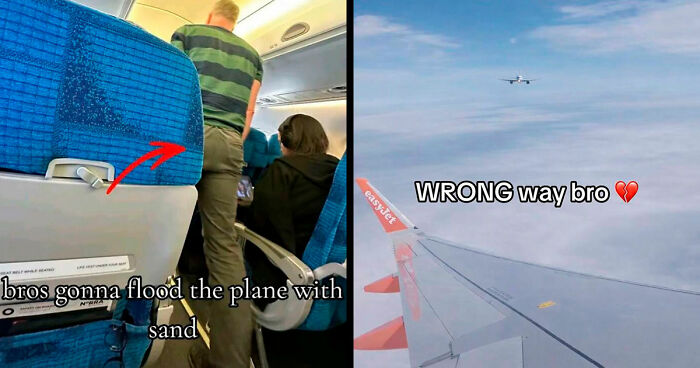
That's one of the very, very rare photos documenting the mating of airplanes in the wild. They're usually very shy.
Your brain has been lying to you your entire life, filling in gaps, making assumptions, constructing a version of reality that is convincing enough to function but occasionally, spectacularly wrong. The images in this list are the receipts. They are proof that the most sophisticated visual processing system on the planet can be completely undone by a 16th-century painting.
And somehow, that is not a terrifying thought; it is a delightful one. Because it means that reality is stranger, richer, and more layered than it first appears, and that sometimes the most interesting thing you can do is look again. Differently. From a slightly different angle. With your phone tilted approximately thirty degrees to the left, in the hope that this time, finally, you will see the dolphin.
Which one of these images made your brain tingle a little too much? Tell us in the comments!
"What? You've never seen a b***h doing ancestry research on a bus?"















 No fees, cancel anytime