Get Premium
Dark mode theme is available exclusively for premium users. Learn more about the benefits of subscribing.
No fees, cancel anytime.

 Dark Mode Ad-Free Browsing Unlimited Content
 Ad-Free Browsing Unlimited Content Dark Mode
Join 1.2 million Panda readers who get the best art, memes, and fun stories every week!
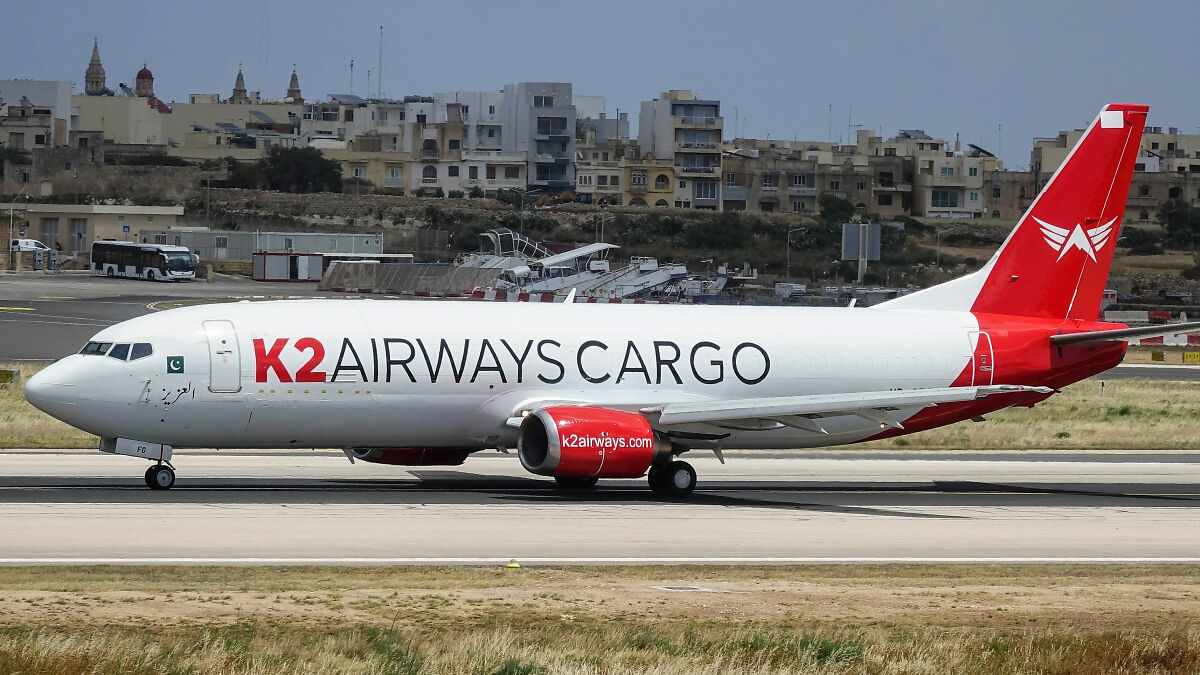
On Tuesday, July 7, a Boeing 737-400SF cargo aircraft, operated by Pakistan’s K2 Airways, mysteriously disappeared over the Arabian Sea with five people on board.
The plane was en route from Sharjah, UAE, to Karachi, Pakistan, when the crew reported an emergency.
Minutes later, all communications ceased, and the aircraft disappeared from the radar.
The incident prompted a large-scale search by Pakistani authorities, amid increasing suspicions of a crash at sea off the coast of Gwadar.
Now, the alleged last known transmission from the aircraft has surfaced, shedding light on the pilot’s desperate call for help in the final minutes.
Image credits: Adrian Cilia
The Pakistan Civil Aviation Authority shared on social media that the Boeing reported a “navigational system issue” at 9:18 p.m. local time and received immediate support from Karachi’s Area Control Center (ACC).
However, three minutes later, at 9:21 p.m., the aircraft was observed making an alarmingly rapid descent before making a sharp change in direction.
Radio contact and radar visibility ceased almost immediately. The plane’s last known location was approximately 155 nautical miles west of Karachi.
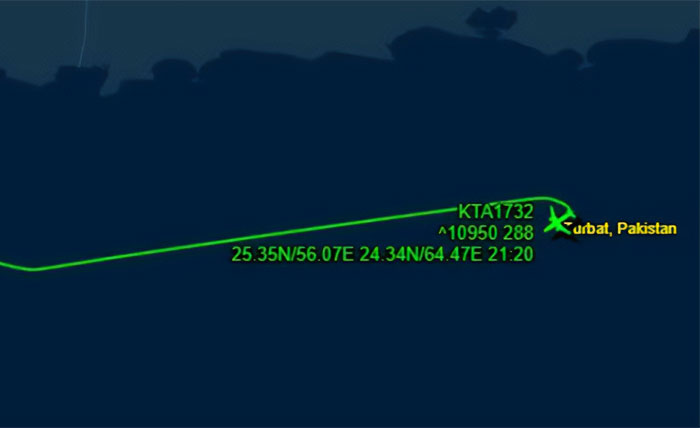
Image credits: Flightradar24
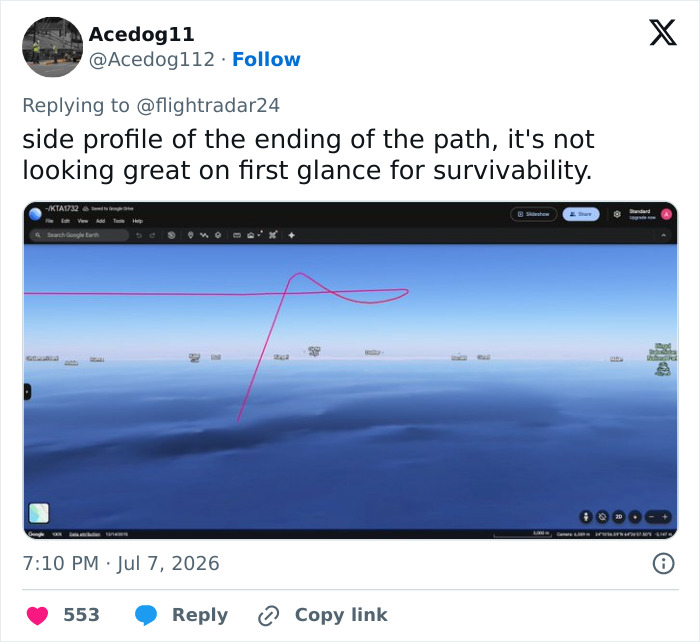
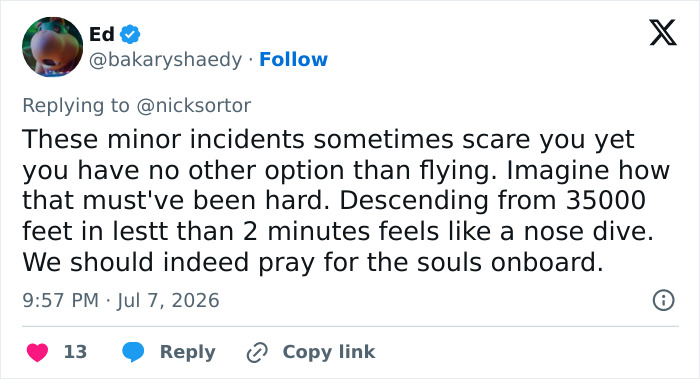
Aviation tracking website FlightRadar24’s data revealed that the Boeing had initially lost altitude, then briefly climbed before taking a massive plunge. It is believed to have plummeted roughly 35,000 ft in less than two minutes.
Just before its disappearance, the aircraft was at 1,100 ft above sea level and descending at 22,400 ft per minute.
Such a rate of vertical drop is far beyond the safe operational limits of an aircraft. For comparison, a typical emergency descent is 6,000-8,000 ft/min, and normal approaches are 500-1,500 ft/min, according to the Federal Aviation Administration.
🚨 BREAKING: A Boeing 737-400 freighter has gone missing in the Indian Ocean, just past the Gulf of Oman, after taking off from the UAE
Flight tracking data shows an EXTREMELY rapid descent, dropping approximately 35,000 feet in less than 2 minutes, before disappearing from… pic.twitter.com/HSXCoVgtfm
— Nick Sortor (@nicksortor) July 7, 2026
Following the loss of communications, Pakistan’s Navy, Air Force, and volunteer civilian agencies began a coordinated search-and-rescue operation in the Arabian Sea, near the area where the Boeing was last spotted.
According to local media, the country’s warships, PNS Zulfiqar and PNS Hunain, as well as a Saab surveillance aircraft, have joined the search.
Image credits: Acedog112
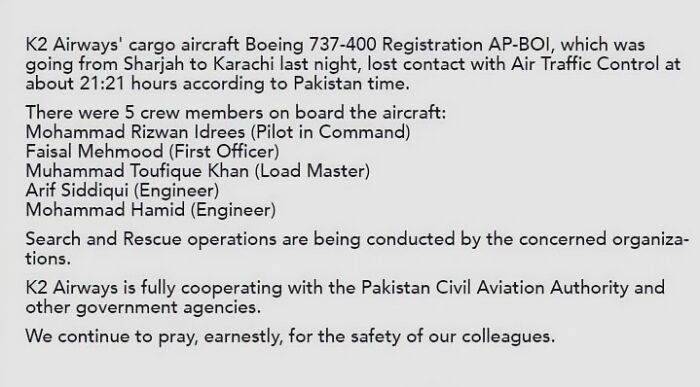
A statement from K2 Airways identified the five crew members on board the Boeing aircraft who are missing and are believed to have met a fatal end: Mohammad Rizwan Idrees (Pilot in Command), Faisal Mehmood (First Officer), Muhammad Toufique Khan (Load Master), Arif Siddiqui (Engineer), and Mohammad Hamid (Engineer).
Pakistan’s Prime Minister Shehbaz Sharif offered his condolences to the families of the five, expressing “deep sorrow, grief, and regret over the tragic incident.”
The last radio transmission of the K2 Cargo plane that crashed in the sea west of Karachi….as an aviator it is absolutely heart breaking…. pic.twitter.com/4rUZNU1TnX
— Fakhr-e-Alam S.I & S.E (@falamb3) July 8, 2026
Amid the ongoing search, news outlets have uncovered unencrypted radio transmissions from the plane’s cockpit to Air Traffic Control (ATC), including those in which the alarm about the operational emergency was raised.
According to news.com.au, the final transmission recorded the pilot saying the plane was “rolling or floating.”
In aviation, rolling is the rotational movement of an aircraft around its longitudinal (nose-to-tail) axis, causing one wing to tilt up and the other down.
Image credits: KhelbeyKhan
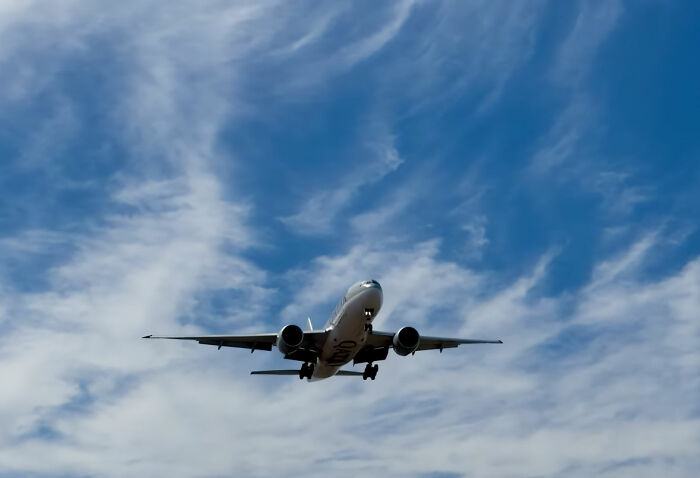
Image credits: Tahamie Farooqui/Pexels (not an actual photo)
“Floating” describes the aerodynamic phenomenon where an aircraft continues to glide just inches above the runway before touchdown.
NewsX shared a portion of the cockpit-to-ATC transmission during their news broadcast, in which the pilot said, “We have a navigation problem, requesting radar assistance.”
The outlet believed this was the aircraft’s initial call for help.
Image credits: Joe Ambrogio/Pexels (not an actual photo)
Image credits: JasonBadman33
Vandana Singh, an aviation expert, said that the radio transmission should help determine the plane’s crash location.
However, whether the system error was responsible for the accident or whether another factor was at play would be determined after its recovery.
“The official cause will only be confirmed after the entire FDR (Flight Data Recorder), CVR (Cockpit Voice Recorder), wreckage, and everything is investigated by the authorities,” she said.
Image credits: livemint
Former commercial pilot Captain Byron Bailey weighed in on the incident, theorizing about what could have gone wrong on the airplane.
He told SkyNews.com.au that rather than an engine failure, the rapid descent pointed to a phenomenon that should not have caused a crash.
“They possibly had a depressurization,” Bailey said. “Maybe the pilots didn’t react, get their masks on in time, and got hypoxic (oxygen deprivation).”
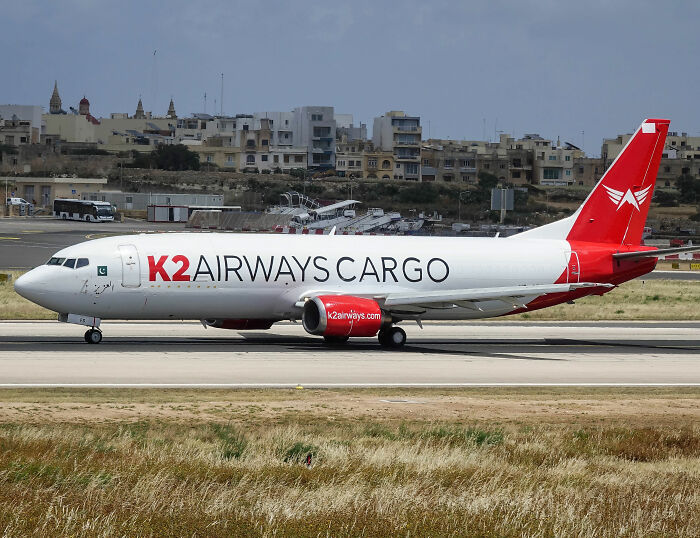
Image credits: K2Airways
“I’ve had depressurization occur, and it’s no big deal. You just put your mask on and then start commencing a descent with the speed brakes out to get down to 10,000 ft.”
“But it’s a controlled sort of situation. This sounds like they were out of control,” added Bailey, who has flown the same route as an active pilot.
“These old airplanes could have been just a failure of the outflow valves and all that sort of stuff,” he continued, saying that the aircraft could have been “carrying a bucket full of faults.”
“Poor maintenance on these cargo airlines. They’re notorious for using old airplanes at the end of their life, you know, they are not fit for passenger travel… Maybe they became incapacitated because you just don’t know if they had serviceable oxygen for their masks or anything.”
The missing aircraft is at least 27 years old, having been manufactured and delivered by Boeing in 1999 as a passenger plane for Russia’s flagship carrier, Aeroflot. In 2012, it was repurposed as a freighter and began operating as K2 Airways’ sole charter aircraft in 2024.
The plane’s previous recorded flight took place on June 28.
Image credits: SharonR53900676
Image credits: nickwakenc
Image credits: ezink3
Image credits: bakaryshaedy
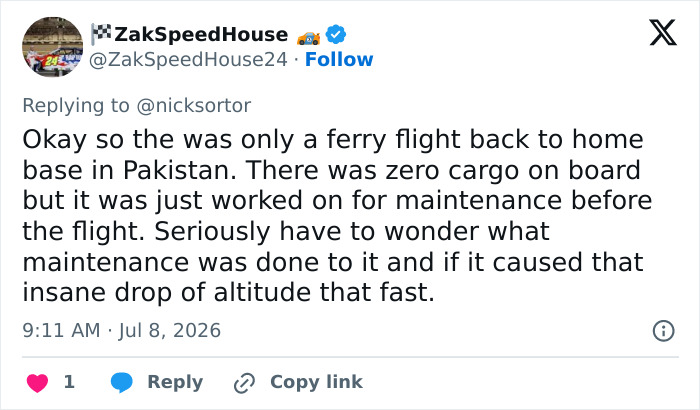
Image credits: ZakSpeedHouse24
Image credits: BrianCantWin
Image credits: Evelyn13478
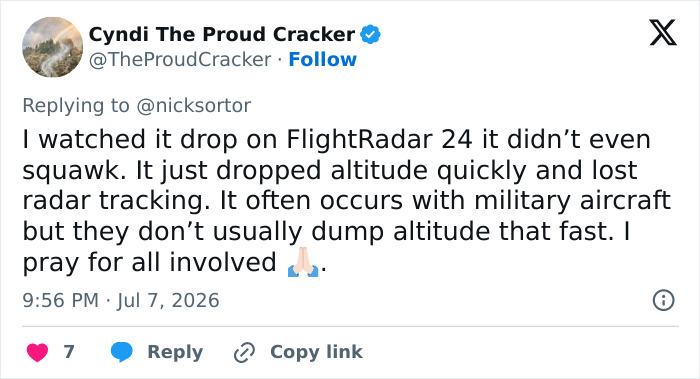
Image credits: TheProudCracker
Image credits: Killuminati2202
Image credits: Freya_swaggy

By entering your email and clicking Subscribe, you're agreeing to let us send you customized marketing messages about us and our advertising partners. You are also agreeing to our Privacy Policy.
Thank you! You've successfully subscribed to newsletters!










































 No fees, cancel anytime














28
2