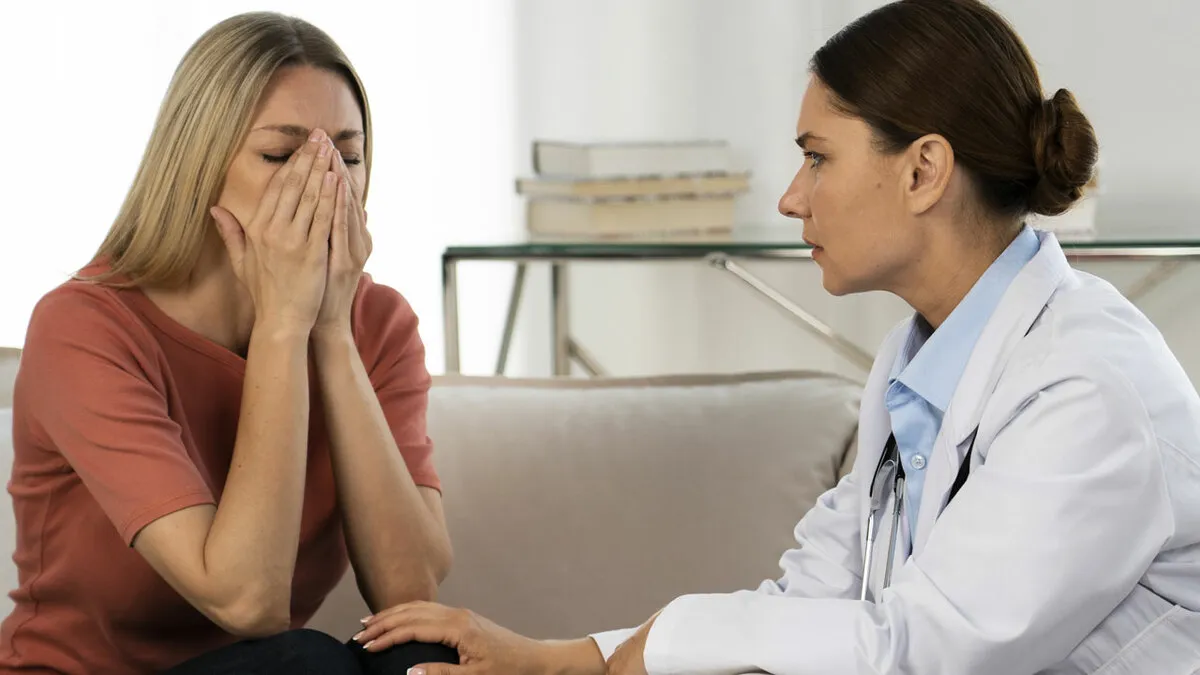
Few fields nowadays have such glaring sexist gaps in knowledge as healthcare. For years, science has prioritized solving men's inability to perform in the bedroom by producing a little blue pill over trying to solve the many issues in women's health. To this day, we don't know what causes preeclampsia in pregnant people, the reason behind or cure for endometriosis, and, most of all, the many scary side effects that come with menopause or the transitional period into it – perimenopause. "She has hysteria!" many a 20th-century doctor had probably declared, chalking up any and almost all women's symptoms like hot flashes, brain fog, fatigue, and sleep disruption to a magical deus ex machina. That's how that old-timey doctor would probably have diagnosed perimenopause back in his day. Yet today, women's health is finally given the attention it deserves. In fact, perimenopause has never been this hot (no pun intended). Celebrities and influencers are talking about it, advertising miracle hormone creams and online clinics that will free women from the shackles of insomnia, dry skin, and hot flashes, and women's midlife healthcare has fallen into the hands of venture capitalists. Perimenopausal women have been ignored for years, but is the alternative of predatory marketing tactics and questionable health apps really the only other choice? Bored Panda consulted with physicians, OB/GYNs, and even one medical director of a telehealth provider to get to the bottom of what's been dubbed the "perimenopause industrial complex." magnific (not the actual photo) Most people can probably tell you what menopause is: the big boogeyman that women are supposed to be afraid of as they age. As a character in the 2016 drama series Fleabag tells the titular character, “[Women] have pain on a cycle for years and years and years. And then, when you feel you are making peace with it all, what happens? The menopause comes. And it is the most wonderful thing in the world. And yes, your entire pelvic floor crumbles and you get hot, and no one cares, but then, you’re free.” That paints a pretty nice picture, but menopause can be pretty exhausting physically and mentally. Theoretically, menopause is a period in a woman’s life when her body stops producing eggs. Experts categorize it as a woman going at least 12 consecutive months without having a period and note that it comes with side effects such as hot flashes, night sweats, insomnia, mood swings, and even urinary urgency. The average age of menopause is 52 years, but many people don’t know that younger women can feel similar symptoms, too. That’s where perimenopause comes in: the period before menopause. It usually starts in a woman’s 40s, though many women in their 30s experience it as well. Perimenopause was never given the same treatment as menopause in the public eye. No adverts for supplements, no social media posts to rally fellow women together, and certainly no celebrities speaking out about their experiences. Today, we have Naomi Watts sharing how she was diagnosed at the age of 35, Halle Berry starting her own female longevity company, and influencers sharing the signs that you, too, may have entered perimenopause. photopopova (not the actual photo) Perimenopause is notoriously difficult to diagnose. As Kanchi Chadha-Agate, M.D., Director of the Midlife Women’s Health and Longevity Center at Hackensack University Medical Center, explains to Bored Panda, it’s a fluctuating, gradual transition rather than a single event. “A woman’s hormone levels, particularly estrogen and progesterone, swing unpredictably during this time, meaning a single blood test rarely provides a definitive answer,” she says. The symptoms of perimenopause can also be many. For example, in an ad for the telehealth clinic Midi that focuses on perimenopause care, comic Amy Schumer lists gum inflammation, itchy ears, “unexplained rage,” and random tears as possible indications. Although these can also be attributed to a bad mood from bad weather or a bad burrito the night before, in practice, no single lab test can tell a person whether they have perimenopause, so medical professionals now diagnose it holistically. Allison Sayre is an ARG Scientific Advisory Board member and board-certified women’s health nurse practitioner with advanced expertise in hormonal health, integrative gynecology, and patient-centered care across the lifespan. She tells Bored Panda that some women have no or few noticeable symptoms, while others experience significant ones, like fatigue, brain fog, bloating, mood changes, low libido, sleep disruption, etc. “That said, these symptoms are not specific to perimenopause, which is why it should never be assumed that it is the sole cause of the problem,” she explained. “Thyroid dysfunction, iron deficiency, sleep disorders, medication effects, mood disorders, gut dysfunction, metabolic issues, nutritional deficiencies, chronic stress, and inadequate recovery can produce many of the same complaints.” bywinona Dr. Cathleen Brown, a board-certified OB/GYN and the Medical Director for Winona What’s more, test results might differ depending on time of day. “Hormone levels fluctuate significantly throughout the day during the menopause transition, so these tests only provide a temporary snapshot of what hormones are doing at that exact moment,” Dr. Cathleen Brown, a board-certified OB/GYN and National Menopause Society-certified practitioner, tells Bored Panda. “Even if levels are found to be within a normal range, a woman can still actively be going through perimenopause.” That’s why many clinicians diagnose perimenopause by looking for patterns. Dr. Brown, for example, asks her patients to keep a symptom journal. “I encourage patients to log what types of symptoms they’re experiencing along with their frequency, severity, potential triggers, and what time of the day or night they typically occur,” she explains. “While hot flashes and night sweats are among the most widely recognized symptoms of perimenopause, it’s important for women to take note of any new or unusual changes such as bloating, mood swings, difficulty sleeping, joint pain, or even changes in taste and smell,” she adds. “These are lesser-known but common symptoms of the menopause transition that can easily be mistaken for other health issues rather than hormonal changes.” DC Studio (not the actual photo) When a condition is so hard to diagnose, it’s no surprise that historically, many women have felt ignored by their healthcare providers. You come into a doctor’s office, list your symptoms, maybe suggest that some of your symptoms might sound like perimenopause, but the only response you hear is, “That’s all in your head.” That’s not just a sad hypothetical: in fact, 53% of perimenopausal women felt their symptoms have been dismissed or not taken seriously. Although it is difficult to diagnose, that doesn’t make it any less frustrating for the women experiencing the symptoms. Dr. Kryss Shane, an expert on medical gaslighting, tells Bored Panda that although the concept of perimenopause has been around for ages, we still don’t know many of its hows, whens, or whys. “Adding in details of endometriosis, fibroids, genetics, and gender affirmation decisions all add additional questions for medical professionals,” she adds. “Sometimes, when a patient presents with symptoms and patterns that don't match textbook definitions, a provider can assume the symptoms aren't indicative of perimenopause and a self-advocating patient can experience medical gaslighting.” Being dismissed by a medical provider might discourage women from seeking care in the future, and even leave them with trauma. “When we look at childhood ACE (Adverse Childhood Experiences) scores, we understand how a childhood experience can undermine a child's sense of self. If we consider that this can continue into adulthood, we can see the way the trauma compounds,” Shane explains. “If we look at the systemic and historical experiences of women, of LGBT+ patients, of Black patients, of visually disabled patients, and of those whose disabilities are invisible, we can truly begin to see the impact of just how many patients or people in need of medical care are experiencing the detriments of being medically gaslit.” That’s why, according to her, medical and mental healthcare providers need to work in tandem. drazenphoto (not the actual photo) Perimenopause is not a condition that can just be treated with a pill and go away — the only thing we can do is treat the symptoms. Nowadays, one of the most effective ways to do that has become Menopause Hormone Therapy (MHT). Previously, it was called Hormone Replacement Therapy (HRT), but today, many medical experts consider that term to be outdated and misleading, and use MHT instead. According to Dr. Chandha-Agate, MHT is the gold standard for treating perimenopause symptoms, such as hot flashes, night sweats, dryness “down there,” and urinary tract infections. It also supports bone health and can significantly reduce the risk of osteoporosis and related fractures. Other experts we talked to agree. Yet, for many years, MHT was demonized as unsafe and risky as a treatment for menopause symptoms. Dr. Eleonora Fedonenko, a board-certified internal medicine physician, told Bored Panda that for years, the FDA had a black box warning for MHT and had just recently begun to lift it. In a 2002 landmark study by the Women’s Health Initiative (WHI), MHT was linked with increased risk of heart disease, breast cancer, and probable dementia. “[MHT] does have its place as an evidence-based treatment for symptoms of menopause,” Dr. Fedonenko says. At the same time, she notes that some information about it has been contradictory, especially from online clinics. “This has blurred the line between medical care and marketing,” she adds. bristekjegor (not the actual photo) Indeed, some telehealth providers and online clinics are making it sound like MHT is the cure for every health inconvenience that a woman has. Feeling sleepy? Let’s get you some hormones! Mood swings, anxiety, and depressive thoughts are making it hard to get through the day? MHT is the answer! Companies like Midi, Winona, Alloy, and Evernow offer midlife healthcare for women, but many experts worry they’re more focused on profits and becoming people’s primary source of medical care than on delivering ethical healthcare. Stephanie Faubion, director of the Mayo Clinic’s Center for Women’s Health and medical director of the Menopause Society, told WIRED, for example, that the perimenopause hype machine is going out of control. “We are running into a danger zone attributing all these symptoms to perimenopause.” The biggest hype right now is about how MHT can help with more than just alleviating perimenopause symptoms. While the experts we spoke with agree that MHT helps in other ways, it shouldn’t be touted as a universal preventive therapy. “We have evidence that hormone therapy can offer benefits beyond treating symptoms, such as preventing bone loss, reducing fracture risk, and potentially supporting cardiovascular health. For these reasons, the conversation should focus on the broader picture, including symptom relief, potential long-term health benefits, potential risks, and how each applies to the individual woman,” Allison Sayre told us. “Labeling HRT as an ‘anti-aging’ or ‘longevity’ drug requires caution; the evidence is not yet mature enough to make this promise to people.” Dr. Eleonora Fedonenko cautions people to be skeptical of any providers who make such claims. “This idea that hormones may be associated with healthy aging has some basis in scientific truth,” she admits. “Women’s natural hormone levels have been studied and higher levels have been associated with lower risk of chronic conditions. This does not, however, mean that supplemental hormones lead to longevity. Randomized studies have shown women who start HRT closer to menopause (within 10 years or before age 60) are less likely to [pass away] from any cause, and have fewer fractures. But that’s not the same as showing that HRT for these women actually prolonged their lives, let alone extending this conclusion to all women.” Dr. Eleonora Fedonenko Dr. Eleonora Fedonenko, a board-certified internal medicine physician Even Dr. Cathleen Brown, who’s the medical director of the telehealth provider Winona, says that MHT cannot be prescribed for longevity or as an anti-aging treatment. According to her, the benefits women might experience from using MHT are additional benefits. She says, “Continued HRT use can help reduce the appearance of fine lines and wrinkles by promoting collagen production, hydration, and elasticity.” “Additionally, when treatment is started before the age of 60 or within 10 years of menopause onset, studies show a reduced risk of all-cause mortality and cardiovascular disease, which remains the leading cause of death among women.” Dr. Kanchi Chadha-Agate, M.D., says that the benefits of MHT can’t be the same for every woman. They depend on each woman's individual metabolic, cardiovascular, and family health history. “Current evidence supports the ‘timing hypothesis’ — meaning MHT may offer cardiovascular protection if started early in the perimenopause/menopause transition,” she tells Bored Panda. “Additionally, while some observational studies suggest hormonal support might benefit long-term brain health, the data is still inconclusive, and MHT is not currently recommended solely for the prevention of dementia or heart disease.” Dr. Cathleen Brown says she asks patients concerned about aging and longevity to focus on strength training, a nutrient-rich diet, stress management, and quality sleep. “Hormones are only one factor at play when it comes to healthy aging,” she says. Have perimenopause treatment providers faced controversies? Of course. Midi, for example, was accused of false advertising by the BBB National Programs’ National Advertising Division because of claims that 91% of their patients felt “relief within 2 months.” Winona, in its own right, has drawn criticism for using compounded medications: while the ingredients are FDA-approved, the resulting compounded treatments are not FDA-approved. We can’t deny that these companies have also helped many women access care that was previously unavailable or denied to them. While they could and definitely should get more government regulation, they’re not as bad as the likes of Gwyneth Paltrow offering us pseudoscience in the form of jade eggs as miracle cures to "balance hormones." For now, it’s still up to women to be informed about where they get their diagnoses and prescriptions from. Some might be okay with relying on companies like Midi, whose CEO and co-founder, Joanna Strober, also sold a children’s weight-loss app to Weight Watchers. Others might question the ethics and practices of such companies and online clinics, delaying their perimenopause care in the process. One thing is obvious, though — women’s midlife health deserves more attention, conversations, and research.