



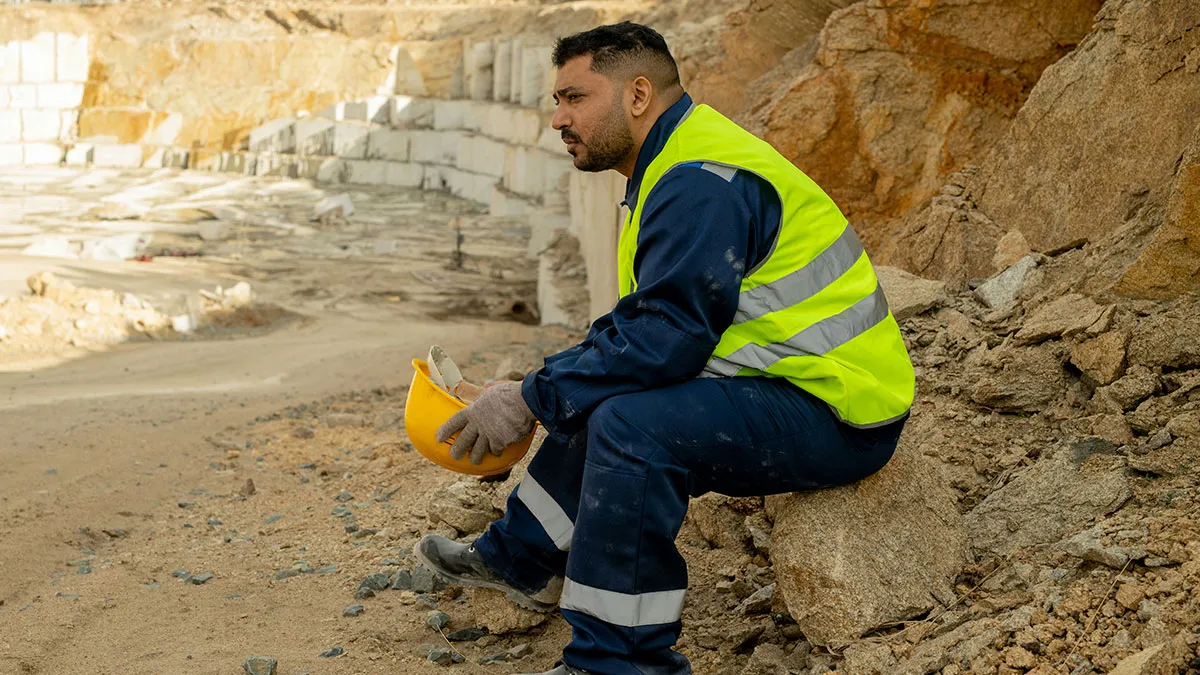


Right now, as heatwaves bake much of the planet and offices turn into slow cookers, millions of workers are sweating through their shirts with precisely zero legal right to do anything about it. Fans pointed at their faces. Ice in their drinks. Nothing in writing.
Here's the thing that'll do your head in: in the UK, there is a legal minimum workplace temperature, but there is no legal maximum. The law decided that working in the cold is unacceptable. Working in conditions hot enough to make you physically ill? That's just... fine. Allegedly.
So we went through the rules to find out where in the world workers are actually protected when the mercury goes through the roof. The short answer: not many places. And the hottest countries are often the ones with the least protection. Make that make sense.
The UK and Ireland
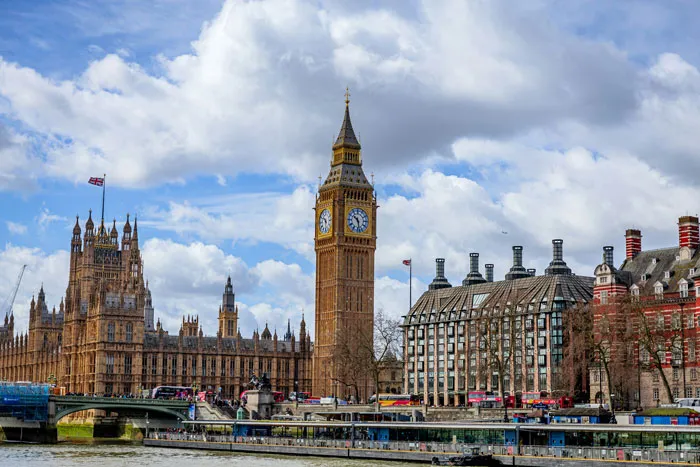
Image credits: Pieter Benedictus / Unsplash (not the actual photo)
The UK's Workplace Regulations require employers to maintain a "reasonable" temperature. The minimum is 16°C for most work, or 13°C if you're doing something physically demanding. Below that? Legal issue. Above that? The law essentially shrugs. The GMB union has been pushing for a legal "too hot to work" threshold for years, but until something changes, open a window and hope for the best.
The Health and Safety Executive's reasoning is that you can't set a meaningful upper limit because in plenty of workplaces, the heat is baked into the job itself, like in a kitchen. Which is technically fair. But it also means that if your office hits 35°C in a July heatwave, your boss isn't breaking any rules by making you sit there until 5 pm.
No maximum temperature in the Republic either. Employers must ensure the temperature is "appropriate for human beings" given the work being done, which is such a beautifully vague bit of legislation that it tells you almost nothing. Until anything changes, the Irish had better find shelter in the nearest pub and cool down with a Guinness during business hours without feeling too guilty about it.
Hungary
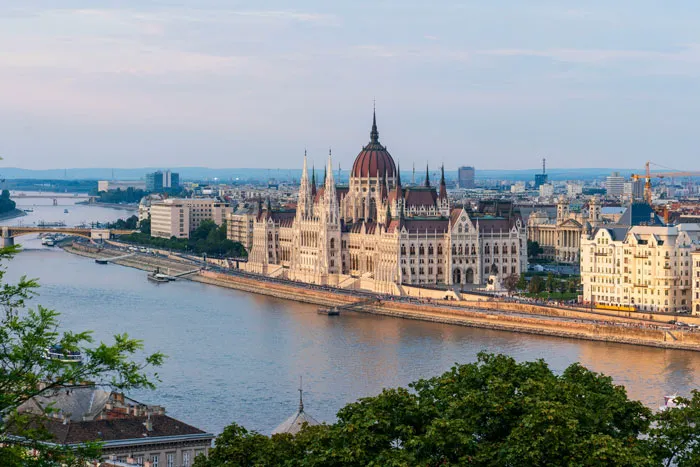
Image credits: Ervin Lukacs / Unsplash (not the actual photo)
Hungary has set the strictest workplace heat limits in Europe. Office workers are legally protected above 31°C. Manual workers have limits ranging from 27°C to 31°C, depending on how strenuous the work is. And crucially, if those limits are exceeded, workers can lawfully stop working.
Worth noting: these figures are measured in "corrected effective temperature," which factors in humidity and air movement, not just what the thermometer says. But still. Hungary looked at the rest of Europe's approach to heat at work and said: "nah, we'll do something useful actually."
Germany
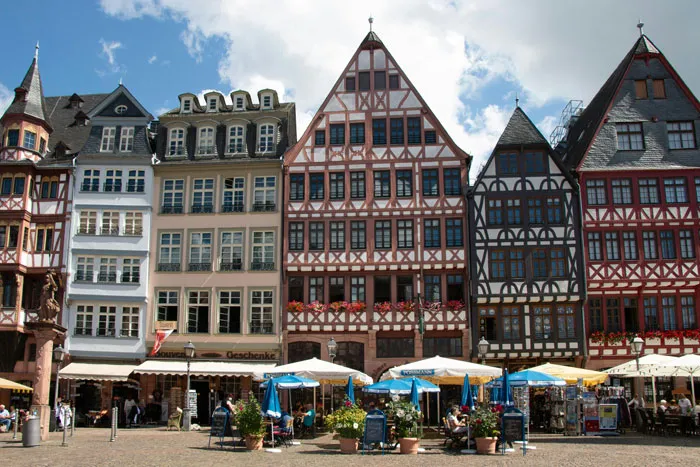
Image credits: Konpasu.de / Unsplash (not the actual photo)
Germany loves rules. Everyone knows this. So you'd think Germany would have this sorted but it's complicated. Under something called 'Technical Rule ASR 3.5,' a workplace at 26°C or above is "unsuitable," and action should be taken. Above 30°C, it becomes urgent. Above 35°C, the location is described as "no longer suitable for work."
Here's the catch: this is not law. It's a technical guideline. It doesn't mean workers get to go home when the office hits 35°C, it means the employer is expected to cool the room down. Whether they actually do it is another matter entirely. So: good instincts, Germany. Incomplete implementation.
The USA and Canada

Image credits: edophoto / Magnific (not the actual photo)
No federal heat standard in the US. None. Roughly 44 states have no enforceable rules on when employers must provide water, shade, or rest breaks. Only six state programmes have anything enforceable: California, Oregon, Washington, Nevada, Colorado, and Maryland. California is the gold standard with shade required above 80°F, mandatory cool-down rest breaks above 95°F, and a written heat prevention plan.
In 2023, Texas passed a law pre-empting local governments from requiring employers to provide mandatory water breaks and rest periods. The state blocked cities from creating those protections. Florida did the same thing in 2024. Two of the hottest, sweatiest, most aggressively sun-baked states in the continental United States looked at heat protection rules and decided the problem was that there were too many of them.
Canada also has no maximum workplace temperature anywhere in the country, with each province relying on vague "general duty" clauses. British Columbia's protections are perhaps the most startling and they kick in when a worker's core body temperature hits 38°C, which is, for the uninitiated, a fever. By the time the rules apply to you, you are already ill. Ontario has proposed a Heat Stress Act but it has not been enacted.
The Gulf States

Image credits: Nick Fewings / Unsplash (not the actual photo)
Here's where the approach shifts entirely. The countries that deal with genuinely extreme, face-melting heat, the Gulf states, have largely given up on trying to regulate temperature and instead regulate time. You just can't work outside during the worst of it.
The UAE, Qatar, Saudi Arabia, Kuwait, Oman, and Bahrain all have different rules but mostly ban work between 11:00 and 16:00 between June and September, with heavy fines or even jail time when employers break the rules. Is time-based regulation perfect? No. Does it at least acknowledge that working outside at 2 pm in July in Qatar is a public health emergency waiting to happen? Yes. Which puts it ahead of Texas.

Image credits: vh-studio / Magnific (not the actual photo)
In Australia, Argentina, and India, some of the hottest places in the world, there are also no limits. Latvia and Slovenia set a 28°C indoor maximum. Montenegro sets a 36°C limit for outdoor work while Cyprus stops outdoor moderate and heavy work between noon and 4 pm during orange heat warnings, and bans it entirely during red warnings.
Spain has set temperature ranges of 17–27°C for office work and 14–25°C for light physical work. During orange or red heat alerts, workers can reduce or modify their hours, with up to four days' paid leave if they genuinely cannot get to work. It's not perfect, but it's something. France is falling behind by only saying construction workers must have access to 3 liters of drinking water in the heat. Liberté, égalité, hydration.
In the US, 55 workers did not survive occupational heat exposure in 2023, up 77% from 31 passings in 2012. Construction workers make up about 6% of the American workforce but have accounted for roughly a third of all occupational heat incidents for the past three decades. Construction workers in Texas and Florida. The ones who can't legally be guaranteed a water break.
How hot is too hot for you to work? Tell us how you would change the law if you were president for a day in the comments!