







From the outside, the family looks perfect. They talk every day, know each other's schedules inside and out, and always share their thoughts and feelings.
Weekends are spent together, vacations are never skipped, and every decision they make is as a group.
Friends and neighbors admire how close they are and the fact that they have no secrets, no distance, and no moments of silence. But inside that same family, the experience can feel quite different.
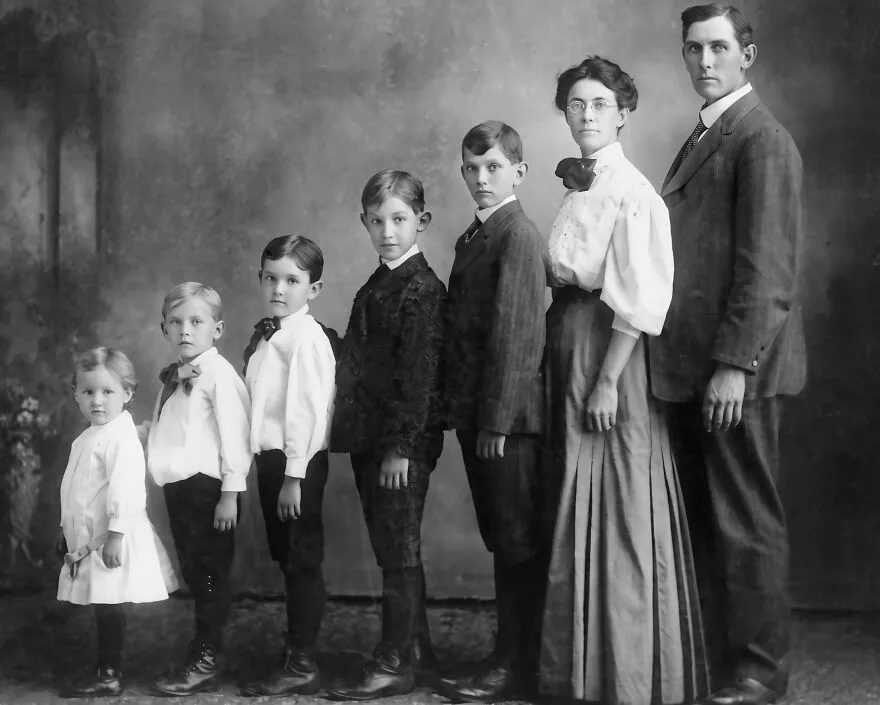
Image credits: VivaLFuego / Flickr
Privacy barely exists. One missed phone call sparks hours of accusations. And making a personal decision, like moving to a different city or choosing a romantic partner, can trigger waves of guilt. Any act of independence feels like a betrayal of the unit.
You start to notice something unsettling: every thought requires approval. Every emotion becomes communal property. What looks like closeness from the outside can feel like suffocation.
This is what psychologists call family enmeshment. It's like intimacy, but more smothering, and it lacks all typical boundaries. Love feels less like support and more like a spiderweb that you cannot detangle yourself from.
What is Family Enmeshment?
Psych Central defines family enmeshment as a group of relatives who are “emotionally fused together in an unhealthy way.”
In a healthy family, people influence each other but still remain separate individuals. Parents, children, and siblings have their own thoughts, emotions, preferences, and lives.

Image credits: taylordobbs / Reddit
But growing up in an enmeshed family, those lines become blurred. The emotional space between “you” and “me” becomes so small that it practically disappears. Personal autonomy is replaced with collective emotional management.
The Fear- Obligation- Guilt Triangle
One reason enmeshment is so difficult to recognize (and even harder to escape) is the invisible glue that binds it. Many enmeshed systems rely on a powerful emotional trio: fear, obligation, and guilt.
Conflict feels dangerous, so any disagreement might lead to silent treatment, emotional explosions, or family drama.
To avoid that, family members feel obligated to maintain harmony and protect others’ feelings. But freedom is often framed as selfishness, so they may feel too guilty to fully separate themselves.
The Shared Nervous System
In enmeshed families, emotional states are contagious. If mom is anxious, everyone becomes anxious.
If Dad is angry, everyone walks on eggshells. If one sibling is upset, the family rallies around to support them. Over time, the household begins to function as a shared nervous system, with no independent, private emotions.
Children growing up in these environments learn to constantly monitor other people's moods.
Their survival strategy becomes emotional hyper-awareness: scanning the room, anticipating reactions, and adjusting behavior to keep the peace.
Healthy Closeness vs Enmeshment
The difference between closeness and enmeshment is subtle but crucial.
Healthy families say:
“We support each other.”
“We care about your choices.”
“You're free to live your own life.”
Enmeshed family dynamics operate differently:
“Your choices affect all of us.”
“Why didn't you tell us first?”
“How could you do this to your family?”
Healthy families support each other, while enmeshed families are overly involved and absorb each other. That difference changes everything.
7 Signs You Are in an Enmeshed Family
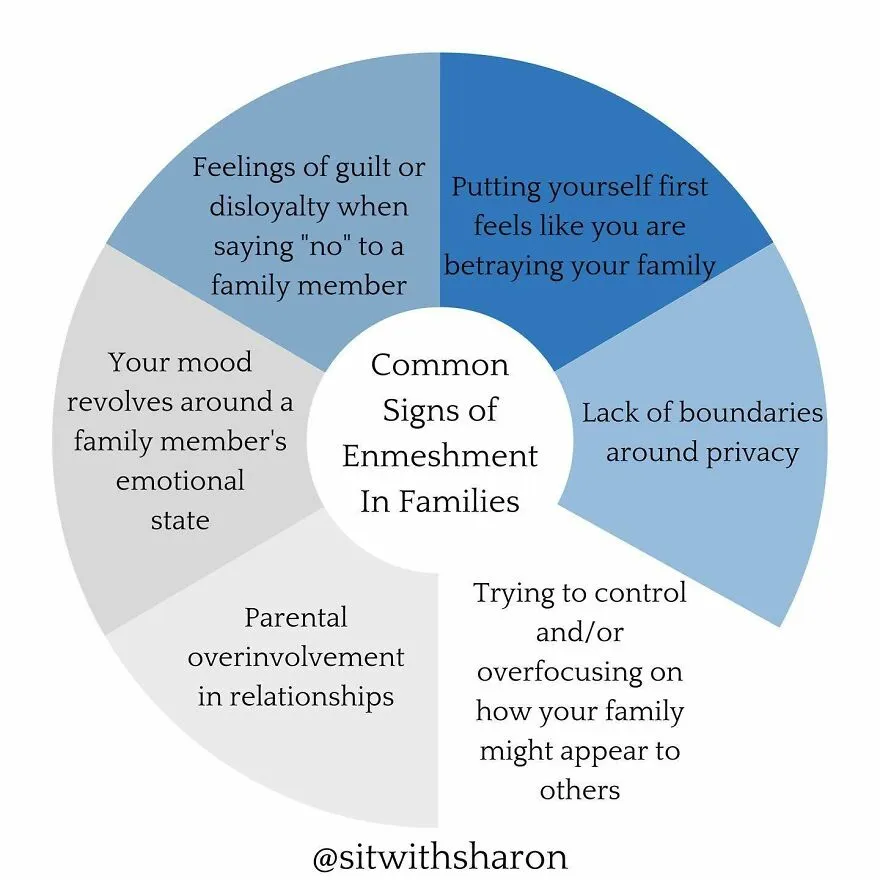
Image credits: sitwithsharon / Instagram
Many people raised in enmeshed environments don't realize anything is wrong until adulthood. The patterns feel normal because they've been drilled in since childhood. If you're unsure whether you're in an enmeshed family, these common experiences may feel familiar.
Guilt of Independence
Making plans without consulting your family can feel strangely wrong. You might hesitate to take trips, pursue opportunities, or even spend time with friends without informing everybody first. Keeping anything private can trigger immense feelings of guilt, as if independence is a betrayal.
Role Reversal
Instead of parents supporting children emotionally, the roles flip. You may find yourself acting as your parents’ therapist, confidant, or emotional caregiver. They rely on you for comfort, validation, and advice, making you feel more like their friend than their child.
The Hive Mind
Major life decisions don't feel like individual choices. Instead, they're discussed, debated, and, at times, railroaded by the family unit. Choosing a career, moving to a new city, or starting a relationship all require the family's seal of approval before they can happen.
No Privacy
Personal space may be interpreted as secrecy or rejection, so you're forced to publicize everything you do. Locked doors and private phone calls are nonexistent, and any personal boundaries around personal topics provoke suspicion.
Conflict Contagion
One person's mood dictates the entire household climate. If someone wakes up angry or upset, everyone else adjusts their behavior accordingly. Family members become highly attuned to emotional shifts, often sacrificing their emotional needs to stabilize the environment.
Identity Confusion
You might struggle to answer simple questions about yourself. What do you actually enjoy? What are your values? Where do you want to go in life? When your sense of self has always been filtered through family expectations, developing a clear sense of identity can be difficult.
The Rescue Mission
You feel responsible for solving everyone's problems, so when family members struggle mentally, financially, or in their other relationships, you instinctively step in to fix it, even when it drains you. Telling them, “This isn’t my responsibility,” feels practically impossible.
The Psychological Cost

Image credits: Art With Erika / Facebook
While enmeshed families often see themselves as loving and loyal, the psychological consequences can be significant.
According to Psychology Today, children with enmeshment trauma often struggle with independence due to a lack of clear boundaries and delayed identity development.
Major life moments, like moving out or pursuing personal goals, can feel terrifying because they disrupt the family dynamic.
Cohesion and enmeshment also complicate romantic relationships. When someone grows up accustomed to intense emotional involvement from family members, setting healthy boundaries with a partner can be challenging.
Parents may intrude on decisions, expect constant updates, or react negatively when attention shifts toward somebody else.
Living inside an enmeshed system produces a constant, low-grade tension that translates into real-life as chronic anxiety.
You may feel responsible for holding the entire family system together, maintaining order, and shouldering an ever-growing emotional burden.
Over time, you'll develop people-pleasing behaviors and a fear of disappointing others. In many enmeshed families, these pressures are distributed unevenly, with one child cast as the scapegoat child who absorbs blame, and another elevated as the golden child who can do no wrong.
How the Generational Cycle Repeats
Family cohesion and enmeshment rarely appear out of nowhere. In many cases, it emerges from earlier forms of emotional deprivation.
Parents who grew up feeling neglected, abandoned, or unsupported may unconsciously overcorrect with their own children, trading distance for constant closeness. But that quickly becomes stifling.
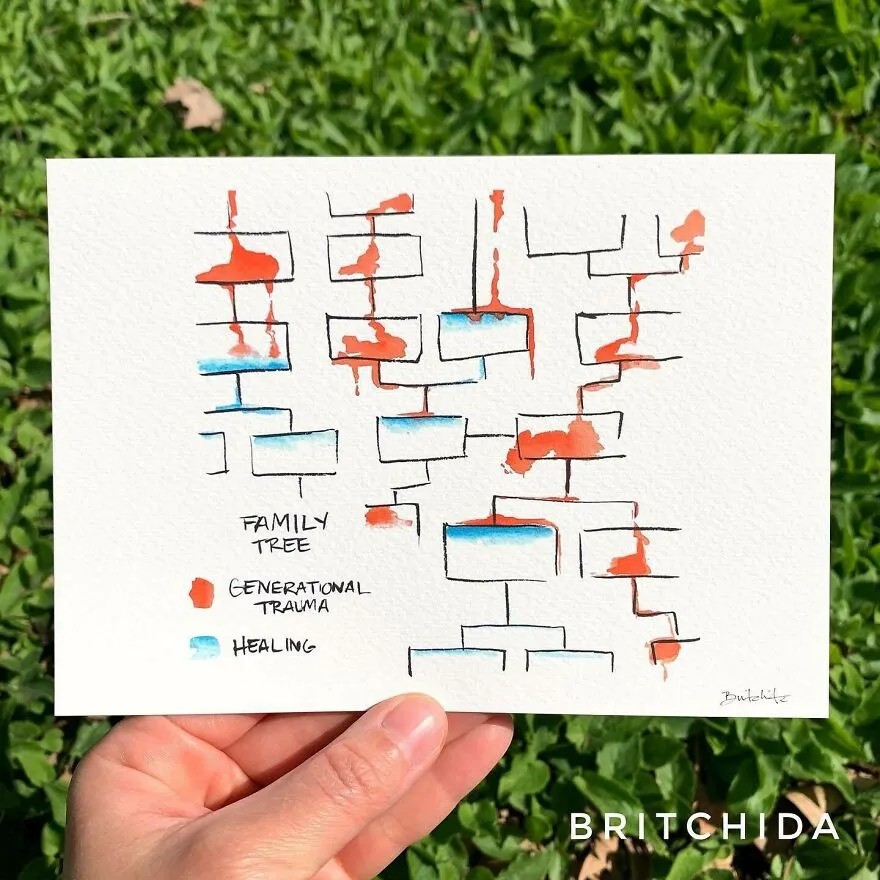
Image credits: britchida / Instagram
Per the Attachment Project, this process of parentification blurs roles across generations, projecting adult insecurities and attachment issues onto children and forcing them to grow up too soon.
Ironically, what began as an attempt to create a loving family ends up recreating another form of emotional imbalance. Until somebody stops it, the pattern will repeat across generations.
Enmeshed systems often produce rigid family roles that pass down across generations, locking children into scripts written long before they were born.
The Narcissistic Parent Connection
Enmeshment and narcissistic parenting frequently overlap. A narcissistic parent often struggles to see their child as a separate person with independent needs and feelings, which makes them prone to treating the child as an emotional extension of themselves.
Rather than supporting the child's individuality, they may unconsciously resist it, interpreting a child's independence as rejection or disloyalty.
This is one reason why adult children of narcissistic parents often describe their upbringing using the same language as enmeshment: guilt when setting limits, a sense of never being "enough," and difficulty knowing where the parent ends and they begin.
Enmeshment often accompanies family gaslighting, in which any attempt to point out the dynamic is dismissed as an overreaction or disloyalty.
Real-Life Insight
Online communities are filled with stories from people who discovered enmeshment only after trying to set simple boundaries.
For this woman, her mother’s relentless calls and texts, guilt trips, and boundary-trampling almost spelled the end of her marriage, and she struggled to find a way to set boundaries. The constant attention made her feel anxious, not loved or tended to.
That feeling of hopelessness is common for children from enmeshed families. Another user shared their embarrassment about being “a child trapped in an adult body” due to a narcissistic family dynamic.
Missing a Sunday lunch or embarking on new experiences in a different city seems like an impossible task, and only results in stress, guilt, and emotional fatigue.
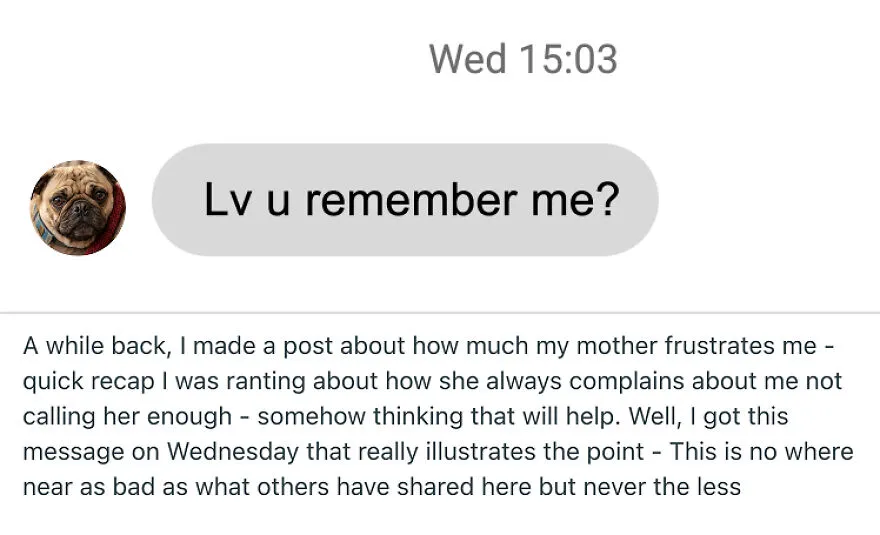
Image credits: RelativeAlfalfa5724 / Reddit
Sadly, some people take a lot longer to come to terms with the trauma of enmeshed relationships with family members.
A wife noticed her husband’s feelings of “fear and guilt” around his family, especially when they pressured him to reverse his boundaries, even at the expense of his own personal peace. She could offer him support and sympathy, but the decision to detangle himself ultimately had to be his own.
In each of these community stories, people struggled to prioritize their personal needs, and the root cause was ongoing enmeshment.
Any small acts of autonomy or attempts at independent emotional development were met with firm pushback that proved almost impossible to resist.
The child who eventually stops complying is often recast as the black sheep of the family, a label that can follow them for years.
Steps to Detangle: Healing & Boundaries
Understanding enmeshment and how to escape it doesn’t usually happen overnight because the emotional threads are often deeply woven into family history. But change is possible if you can see the signs.
Step 1: Awareness
The first step is simply recognizing the pattern. Understanding that you are an individual person, and not a role within a family system, can be profoundly liberating.
Awareness helps shift internal narratives from “I’m selfish for needing space” to “It’s healthy to have boundaries.” You’ll be able to look at the entire situation with more clarity and strength.
Step 2: Small Boundaries
Drastic changes can provoke strong reactions or be more difficult to keep up with, so many people start small. You could say things like:
“I can’t talk right now, I’ll call tomorrow.”
“I’m going to make this decision on my own.”
“I’d prefer to keep that private.”
Small boundaries create the foundation for larger ones later, and, if you can stick to them, set a new precedent for overbearing or meddling family members.
Step 3: Handling the “Extinction Burst”
When a long-standing dynamic changes, family units often react badly. Psychologists call this an “extinction burst”: a temporary escalation of behavior that used to work, designed as a last-ditch attempt at regaining control. Family members may increase guilt-tripping, become more emotional, or pressure you for time or communication harder than before.
This doesn’t mean that your boundary is wrong. It’s a difficult but positive sign that the family system is adjusting to this new normal. Remember, consistency is key.
Step 4: Seeking “Chosen Family”
One of the most healing steps for people leaving enmeshed dynamics is developing supportive relationships outside of the immediate family.
Friends, partners, mentors, and supportive communities can provide different forms of connection, all built on mutual respect, rather than obligation. These relationships serve as reminders that being close to people doesn't have to cost your autonomy.
For parents who recognize these patterns in their own families, learning parenting as a united front offers a practical model for how healthy family closeness actually works.
Breaking Free From Enmeshment For Good
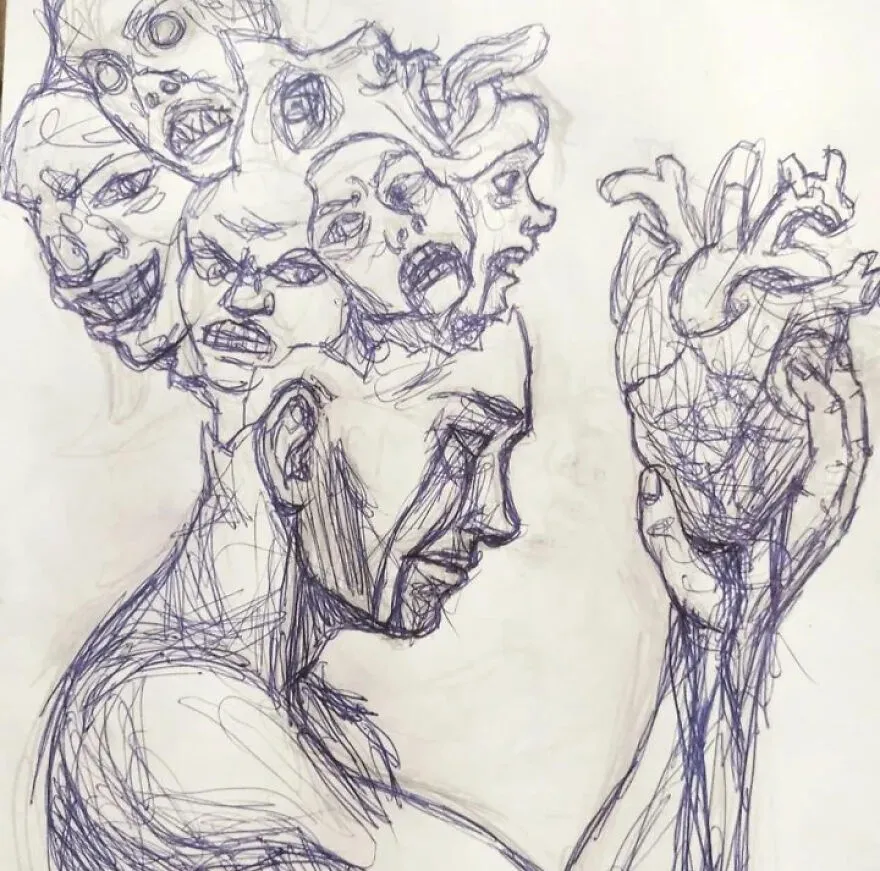
Image credits: Till_Im_Dust / Reddit
Family love is one of the most powerful forces in human life. At its best, it provides safety, encouragement, and a sense of belonging.
Healthy relationships in families give their members roots and wings: the security to know where they come from, and the freedom to discover who they are. If the former vastly outweighs the latter, love can become something heavier.
Enmeshment doesn’t always look harmful from the outside. It often disguises itself as loyalty, devotion, and togetherness, yet, beneath the surface, individuality is slowly eroded by the weight of collective expectations.
The journey out of enmeshment isn’t easy. It involves redefining your identity, learning to manage guilt, and understanding that boundaries are acts of self-respect, not rejection. Love should be a safety net, not a spiderweb, and you can love your family while still having a life that is entirely your own.
For more guidance on navigating complex family dynamics, explore the Bored Panda Family Hub.
FAQ
What is adult son enmeshment?
Adult son enmeshment is a form of emotional dysfunction between a mother and a son who lack healthy parent-child boundaries. The codependency and extreme cohesion slowly erode the son's identity.
Can enmeshment be healed?
Yes, enmeshment can be healed, though it takes time and consistent effort.
Therapy, particularly approaches such as family systems therapy or cognitive-behavioral therapy, helps individuals rebuild a separate identity, practice setting limits, and process the guilt that comes with doing so.
How do you know if you are enmeshed?
If you grew up in an enmeshed family, you may find it difficult to make decisions without seeking family approval, feel intense guilt when prioritizing your own needs, and struggle to define your values and preferences separately from what your family expects.
Many people only recognize the pattern in adulthood, often triggered by a relationship conflict or a therapist pointing it out.