Get Premium
Dark mode theme is available exclusively for premium users. Learn more about the benefits of subscribing.
No fees, cancel anytime.

 Dark Mode Ad-Free Browsing Unlimited Content
 Ad-Free Browsing Unlimited Content Dark Mode
Join 1.2 million Panda readers who get the best art, memes, and fun stories every week!
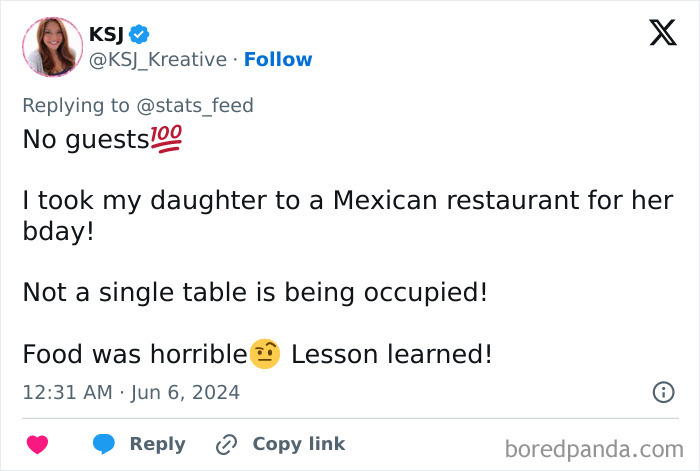
It's all fun and games watching Gordon Ramsay descend on a failing restaurant and lift the lid off a container of something that has been in the kitchen since a previous administration. It is theatre. It is cathartic. But Kitchen Nightmares is not always on. And restaurants, unfortunately, are. Which means that at some point, in some dining room, there will be red flags Gordon can't save you from.
The question is whether you can spot it yourself. Because not all dodgy restaurants announce themselves with a health code violation notice on the door. Some of them are considerably more subtle about it. These red flags were compiled from seasoned diners and people who learned the hard way, so that you do not have to. Consider this your crash course in dining with your eyes open.
This post may include affiliate links.
Before you even look at the menu, it is worth knowing which items are statistically most likely to send you home early and horizontal. According to the CDC, produce accounts for nearly half of all foodborne illnesses, with raw vegetables and leafy greens being among the biggest culprits.
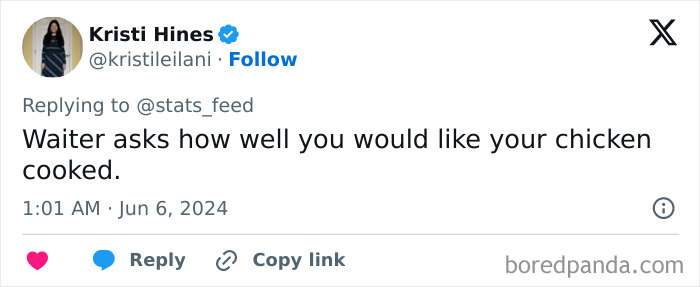
Undercooked poultry is not far behind. The reason is straightforward: these items cannot rely on high heat to remove bacteria the way a well-cooked (not well done! BIG difference) steak can. Norovirus and E. coli do not need much of an invitation. A limp Caesar salad at a restaurant you already felt uncertain about is a full evacuation notice.
The professional kitchen operates on a color-coded system that most diners have no idea exists, and the absence of it is one of the clearest signs that a kitchen is not running the way it should. Red equipment handles raw meat. Blue is for seafood. Yellow is for poultry. Green is for produce.
This system exists entirely to prevent bacteria from raw proteins transferring onto food that will not be cooked again before it reaches your plate. Cross-contamination is one of the leading causes of foodborne illness in restaurant settings. If you ever catch a glimpse of a kitchen that does not appear to be operating any kind of separation protocol, your instincts are right, and your coat is right where you left it.
Social media has added an entirely new layer to the restaurant red flag conversation, and food critic Candy Hom has something to say. "When every post or review is from a hosted experience, I can't trust that." Influencer reviews built on complimentary meals and curated lighting setups are not the same as honest feedback from a paying customer.
An Instagram grid full of sponsored content tells you more about a restaurant's marketing budget than its actual food. There is also, Hom notes, the very real issue of influencers and their lighting equipment actively disrupting the experience of every other person in the room who just wanted a quiet dinner. The ring light is a red flag with a filter on it.
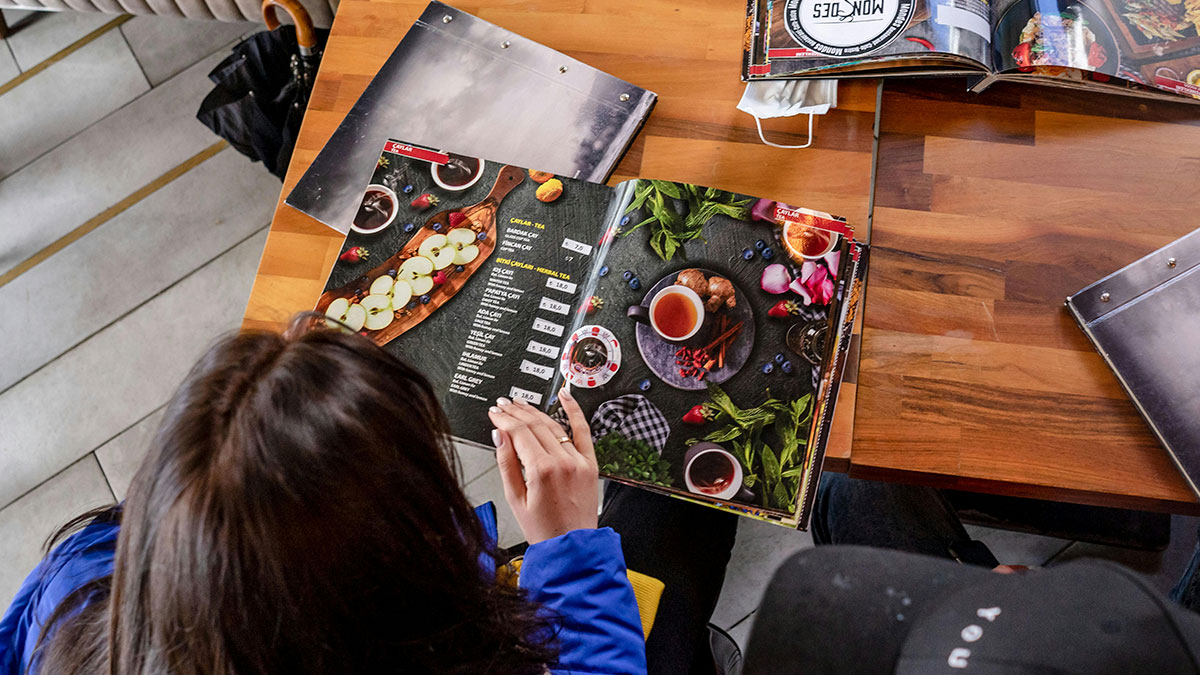
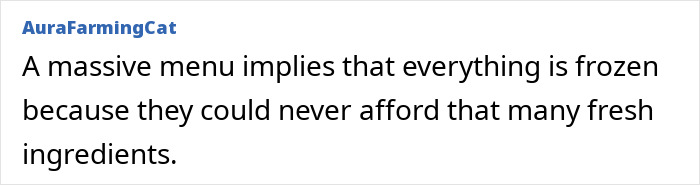
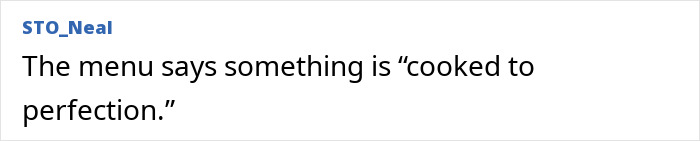
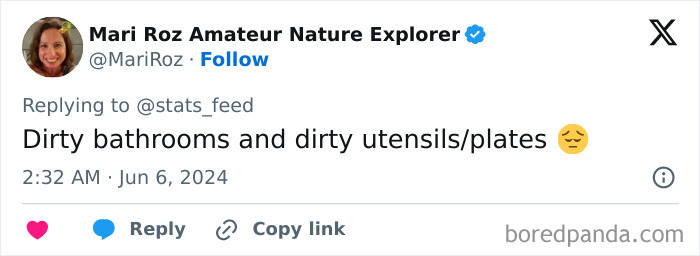
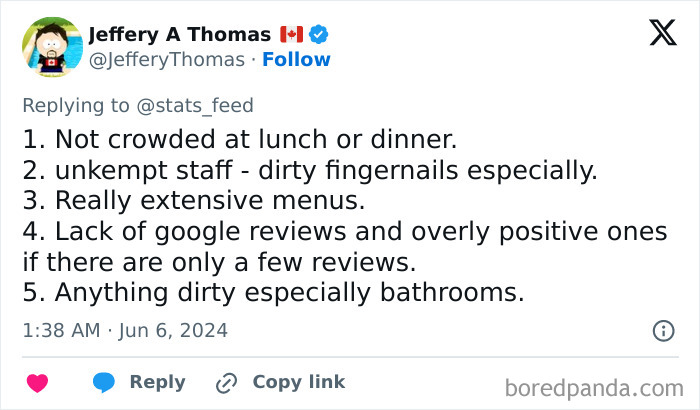
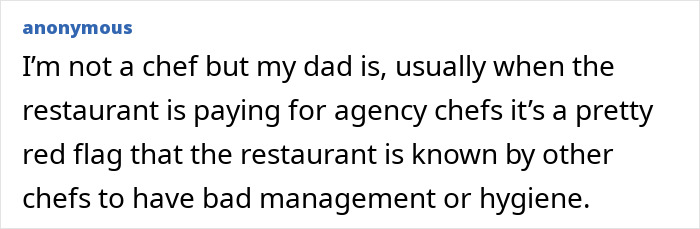
A menu the length of a short novel is either a sign of an impressively equipped kitchen or a sign that very little of what you are about to order is fresh. Chef Guy Vaknin of City Roots Hospitality says a giant menu tells him that either the kitchen has serious capacity, or that many of the dishes are not made fresh.
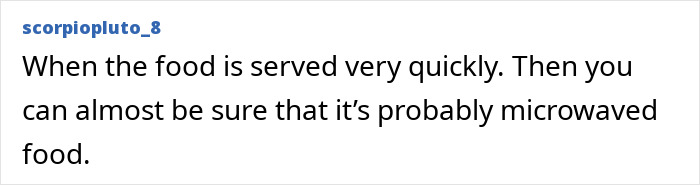
The logic is simple. A kitchen genuinely cooking everything from scratch has a natural limit on how many dishes it can execute well. A kitchen with a forty-page laminated menu and a photograph of every item is telling you something important, and it is not that everything is handmade this morning.

Counterintuitively, if food safety is your primary concern, the statistically safest place to eat is a high-volume fast food chain. Places like McDonald's operate under hyper-standardized supply chains with zero tolerance policies for contamination, heavily automated prep processes, and corporate oversight that local restaurants simply do not have.
Pre-frozen, heavily cooked, and rigorously monitored does not make for the most exciting dining experience, but it does make for a considerably lower risk of spending the following day regretting your lunch. The Michelin-starred experience comes with creativity and craft. It also comes with a human in the kitchen making judgment calls. Sometimes that is the risk.

Every place I've worked that sell food has had these as default. Supermarkets, cafes, hotels.
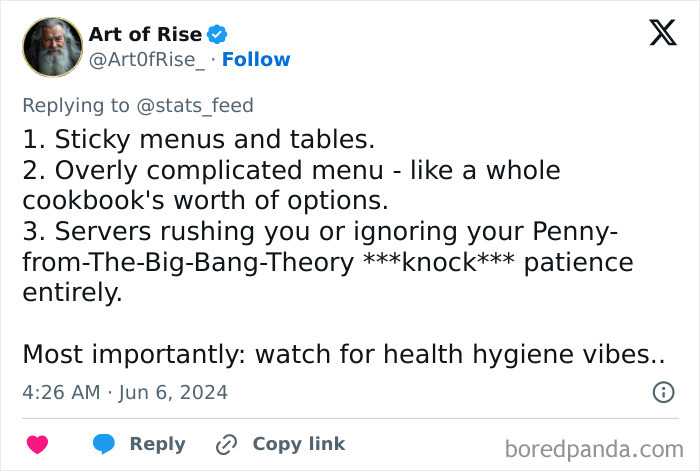
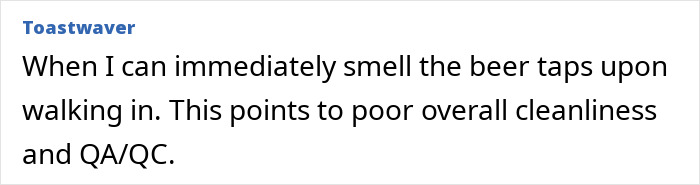
The biggest warning sign isn't always in what you can see. There are invisible forces at play too. Restaurant menus have been found to carry an average of 185,000 bacteria per item, including E. coli and Salmonella, with harmful bacteria surviving on laminated surfaces for up to 24 hours.
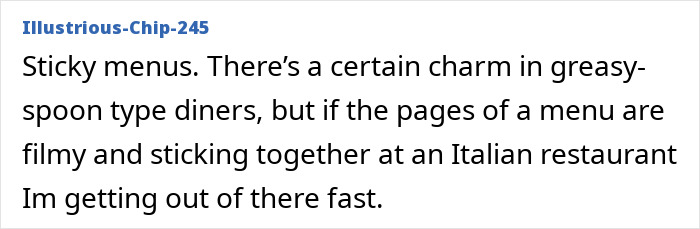
Most restaurants do not have any menu cleaning protocol in place whatsoever. The menu has been handled by every person who sat at this table before you, passed between every member of your group, and possibly propped against a condiment bottle that has its own separate bacteria situation going on. Order quickly. Put it down. And maybe do not touch your face again until you have washed your hands.
Among all the green flags a restaurant can show you, one of the most reliable is a menu built around seasonal ingredients. Executive chef Henry Wesley III says that seasonal dishes center on what is freshest and most abundant in the area. A kitchen with a seasonal menu is a kitchen that is sourcing carefully, cooking with what is actually good right now.
They are paying attention to quality rather than simply maintaining a static list of dishes year-round. A restaurant serving the same menu in January and August without any variation is either operating from frozen stock or not thinking very hard about either one. Seasonality is not a trend. It is a sign that somebody in that kitchen actually cares.

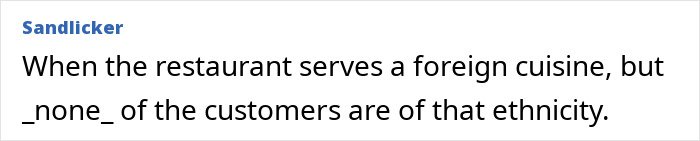
Are you saying that only persons of a certain race can cook certain foods? VERY RACIST of you.
"Pop"? It's "coke". As in: Customer: "I'll have a coke." Server: "What kind?" Customer: "Diet Dr. Pepper, please." It is a Southern thing.
The red flags on this list are not here to make you paranoid about eating out. They are here because the difference between a meal that becomes a memory and a meal that becomes a warning story you tell for the next decade is almost always visible before the food even arrives.
The too-big menu, the suspiciously spotless dining room that smells faintly of something being masked, the server who cannot answer a single question about the kitchen ... They are all signs of a restaurant telling you exactly what it is before it has to. Gordon Ramsay built an entire career spotting them. All you have to do is pay attention.
What is your biggest restaurant red flag? Share a warning with us in the comments!


























 No fees, cancel anytime