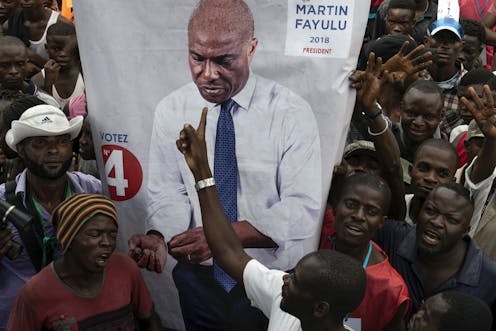
On December 30, 2018, 46 million citizens cast their votes in a historic election in the Democratic Republic of Congo. There hasn’t been a peaceful transition of power in this country since the end of Belgian rule in 1960. If this election produces a result that’s widely viewed as credible, it will cement a new era of representative government in Africa.
The deferral of representative government in the DRC has a long history. After the Berlin Conference (1884-85), Belgium acquired the Congo as a colonial territory and, from Léopold II to King Baudoin I, Belgian administrators oversaw one of the most brutal regimes on the continent. In 1960, Patrice Lumumba became the first prime minister, sharing power with Joseph Kasa-Vubu as president. A confluence of internal and external factors unleashed a crisis that led to Lumumba’s assassination in 1961 and Mobutu Sese Seko’s rise to power in 1965. With the support of Western nations, Mobutu presided over the looting of his country’s natural wealth as one of the most tenacious gatekeeping dictators of the 20th century. He clung to power for more than 30 years.