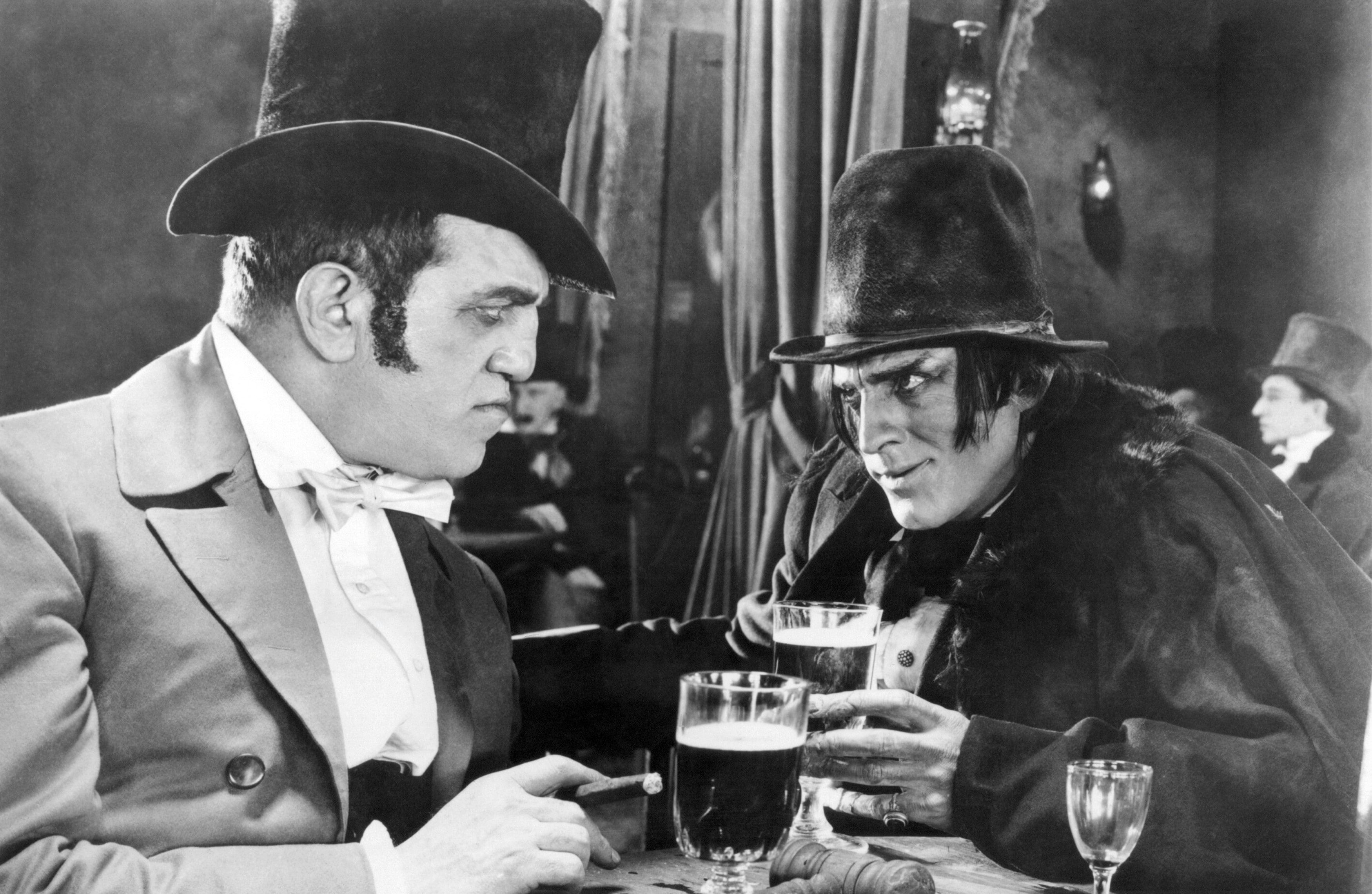
Director John S. Robertson’s Dr. Jekyll and Mr. Hyde, which premiered 105 years ago today, wasn't the first movie adaptation of Robert Louis Stevenson's landmark 1886 novel, but it's the oldest surviving version and still possibly the best. Stevenson’s tale, about a kindly doctor who transforms into a malevolent monster that acts upon his cruder desires, was adapted for the screen at least 10 times between 1908 and 1914, with three versions released in 1920 alone. Two of them — a comedy and a lackluster cash grab adaptation in which it’s all a dream and Dr. Jekyll finds religion — are forgotten, while the third and finest endures.
John Barrymore, one of the great actors of his time (and, yes, Drew Barrymore’s grandfather), plays the title roles, contorting his movie star good looks and body (first on his own, later via prosthetics) from the almost angelic Henry Jekyll into the twisted Edward Hyde. Even today, Barrymore’s transformation and the emergence of the Hyde persona (which the movie likens more to a spider than the brutish, ape-like man seen in later versions) are unsettling to watch, and must have been an irresistible attraction for contemporary audiences. Thanks to the backing of an American studio and Barrymore’s considerable star power, Dr. Jekyll and Mr. Hyde may well have been the first genuine horror blockbuster.