
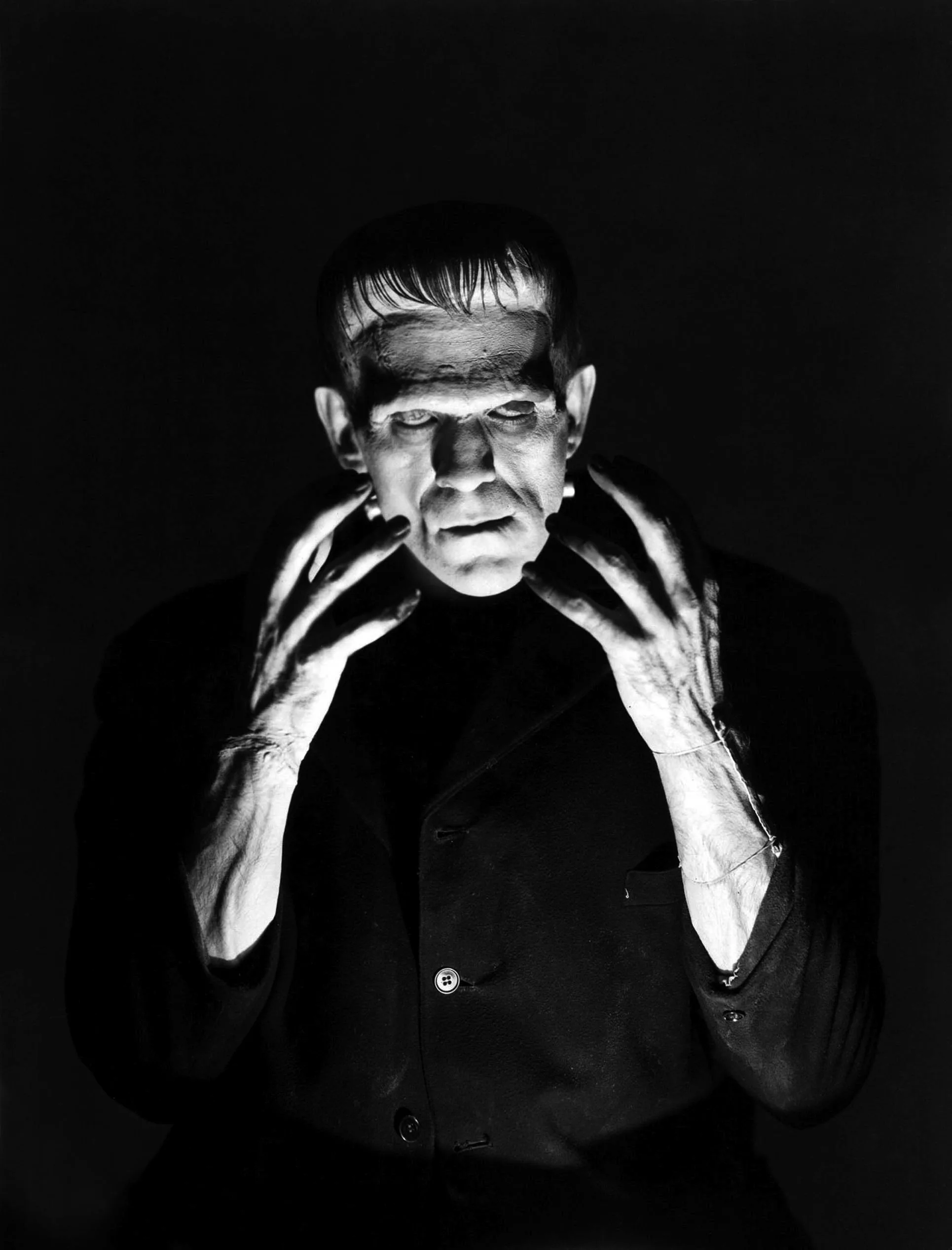
For most of the 20th century, Frankenstein was all about the monster. On rubber masks and plastic toys, his image was instantly recognizable: Tall and imposing, with green skin, a square head, a heavy eyebrow ridge, and electrodes on either side of his neck. His appearance thus standardized, he appeared in spoofs like Mel Brooks’ Young Frankenstein, on the cover of magazines like Famous Monsters of Filmland, and even in the occasional novelty song. This image became so iconic, in fact, that it eclipsed the original creator and her vision.
Rather than originating with Mary Shelley, the version of Frankenstein’s Monster familiar to monster kids everywhere was invented for the 1931 Universal horror movie Frankenstein. The film is not a direct adaptation of Mary Shelley’s novel; instead, it was based on a 1927 stage play that was itself adapted from Shelley’s original. As a result, aside from a general theme of playing God and its consequences, the story has little in common with the source material. So perhaps it makes sense that the Monster would be reimagined as well, into something far different from what Shelley describes on the page: