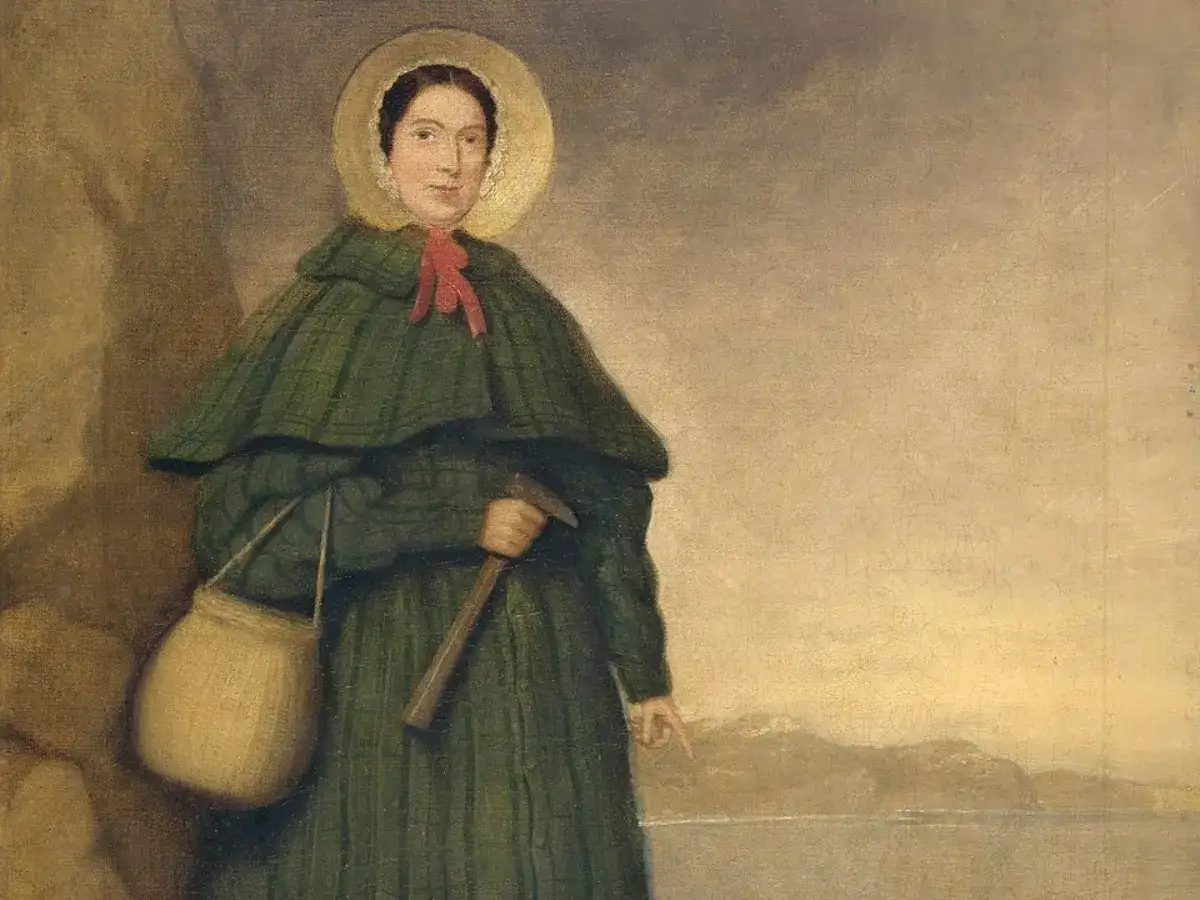
At the beginning of the nineteenth century, the cliffs of Lyme Regis in southern England were notorious for their dangerous landslides and bizarre fossils buried in them. To one local family, these cliffs offered a way to earn money by finding fossil specimens that could be sold to visitors. This practice changed the course of science.
In 1810, Joseph Anning discovered the fossilized skull of an enormous creature along the Jurassic Coast. A year later, Joseph's sister, Mary Anning, assisted in finding more bones that belonged to the same skeleton. The Natural History Museum in London reports that the fossil later became known as one of the earliest ichthyosaurs analyzed by scientists. The discovery allowed scientists to learn about the existence of large marine reptiles that lived in Earth's oceans many millions of years ago.