
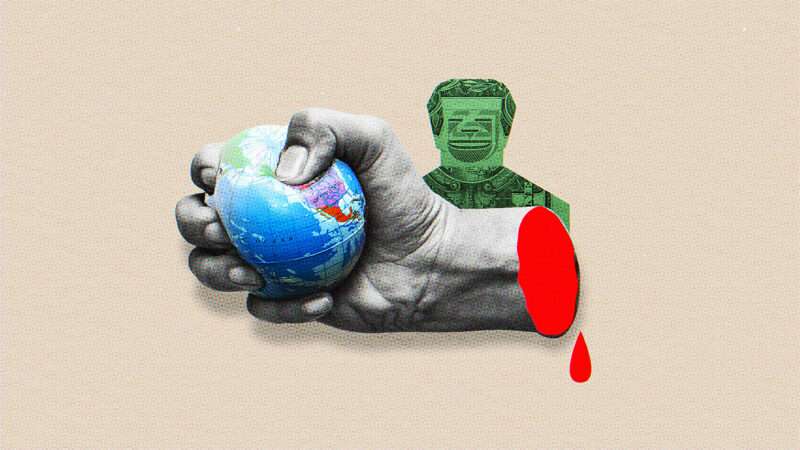
Implementing a global tax cartel is hard. This lesson is being learned by the bureaucrats who dreamt up an effort to prevent businesses from taking advantage of the fact that some countries impose lower taxes than do other countries. A year after 130 jurisdictions agreed in principle to institute a global minimum tax rate of 15 percent on corporate profits and make it harder for companies to shift their tax liabilities from higher- to lower-taxing countries, the early result is a delay and buyers' remorse.
The global tax agreement, overseen by the Organisation for Economic Co-operation and Development (OECD), has two main pillars. Pillar One is meant to allow governments to tax digital businesses that sell services in a country but have no physical presence there, and hence weren't previously taxed there. These companies, of course, are taxed in the country where they are based or where their intellectual property is located, which (not surprisingly) is often in jurisdictions with lower taxes. Just as you don't attract bees with vinegar, you don't attract corporations by promising to tax them heavily.