
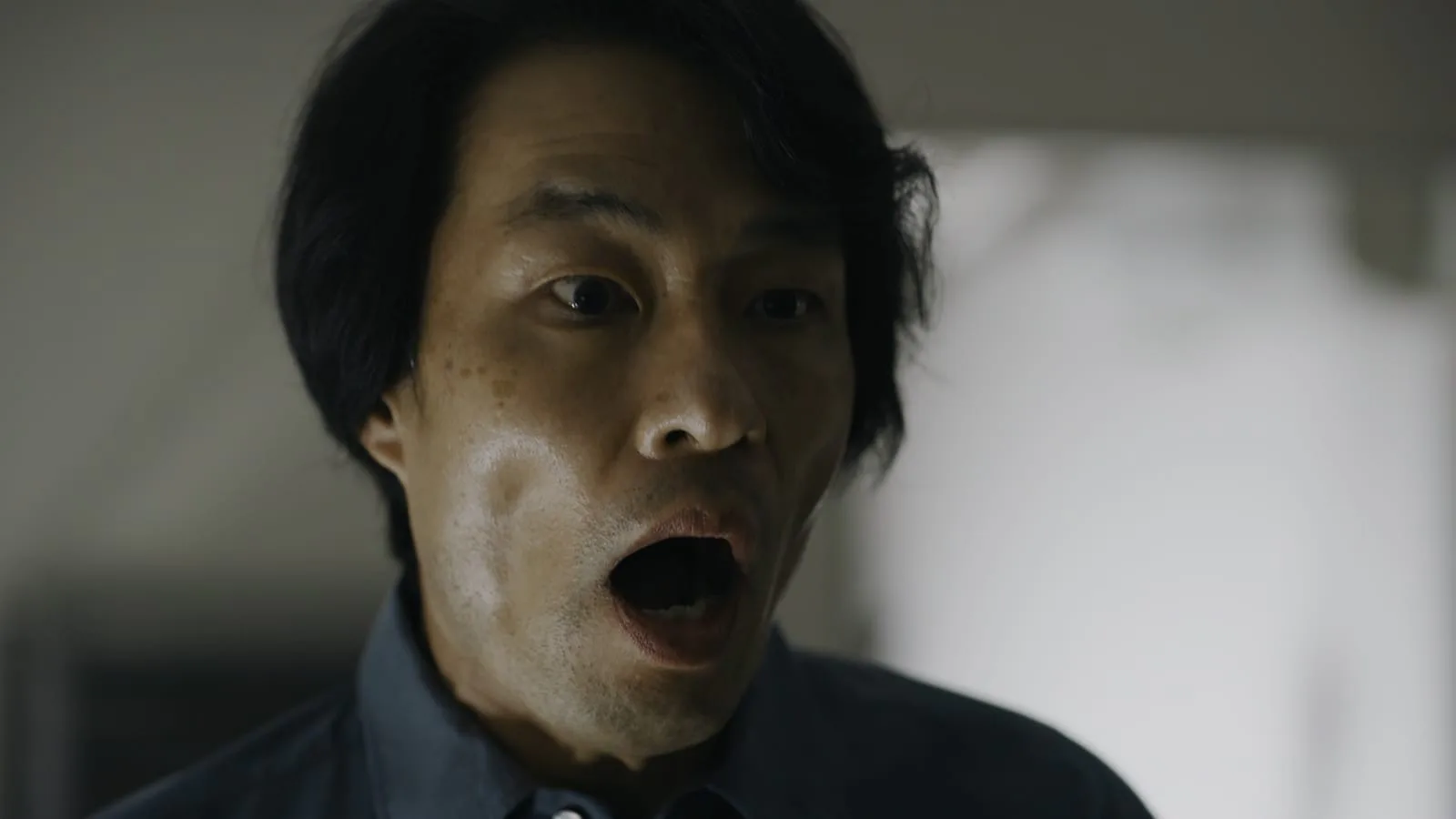
It’s fitting that the long-awaited U.S. release of Chime — Kiyoshi Kurosawa’s eerie 45-minute thriller, made in 2024 — comes alongside the equally anticipated Stateside bow of the filmmaker’s 1998 lo-fi landmark Serpent’s Path, which he also recently remade. The horror maestro has a fascinating tendency to extract terrors from the modern world. But as the present charges forward, evolving through changing technology and societal concerns, he also seems to update what he finds most terrifying, if he can even locate a definite answer. Sometimes what’s scariest is a lack of certainty, and in his short feature about a ringing sound that imbues people with violent tendencies, the question of “why” is an endless journey with no clear destination.
In that vein, Chime may as well be a sequel to Kurosawa’s searing, nihilistic 1997 mind-trip Cure, in which a detective tries to make sense of seemingly motivation-less murders that may have hypnotic underpinnings. Here, in his tale of a middle-aged culinary teacher, he turns that mystery inside out by placing us practically in the shoes of mysterious murderers with no clear incentive beyond external stimuli. And yet, the film’s unspooling is far from random. Kurosawa’s filmmaking is observational, and deliberate, with a camera that practically lures his entranced protagonists towards pre-ordained outcomes, as if violence were the inevitable result of the way we exist in contemporary society. That this violence is usually enacted by men upon women (or upon themselves) makes it feel like a psychological pressure cooker, born of patriarchal norms and expectations that go un-remarked upon for far too long. Through numerous interactions, it’s clear that a subtle misogyny is in the ether — a simple assertion, but the film’s embodiment of it is far from straightforward.