
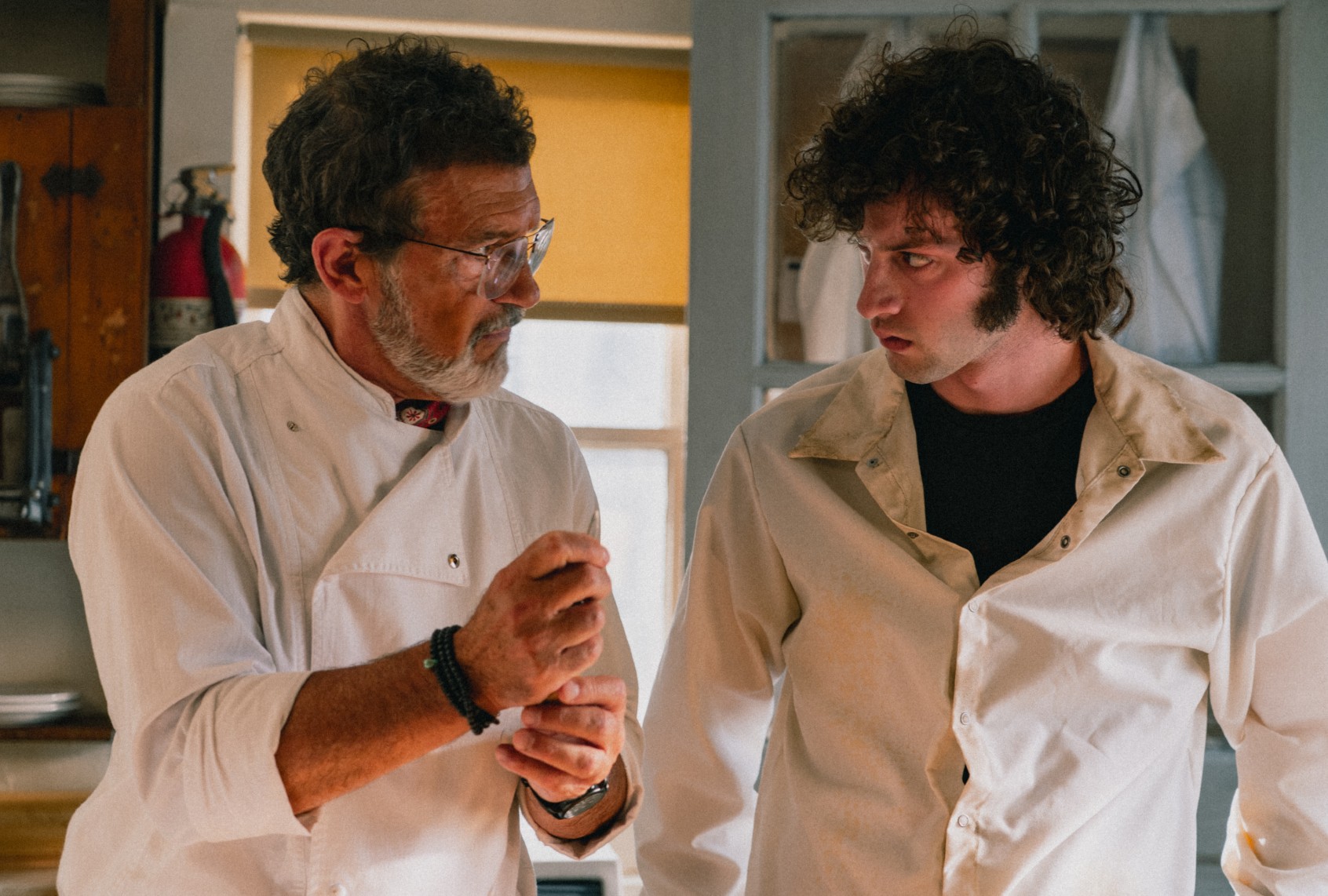
Director Matt Johnson’s latest feature, “Tony” — a biopic following a young Anthony Bourdain (Dominic Sessa) through his first kitchen experience, slinging cheap fish in a Provincetown greasy spoon — exists inside a quote. The film opens with a pull from Bourdain’s beloved pseudo-memoir, “Kitchen Confidential,” in which Bourdain reminisces about his 19-year-old self, trolling around Cape Cod trying to impress a girl and become a writer, with zero experience doing either. “I was — to be frank — a spoiled, miserable, narcissistic, self-destructive and thoughtless young lout, and badly in need of a good ass-kicking,” Bourdain writes early in the book.
From the jump, it’s hard to shake the feeling that “Tony” is mistakenly aligning itself with the public’s idea of Bourdain rather than the man’s reality. When I think of Anthony Bourdain, I think of two people. The first is the enigmatic yet ultimately unknowable chef, whose charm and good nature sometimes dulled a cloud of unmistakable darkness to the eyes of the public; the second is the idealistic version of Bourdain, who exists in half-remembered citations and GIFs of his many travel shows removed from their context — rosy, nostalgic tributes to an image, rather than a person.












