
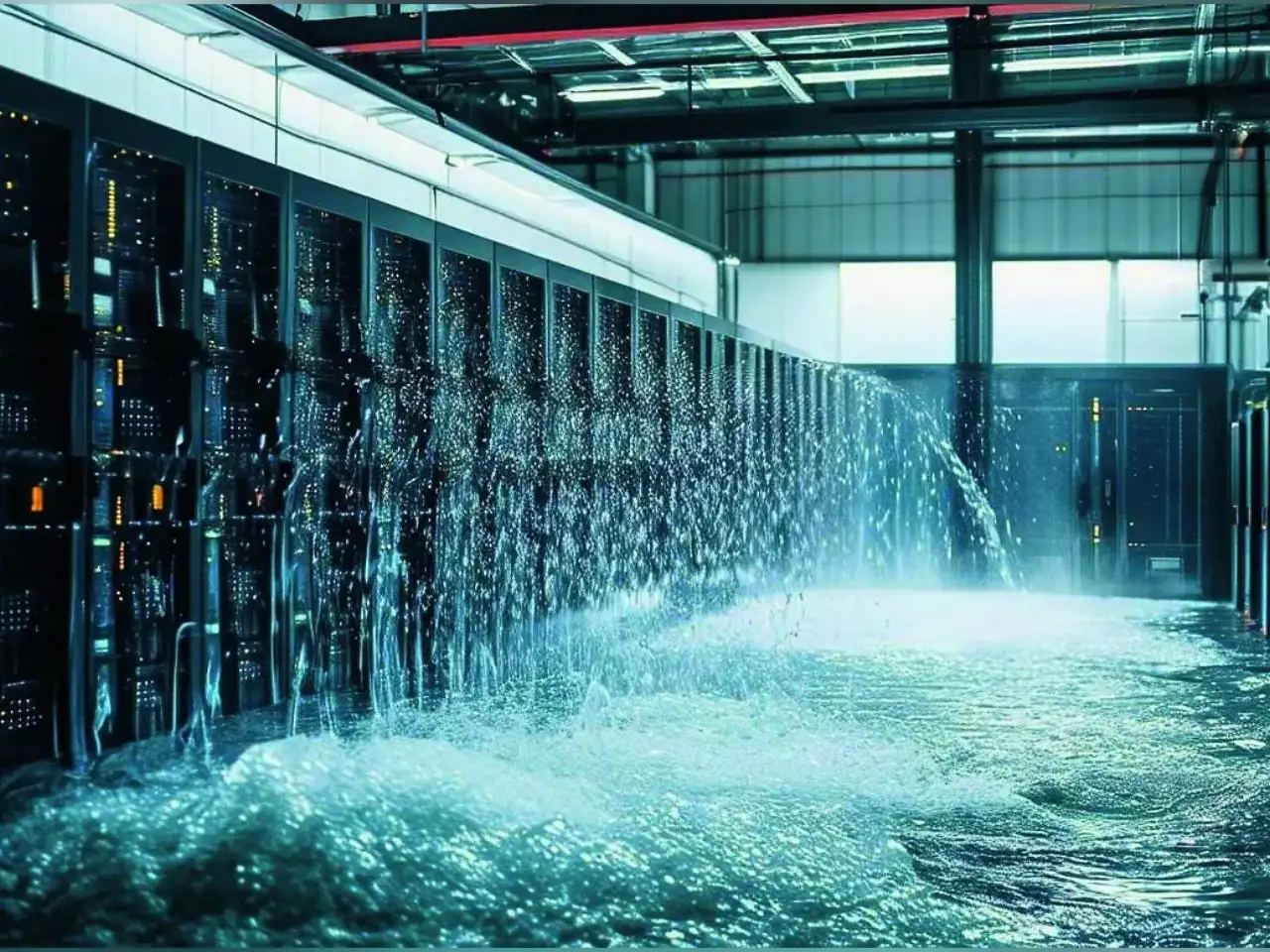
Resistance to AI, till now confined to economics, is spilling over to the environment. Since the outset, AI has been identified as an economic disruptor that will result in large-scale job losses. But a new pushback is emerging over AI's sustainability frontier. Data centres are consuming country-scale electricity, and their computing intensity is exerting enormous pressure on freshwater for cooling needs.
Last year, residents of the executive-style, single-family subdivision of Annelise Park in Fayetteville, Georgia, were outraged when they discovered that the nearby data centre was siphoning nearly 30 mn US gallons (113.56 mn litres) of water - equivalent to 44 Olympic-size swimming pools and far exceeding the peak limit agreed to during the data centre planning process - for its cooling needs. This was after residents noticed that their water pressure had become unusually low. If this can happen in an affluent part of the US, one can be forgiven for being concerned about the way Indian authorities may go about with data centre infrastructure in a country facing extreme water stress due to overextraction of groundwater.