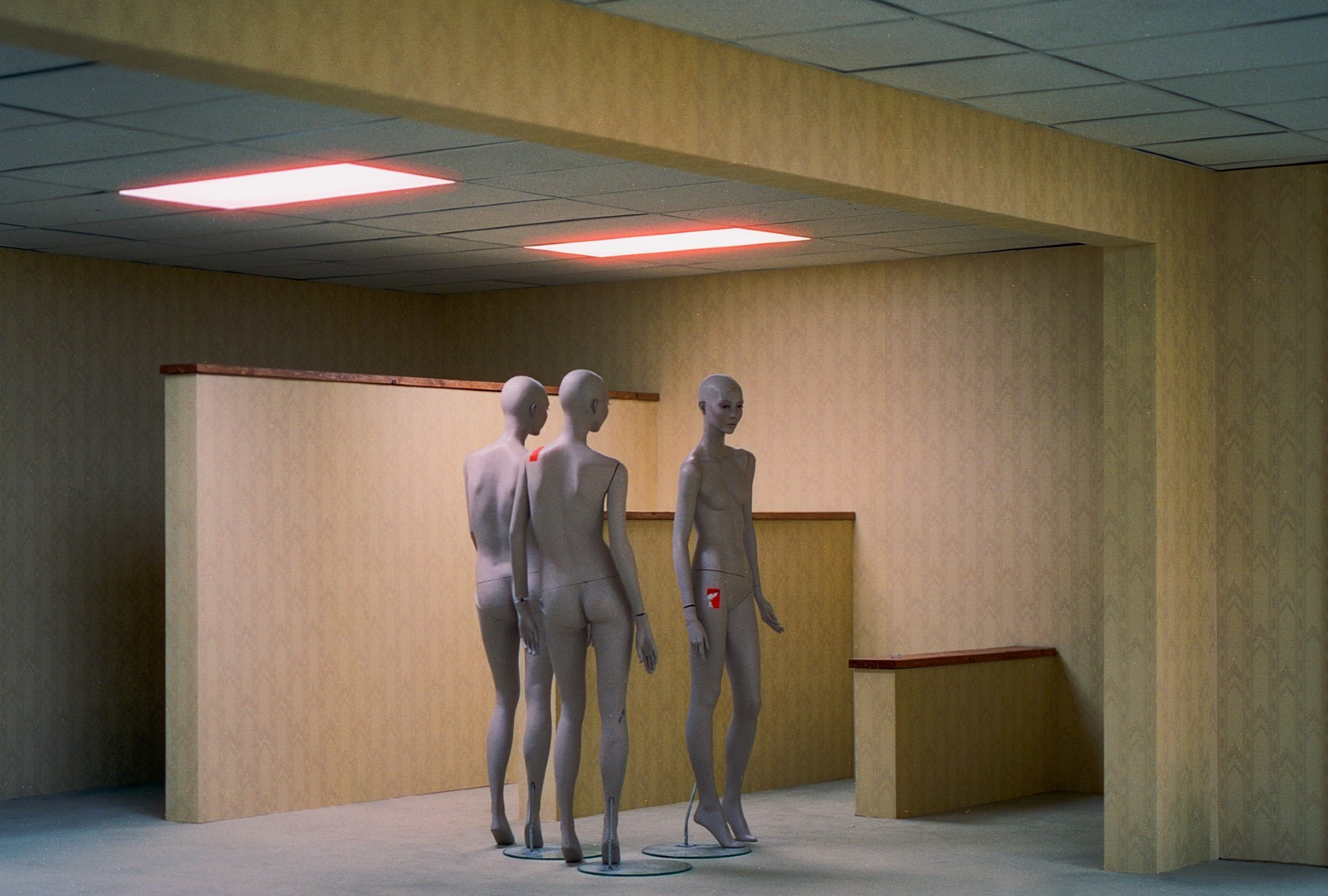
“Backrooms,” the No. 1 movie in the country currently, is a horror movie that takes place in a seemingly endless liminal space that articulates itself as generic strip mall or office spaces. One of the unsettling horrors of these eponymous spaces is how generic they are: we’ve all seen and been in an office complex like this, with tile ceilings, harsh fluorescent lighting, cheap carpets and particle board furnishings. They’re ubiquitous across the Western world — an architectural infection spurred by capitalism’ need for generic efficiency borne of economies of scale. That’s partly what makes the movie unsettling: the backroom aesthetic is unsettlingly generic, a space that exists everywhere and yet nowhere.
For a movie defined by this nowhereness, it’s all the more telling that the filmmakers took pains to let us know exactly where we are. Throughout the film, the audience is reminded repeatedly that the furniture store where this all starts is at the corner of Capitol and McKee, in San Jose, California, in fall 1990. The corner of Capitol and McKee is a very real intersection, with two very real strip malls bordering it on either side, that look very similar to the strip mall with Cap’n Clark’s Ottoman Empire as tenants. (Though it takes place in San Jose, the film wasn’t actually shot there; the producers used exteriors and sound stages in British Columbia, a common shooting location due to tax incentives.)