
Get all your news in one place.
100's of premium titles.
One app.
Start reading
Latin Times
Latin Times
Business
Azucena Salazar

THE TRUTH ABOUT: Behind the worlds softest fiber how peru is using genomics to dominate luxury textiles - Caught on Camera

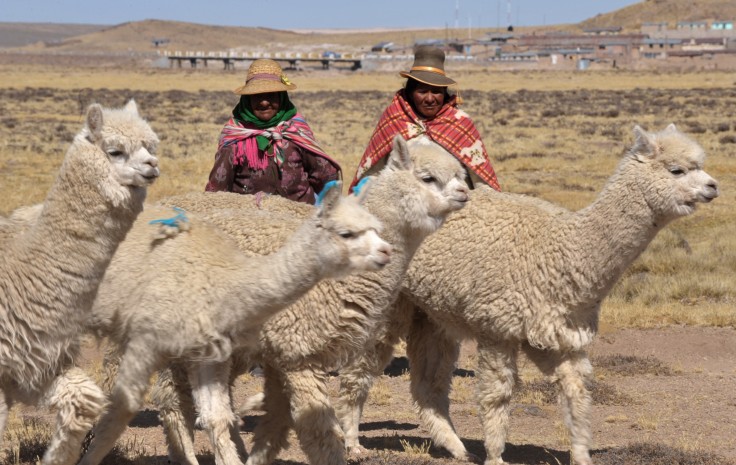
Andean women tend a herd of 200 alpacas, an Andean camelid priced for its wool, close to the village of Imata, in Puno, some 1,500 km southeast of Lima on July 30, 2010. Some 50 people - mostly children and elderly - have died in this area at 5,000 metres above sea level, and hundreds of alpacas, the most important source of income, have also succumbed to the cold weather. A sixth cold wave is expected to reach the Peruvian highlands at the beginning of October for which regional authorities are trying to prepare. AFP PHOTO/CRIS BOURONCLE (Credit: Photo credit should read CRIS BOURONCLE/AFP via Getty Images)

The Briefing:

  • Peru's UNALM, Inca Tops, and MGI Tech are jointly sequencing 1,200 alpaca DNA samples at the Pacomarca research station in Puno, with the goal of identifying top breeders from birth rather than through post-shearing laboratory analysis.
  • Each animal generates approximately 2.6 gigabytes of genomic data, processed through MGI's DNBSEQ T7RS platform; the first genetically selected breeders are expected by mid-2027, with superior offspring reaching highland producers by 2028.
  • Peru holds approximately 87% of the world's alpaca population, with a national herd of around 4.7 million animals, and exported $238 million in alpaca products in 2025, up 6.5% from 2024, according to the Alpaca Industry Association, citing PromPerú's annual report.

Sign up to read this article
Read news from 100's of titles, curated specifically for you.
Already a member? Sign in here
Related Stories
Top stories on inkl right now
One subscription that gives you access to news from hundreds of sites
Already a member? Sign in here
Our Picks
Fourteen days free
Download the app
One app. One membership.
100+ trusted global sources.