
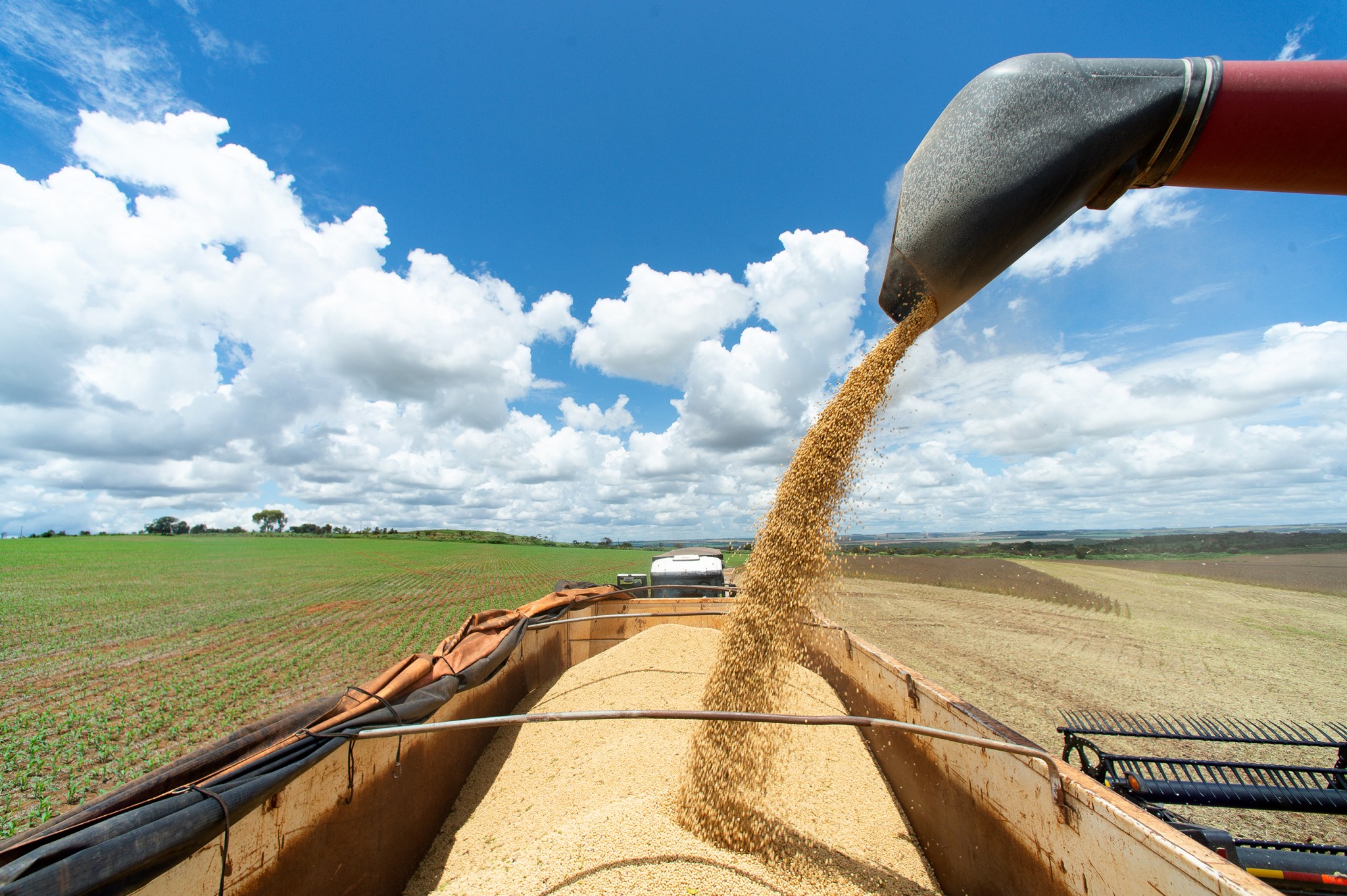
Brazilian agriculture feeds roughly 800 million people, about 10% of the world’s population. In 2024, according to World Trade Organization data, Brazil exported US$144.4 billion in agricultural products while importing just US$15.4 billion — a net surplus of roughly US$129 billion, more than four times Argentina’s, the next-largest net agricultural exporter. Brazil is the world’s largest exporter of soybeans, beef, poultry, coffee, sugar and orange juice, and a top-three producer and exporter of corn. Brazil alone supplies more than half of global soybean trade. The world’s food supply increasingly depends on Brazil, and Brazil’s harvests depend on fertilizer it barely produces.
That is the paradox: the country that feeds so much of the world cannot feed its own fields without imports from a handful of foreign suppliers. Its farms run on three nutrients — nitrogen, phosphorus and potassium — and, according to the latest UN Food and Agriculture Organization data, in 2024, Brazil imports roughly 90% of the fertilizer it used.