Ena O’Daniel is no stranger to festival culture. Growing up in the town of Rough and Ready in Nevada County, the kind of small Sierra Nevada canton that gets ranked among the “best hippie towns,” she became acquainted with counterculture celebrations as a kid, and the enthusiasm persisted into adulthood. Over the years, the people that she met at small festivals, like the Earthdance Global Peace Party, often raved about the mother of all transformational festivals: Burning Man. So in 2014, the 36-year-old hospice nurse packed up her grey, 2007 Honda Element and drove to Black Rock City, the home of The Burn.
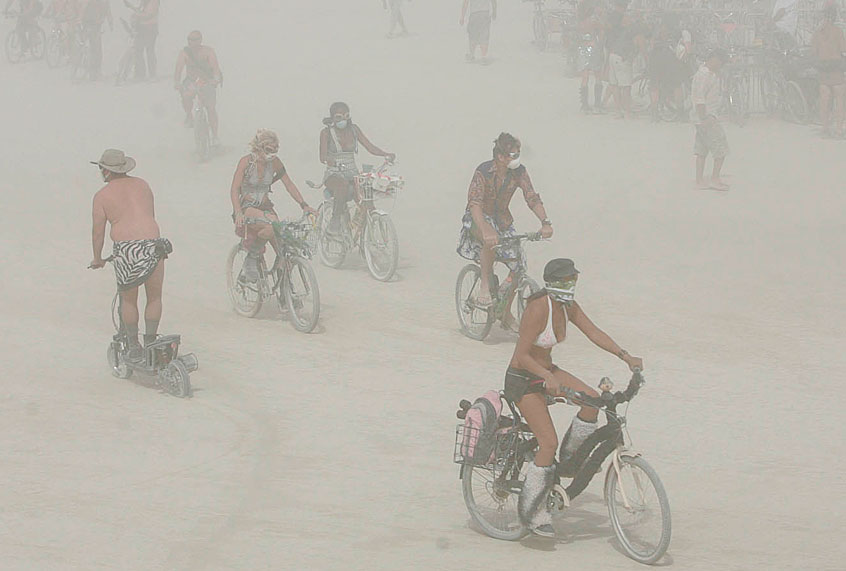
Every summer at the end of August, tens of thousands of people from all over the world make the journey to the week-long festival. For many, attending Burning Man is a definitional personal experience, part of their identity. What started as a small summer-solstice gathering on San Francisco’s Baker Beach in 1986 now draws 70,000 festival-goers to Black Rock Desert in Pershing County, Nevada. Burners pay anywhere from $200 to $1,200 for a ticket and $80 per car to enter Black Rock City, a sun-blasted, nearly six-square-mile patch on a 200-mile Pleistocene era lakebed, the talc-like silt of which whips up in squalls covering everyone and everything (“I got dust in curious places” reads a billboard in Black Rock City). The excursion is an escape from what Burners call the “default world.” An authentic human connection, that feeling of being in the moment, is what O’Daniel loved about the smaller festivals — and what she looked forward to experiencing at Burning Man. “You can just be,” O’Daniel said.