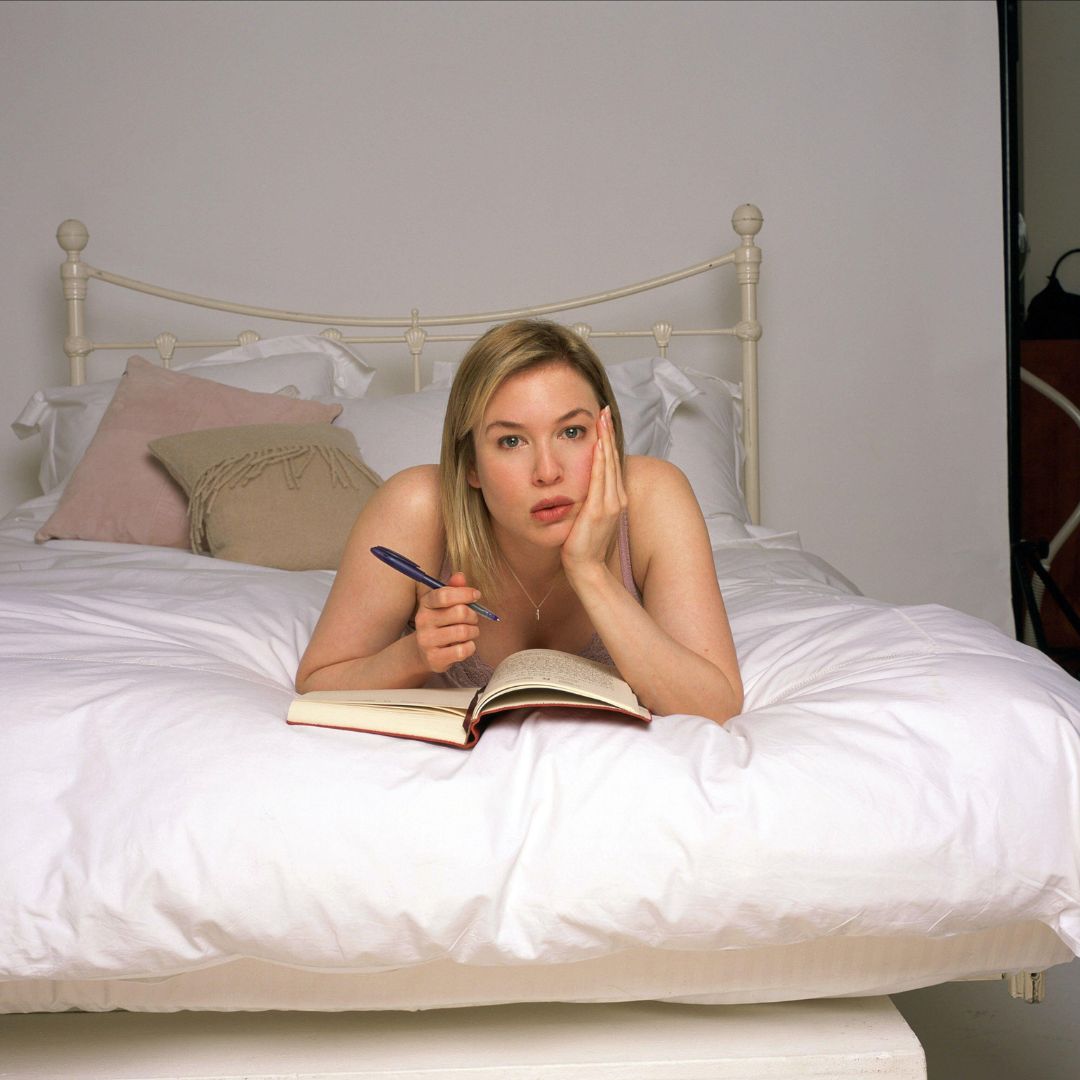
Bridget Jones was an icon of the noughties, with her big knickers, string soup and ironed hair. She spoke to women across generations, was a relatable figure for those in their early 30s and was a rom-com lead for young girls to look up to who wasn’t two-dimensional. She was funny, flawed, real, and equal parts aspirational and down-to-earth. No wonder she was voted the most inspiring on-screen heroine of all time.
Bridget Jones’s Diary was a cultural phenomenon that captured the zeitgeist when the 1996 book by Helen Fielding was adapted for the big screen. Jones, played by the inimitable Renée Zellweger, broke records, and Zellweger won an Oscar for the role. The first instalment grossed $282 million at the box office in 2001. Since then, two follow-up films (Bridget Jones: The Edge of Reason in 2004 and Bridget Jones’s Baby in 2016) have garnered similar success. The last instalment broke UK box office records, earning £8.11 million in its opening weekend – this was a record for any romantic comedy at the time.












