
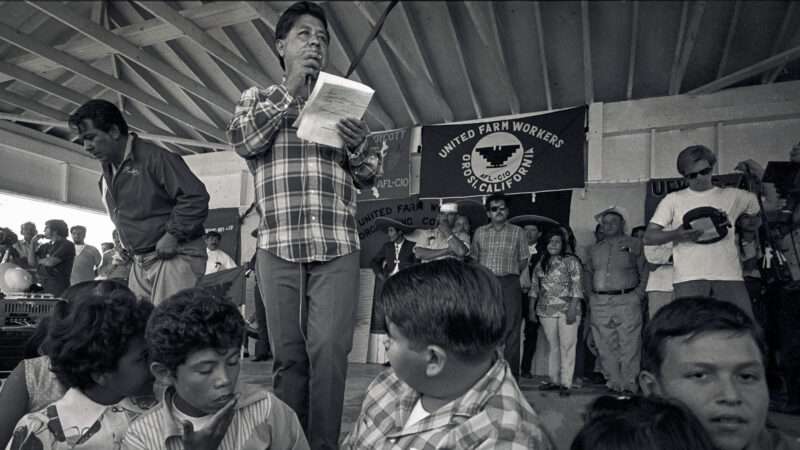
Cesar Chavez (1927–1993), the California-based labor icon who helped create the United Farm Workers of America (UFM) and led high-profile boycotts against table grapes and iceberg lettuce, has been accused of rape and sexual abuse in a major New York Times investigation. Two women told the Times that Chavez "sexually abused them for years when they were girls, from around 1972 to 1977," and 95-year-old Dolores Huerta, a co-founder of the UFW who had four children with Chavez's brother Richard, issued a statement denouncing César, saying he "manipulated and pressured" her into having sex on two occasions, including one in which she "was forced, against my will, and in an environment where I felt trapped." Both encounters, she says, resulted in children whose paternity was hidden and who were raised by "other families."
The response to the allegations has been swift. The union he co-founded has announced it "will not be taking part in any Cesar Chavez Day activities," a "federal commemorative holiday" proclaimed in 2014 and slated for March 31 this year. It is also creating an "external, confidential, independent channel for those who may have experienced harm caused by Cesar Chavez during the early days of the UFW's history." States such as California, which created its own Chavez holiday, are working to rename it, and colleges and communities featuring statues and buildings named after him are covering statues and discussing plans to remove references to him.













