
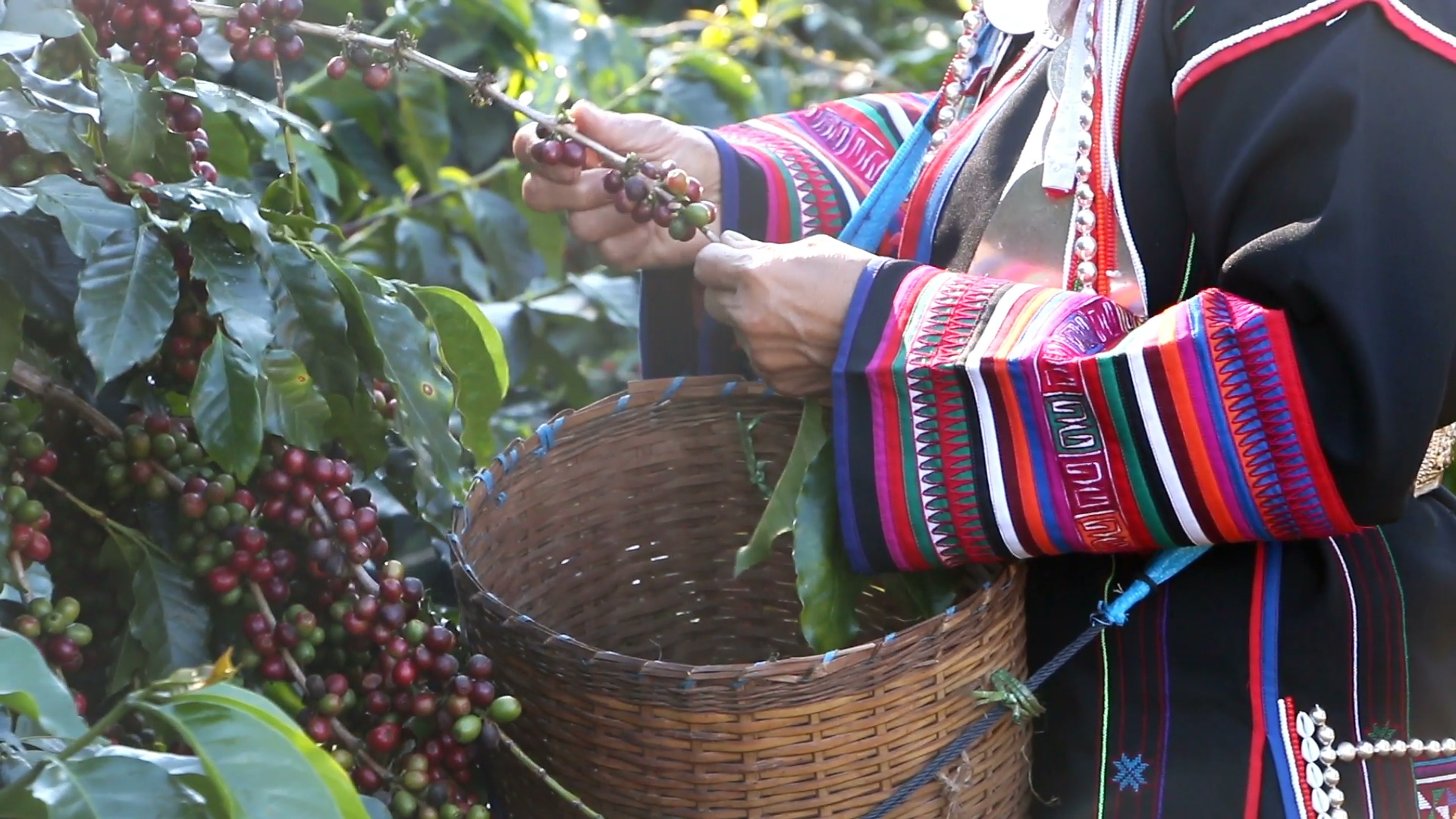
Coffee has become such an integral part of Canadian life that it’s easy to forget that the beans that make up our morning cup—be it a pre-ground grocery brand or a locally roasted organic brew—are grown by farmers in countries with increasingly delicate ecosystems. As we see climate change effects like glacier melting, forest fires, and unpredictable storms here in Canada, coffee-producing countries are suffering from drought or floods, changing soil conditions, and an increase in plant diseases and pest infections that are disrupting farmers’ ability to produce coffee with the same methods they’ve relied on for hundreds of years.
The concept of Fairtrade farming—collectives of farmers called co-ops from around the world who band together to ensure fair pricing in global trade systems—is well known in Canada. Many of us already reach for bags of coffee beans (and other products like chocolate, bananas, and tea that may be vulnerable to exploitative production and pricing) labelled with the FAIRTRADE Mark as a more ethical choice. But coffee farmers may be in trouble because of climate change: the Inter-American Development Bank says that rising temperatures will reduce areas suitable for coffee growing by up to 50 percent by 2050.












