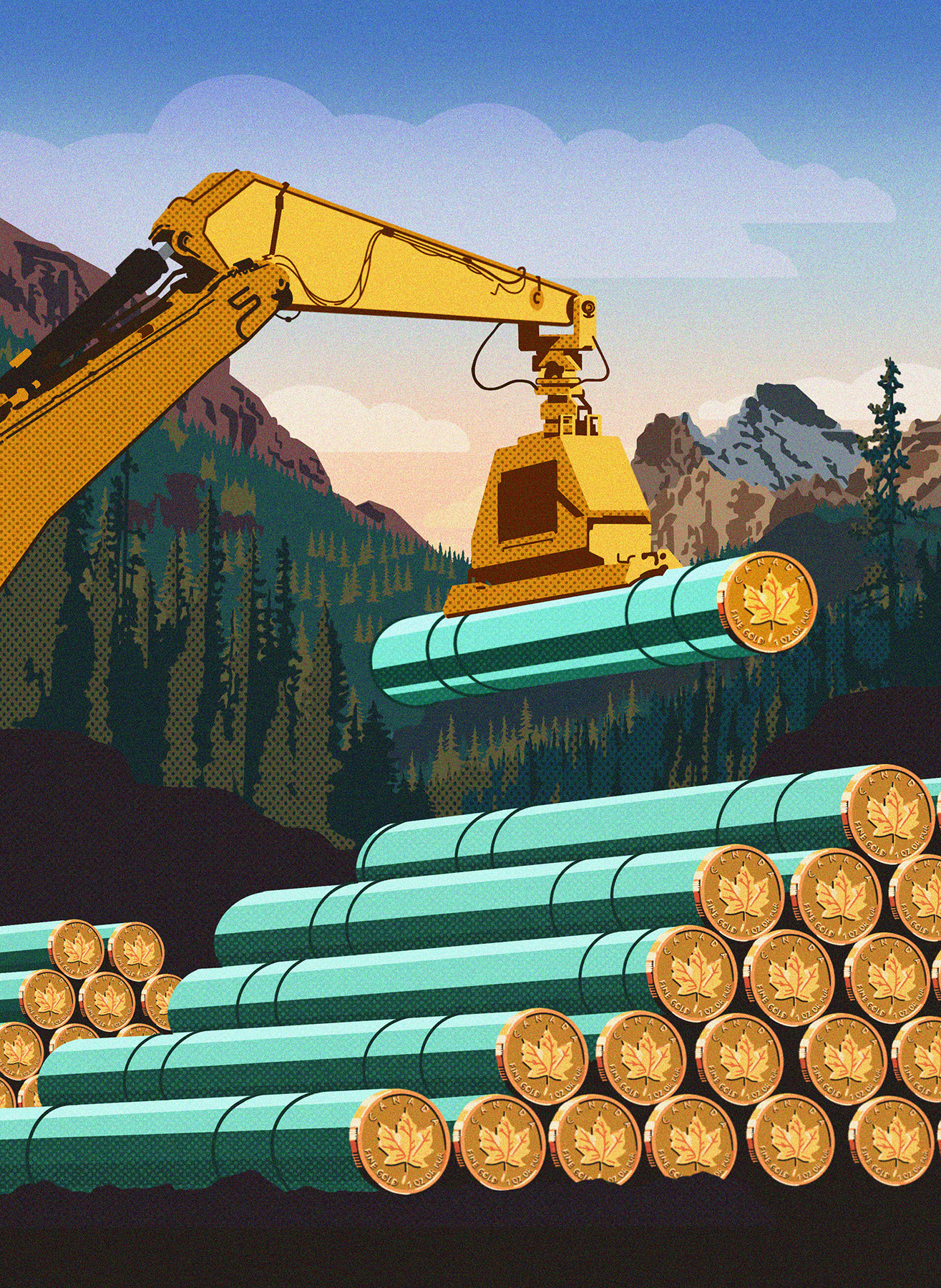
On a hot Friday afternoon in late July 2018, nine identical shovels stood upright in freshly tilled dirt, ready for their photo op. Donning white hard hats, a group of politicians, corporate officials, and Enoch Cree Nation leaders had gathered at a groundbreaking ceremony tied to the Trans Mountain expansion. Trans Mountain has been a linchpin of Canada’s oil industry since it was built nearly seventy years ago, and its expansion on the First Nation’s land—a project that would extend the existing pipeline, for exports, from Alberta to the Port of Vancouver—would triple daily capacity to 890,000 barrels of oil.
Breaking ground would be the easy part. From the time it was proposed in 2013 by then owner Kinder Morgan, a Texas-based oil-and-gas corporation, the Trans Mountain expansion faced widespread resistance. First Nations like Tsleil-Waututh, located on BC’s coast, knew their territory would bear the brunt of increased tanker traffic. And, for citizens worried about the realities of climate change, building a lifeline for Canadian oil seemed a noxious mission. As opposition from First Nations, the BC government, municipalities, and environmentalists fuelled court cases, blockades, and rallies, Kinder Morgan’s shareholders grew uneasy. In August 2018, just a month after the Enoch Cree ceremony, the company withdrew from the project, selling its stake to the federal Liberal government for $4.5 billion. The purchase was temporary, the government said. It intended to find a new buyer.