
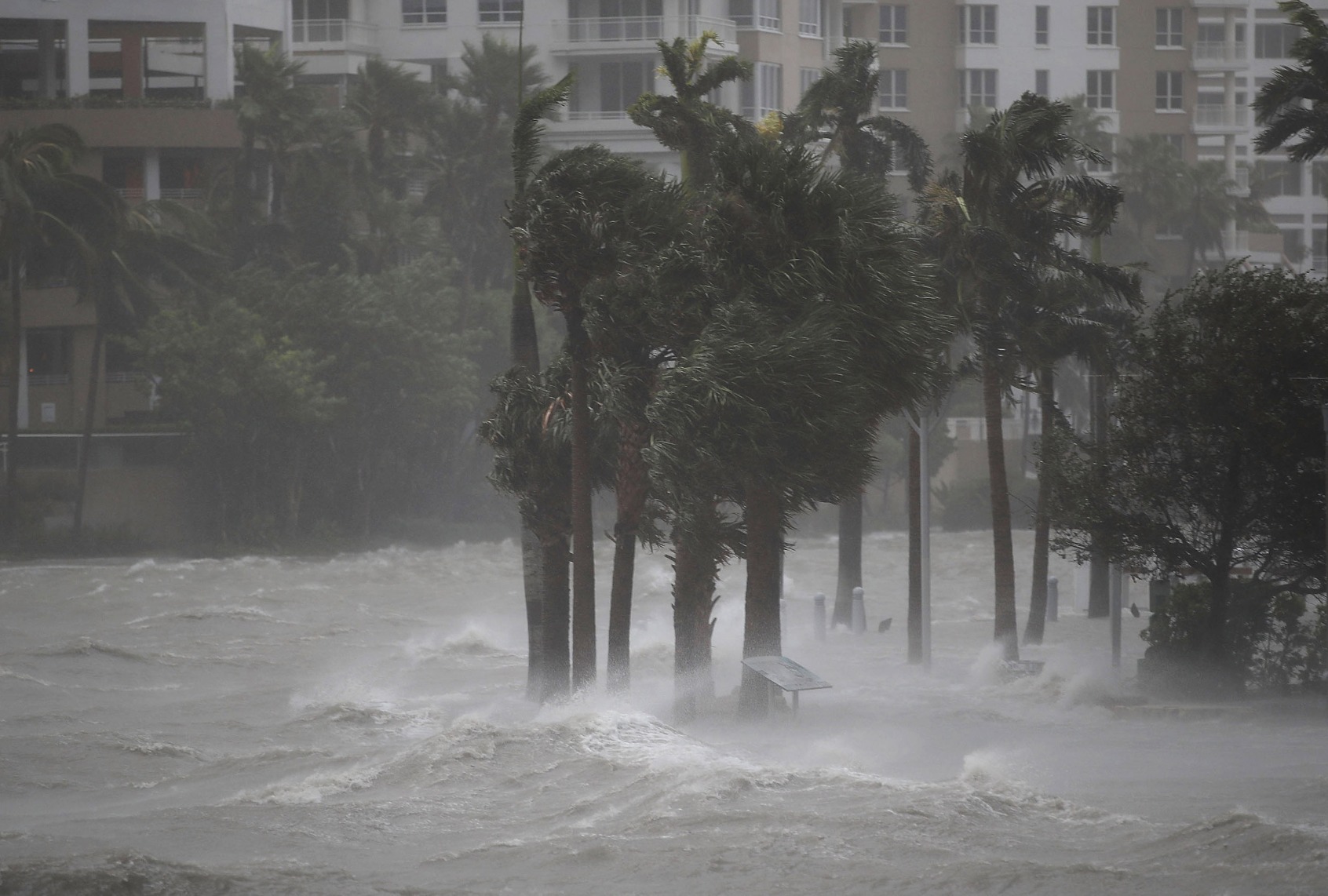
Greenhouse gases are creating such disequilibrium in the atmosphere that past patterns are no longer reliable predictors of the future. For a journalist reporting on climate change, this can mean finding where volatility has its most poignant impacts.
Volatility is a fundamental characteristic of climate change; only uncertainty is truly certain. A team of water scientists led by the U.S. Geological Survey alerted us to that volatility in 2008, when they concluded that past patterns of rainfall — going back several hundred thousand years — were no longer reliable predictors of future rainfall. Their paper in Science was called "Stationarity Is Dead," an ominous phrase that captured how scientists' fancy term for baselines — "stationarity," evoking the range of fluctuations in natural systems — was no longer operative as a way to plan for the future. These scientists predicted much of what we're seeing today — the collapse of baselines, from rainfall to temperatures and the frequency of extremes, calculations upon which entire governments, industries and human settlements have been based.











