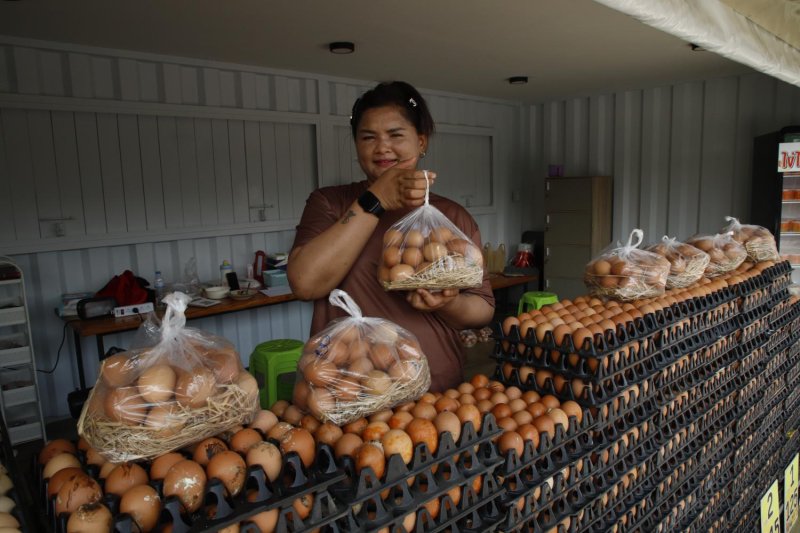
In economics, few indicators of food security are as simple -- and as powerful -- as the price of eggs. Affordable, accessible, and nutritious, eggs should be the most democratic source of protein in any society. Yet in Thailand, a single egg tells a far more complex story -- one of market power, distorted incentives, and a system that may no longer serve the public interest.
Over the past two decades, Thailand's egg industry has undergone a profound transformation. What was once a sector consisting of smallholder farmers has gradually evolved into a vertically integrated system, where large firms control the supply chain -- from breeding stock and feed production to distribution and retail. This structural shift has not only changed how eggs are produced, but also benefits sharing within the whole system.