
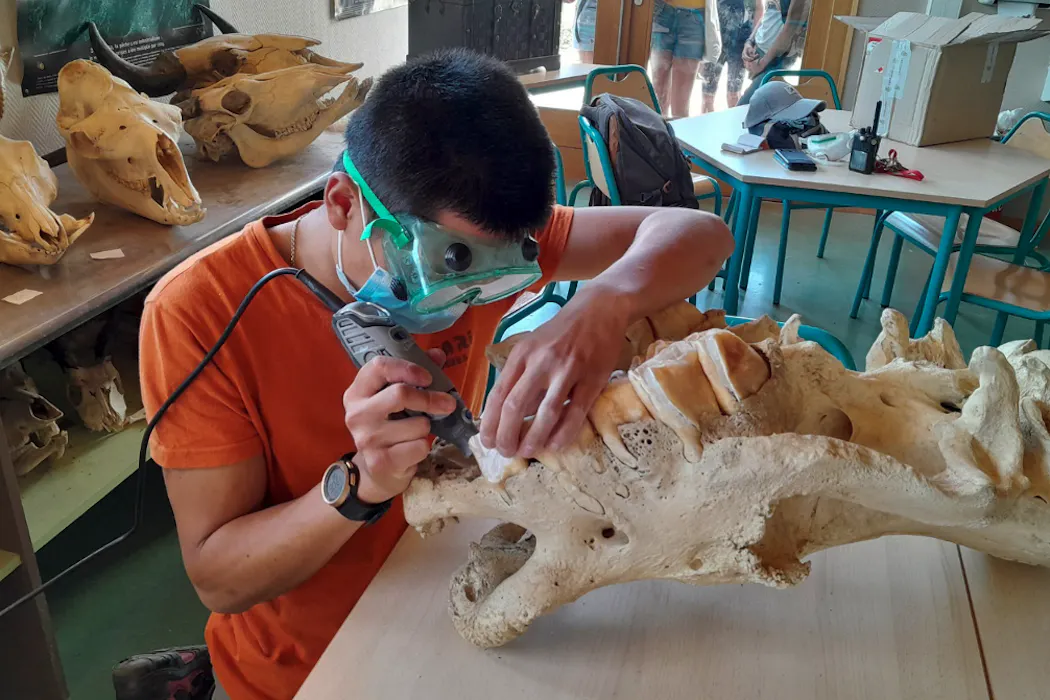
The RINO project was born from the discovery of unusual marks on rhinoceros teeth recovered from the prehistoric Payre site in France’s Rhône Valley. The study of fossil rhinoceros teeth from this Middle Palaeolithic site, dating to around 250,000–130,000 years ago, provides unprecedented evidence that Neanderthals used them as tools.
Unlike the iconic mammoth, the role of rhinoceros in the subsistence strategies of prehistoric human groups and the relationships they maintained with these animals throughout the Palaeolithic age remain poorly understood. They served not only as a source of food but also for other purposes, including their rock-art representation in caves, such as the famous paintings in the Chauvet Cave in Ardèche more than 30,000 years ago.













