
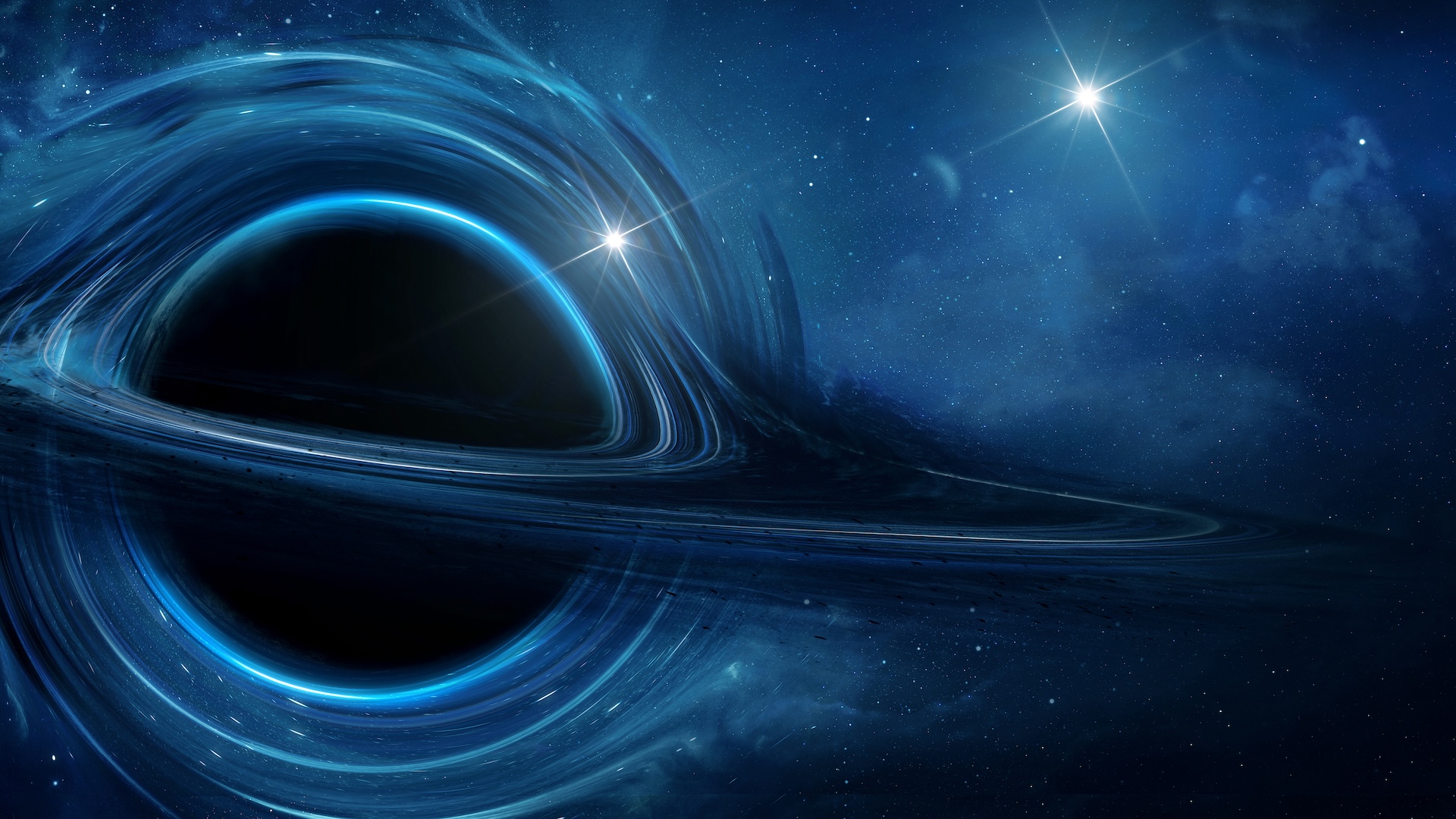
In 1974, Stephen Hawking put forward an intriguing idea: Using the principles of quantum physics, he predicted that even though nothing is supposed to escape a black hole's event horizon, these cosmic beasts can actually emit particles. And by ejecting these particles, black holes will shrink over a very long time, eventually evaporate and possibly explode.
Hawking sparked a debate that has continued for more than 50 years. The idea that black holes evaporate puts two fundamental tenets of physics — general relativity and quantum mechanics — into conflict.













