
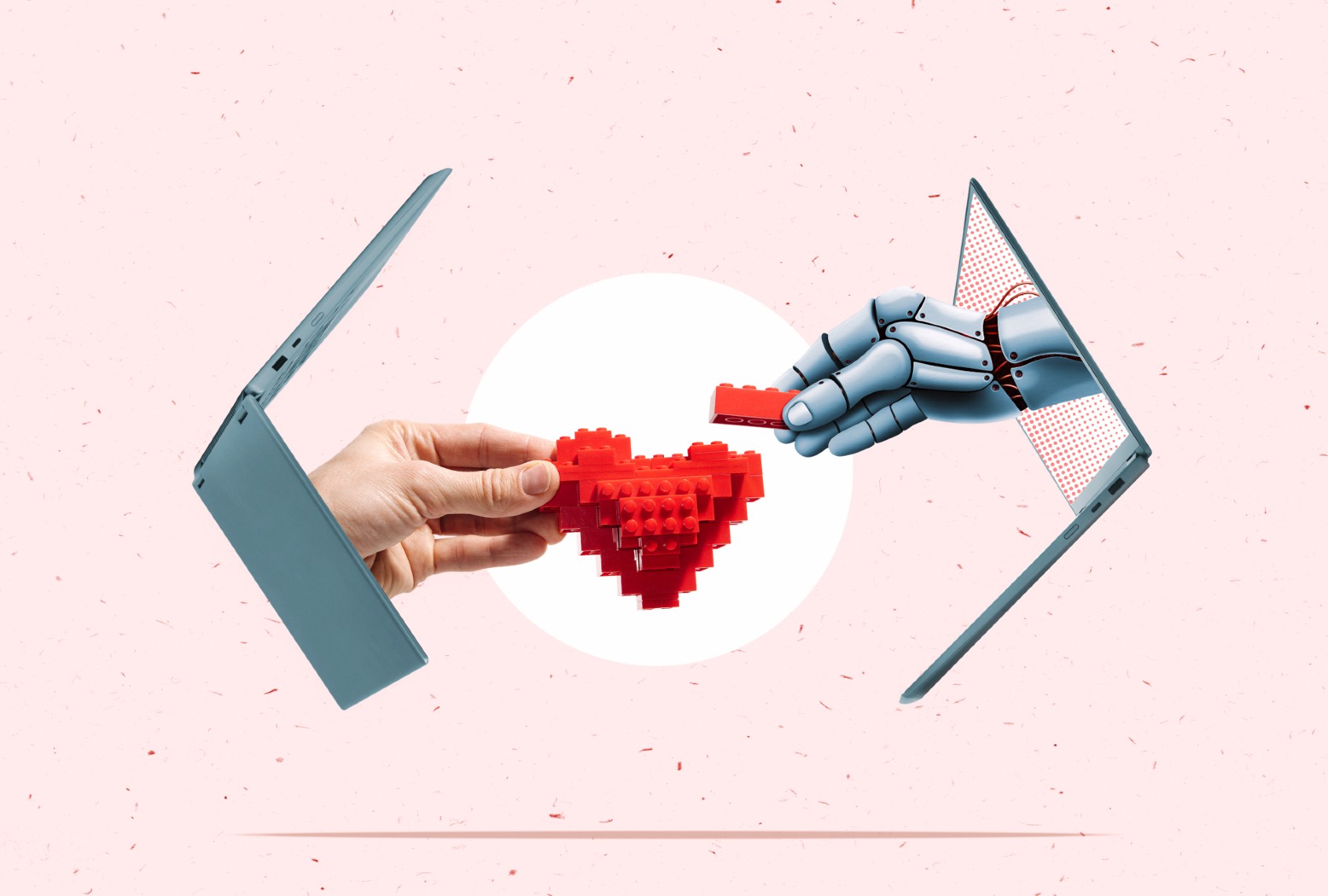
For the past year or so, I’ve been checking in semi-regularly with the corner of Reddit in which people crowdsource variations of the same question: How to feel when someone in your life uses generative AI for human-to-human communication — the suspiciously well-argued apology letter from a mother-in-law, the stilted wedding vows, the Sunday sermons that suddenly seem both more earnest and more generic. Sometimes the communication in question features what are now recognizable as LLM tells, like an overuse of triadic phrasing (“My feelings for you are not X, but Y”) and em dashes. But more often, people on the receiving end just feel like something is . . . off.
AI companies have been working tirelessly to stuff generative and agentic AI into every nook and cranny of our online lives. These might be helpful, anodyne retail chatbots; they also might be utter menaces like Google Docs’ Gemini pop-up. (It’s hard not to feel undermined when the AI is asking what changes it should make to a sentence I haven’t finished typing out.) The question of whether these interventions are good — and yes, I am aware that they can be turned off — is almost beside the point: The companies forcing generative AI into everyone’s life are shifting the Overton window to normalize using AI in the one place where, at least for those not using it for accessibility, it has no reason to be: personal interactions.