
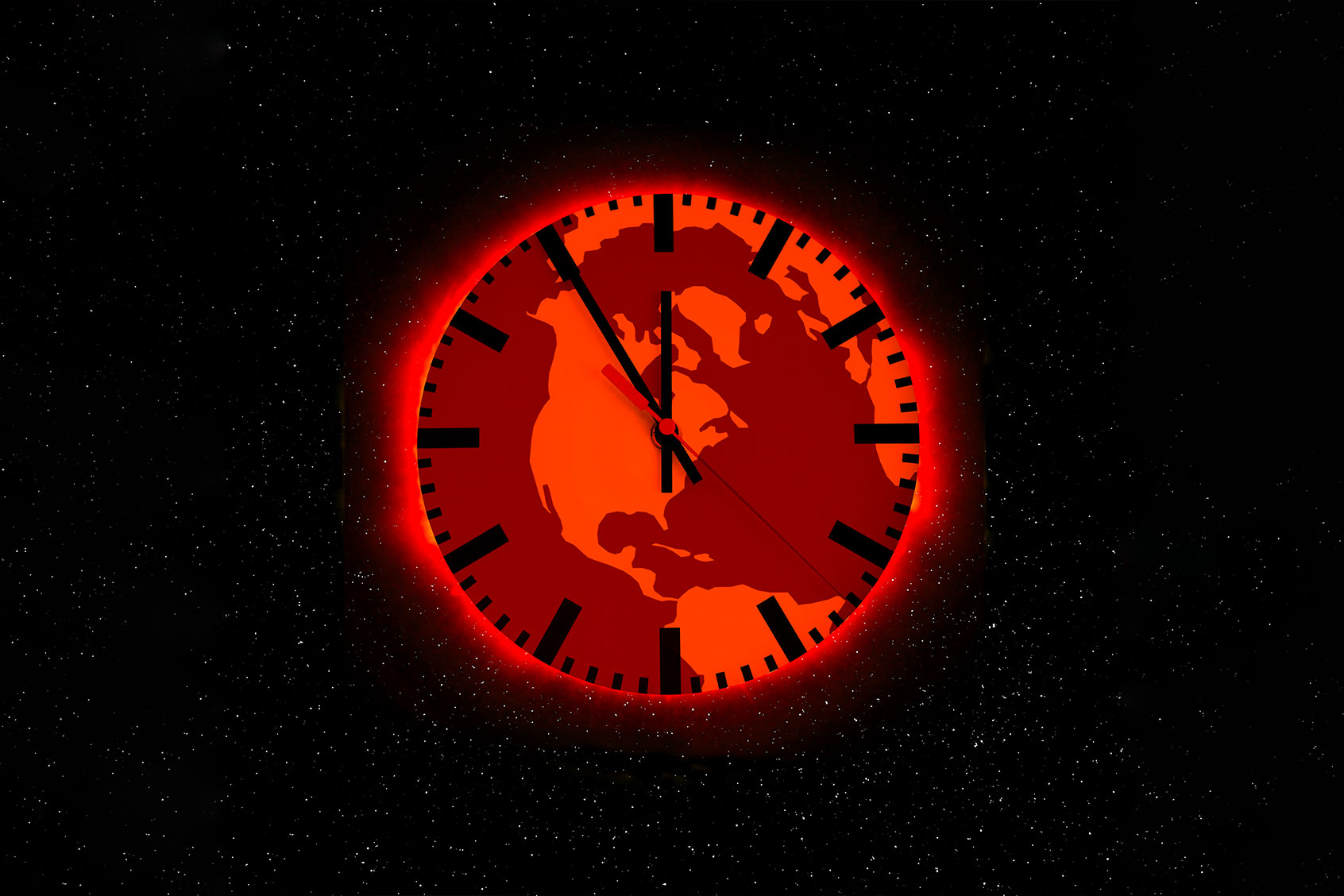
Every year, the Bulletin of the Atomic Scientists convenes a meeting to decide whether the minute hand of its famous Doomsday Clock will move forward, backward or stay put. Invented in 1947, the clock is a metaphor aimed at conveying our collective proximity to global destruction, which is represented by midnight: doom. Initially set to seven minutes before midnight, the minute hand has wiggled back and forth over the decades: In 1953, the year after the U.S. and Soviet Union detonated the first thermonuclear weapons, it inched forward to a mere two minutes before doom, where it stayed until 1960, when it returned to the original setting. In 1991, following the dissolution of the Soviet Union, which marked an official end to the Cold War, the minute hand was pushed back to a reassuring 17 minutes.
Since then, however, the time has pretty steadily lurched forward, and in 2018 the Bulletin's Science and Security Board once again placed the time at two minutes before midnight, due to growing nuclear tensions and the ignominious failure of world governments to properly address the worsening climate crisis. Two years later, the minute hand moved forward to just 100 seconds before midnight, and this January — the most recent Doomsday Clock announcement — it was, for the first time ever, inched forward to 90 seconds.







