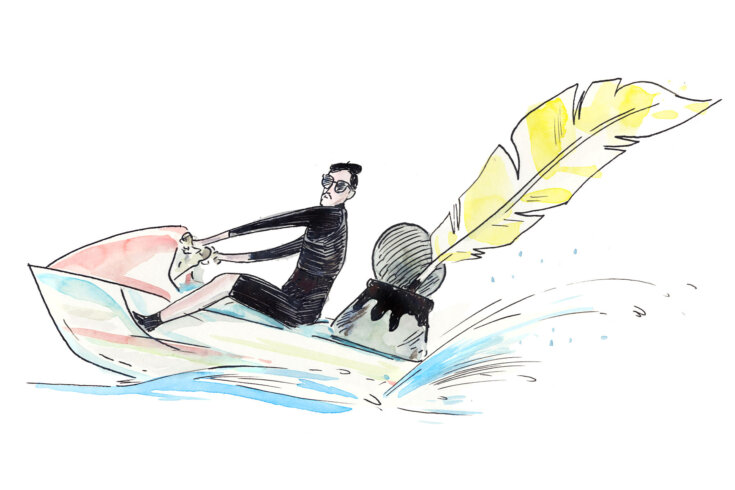
Publishing fiction and poetry has long been part of our formula. A general interest magazine, we believe, should be more than a home for journalism. It should cultivate good writing in every incarnation. This commitment also reflects the idea that nonfiction exists on the same spectrum as sonnets and short stories—that they are all part of what Gay Talese called the “literature of reality.” It shapes our editing too. We don’t worry only about facts; we mind the language they are dressed in. If you’ve written for us, you know how we fuss over your sentences until they sit just right. I have often thought magazine writers practise a secret prosody, marrying a specific turn of phrase to a specific turn of mind.
The Walrus comes to the question of literary arts from a unique vantage. Staff and writers tend to dabble in other genres. We have an editor who has just placed a very fine short story in a literary magazine. One of our political reporters is trying to finish another novel. And then there’s me. For decades, I have had a side gig as a poet. (A few months after I was hired here, a colleague introduced me to a board member thus: “Carmine’s come a long way. When he first started, he spoke only in iambic pentameter.”) That versatility bestows a sense of the elasticity of form but also a recognition that clarity is king. Pursuing accessibility at our day jobs helps us appreciate what readers can grasp in the experimental things we steal time to write.